
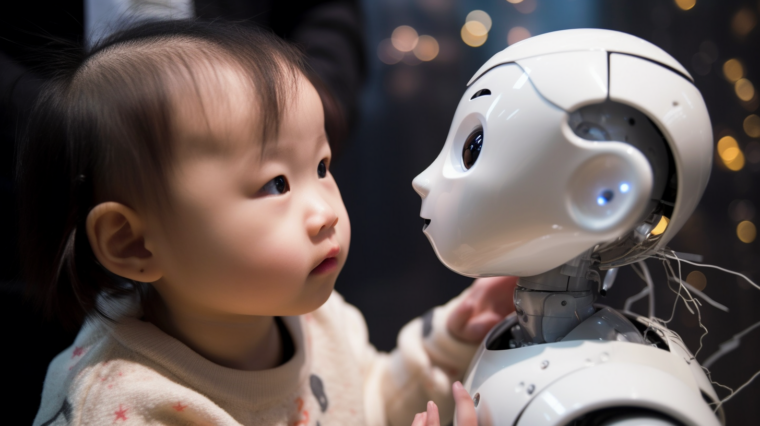
In the age of rapid technological advancements, the question AI’s Impact on Kids is becoming increasingly relevant. The application of artificial intelligence (AI) has been met with both skepticism and criticism, particularly for its potential to replace human jobs. However, the focus should also be on a demographic that is equally affected by the advent of AI: children.
The Bond Between Children and AI
Even before the advent of the internet and mobile devices, children had a tendency to form attachments with their toys. Now, with AI-enhanced chatbots, this affinity is being taken to a new level. According to Banu Kellner, a psychologist and executive coach, AI tools can cater to a child’s needs with remarkable precision, which can lead to a deep-seated bond. This bond, however, poses a significant challenge as children might become overly reliant on AI, hindering their ability to form and navigate complex human relationships.
AI in Education and Entertainment
As AI continues to evolve, various companies are striving to integrate this technology into education and entertainment sectors. Carnegie Learning, Cognii, and Kidsense are among the educational organizations utilizing AI. Recently, Pinwheel, a technology company focused on kids, launched the “kid-safe” PinwheelGPT. This AI-based system is designed for children aged 7-12, providing age-appropriate responses and creating a safe, educational environment.
Moreover, Khan Labs introduced a beta version of Khanmigo for the Khan Academy learning platform. This chatbot interacts with students by impersonating historical figures, creating a unique and engaging learning experience.
The Concerns Around Artificial Intimacy
Kellner points out that the primary issue is not just with AI, but more specifically with artificial intimacy. This refers to AI products that simulate relationships, which are already on the market and are expected to improve over time. The implications of this are far-reaching, especially considering the loneliness epidemic declared by U.S. Surgeon General Vivek Murthy.
Despite expert advice, some individuals have turned to AI companions and chatbots like OpenAI’s ChatGPT to combat loneliness and address mental health concerns. However, according to Dr. LeMeita Smith, a Dallas-based clinical therapist, while AI chatbots can provide instant support, they cannot replace the nuanced and empathetic care provided by human therapists.
Furthermore, the potential for AI to foster addiction is growing as language models evolve. This is particularly concerning for children, who lack fully developed executive functions. Kellner warns that tech companies are capitalizing on our brain’s wiring to keep us hooked on social media platforms, which can lead to dependency issues.
For instance, Meta recently announced plans to introduce AI chatbots on Facebook and Instagram to increase user engagement and retention. Google has also introduced AI-generated summaries on YouTube. While these advancements aim to engage users, they also pose a risk of fostering addiction, especially among young users.
In this digital era, keeping track of technological advancements is crucial. Platforms like cryptoview.io can be an invaluable resource in staying informed about these developments.
Stay updated with the latest in AI technology
In conclusion, the question of AI’s impact on children is a complex one. It lies in how we can use this technology to add value and enhance their lives, rather than replacing human interactions. As Kellner suggests, it is important to guide parents and set our kids up for a successful future in this AI-driven world.


