
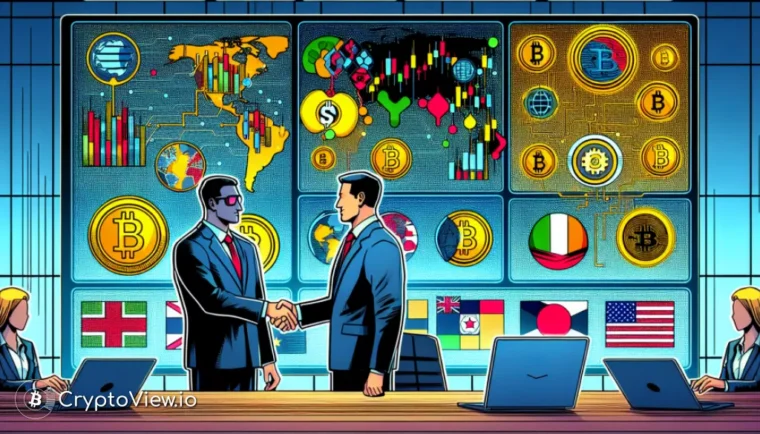
Senate Democrats have raised significant ethical concerns over U.S. Middle East envoy Steve Witkoff’s crypto investments in World Liberty Financial, a firm he co-founded with President Trump in 2024. These holdings, particularly involving the USD1 stablecoin, are under scrutiny for a potential Witkoff UAE crypto conflict, especially following a $2 billion stablecoin deal with a UAE state-owned entity that preceded a major U.S.-UAE AI agreement.
Price of USD1 Stablecoin (USD1)
The Nexus of Diplomacy and Digital Assets
Steve Witkoff’s appointment as the U.S. envoy to the Middle East came with expectations of full financial transparency, yet his continued involvement with World Liberty Financial has ignited a firestorm of debate. Despite divesting a substantial $120 million from his traditional real estate portfolio to assume his diplomatic role, Witkoff has maintained significant crypto assets linked to World Liberty Financial and related entities like WC Digital Fi LLC and SC Financial Technologies LLC. This retention, as highlighted in his August 13 financial disclosures, raises critical questions about federal ethics standards and the potential for compromised objectivity in sensitive international negotiations.
World Liberty Financial, co-founded by Witkoff and President Trump in 2024, operates in the burgeoning digital asset space, including stablecoin issuance. The firm’s activities in the United Arab Emirates are particularly problematic, given Witkoff’s direct diplomatic responsibilities in the region. Lawmakers are scrutinizing how these financial ties might influence or appear to influence U.S. foreign policy decisions, especially when high-stakes agreements are on the table.
Unpacking the UAE Financial Entanglements
The core of the ethical quandary lies in the timing and nature of World Liberty Financial’s business dealings in the UAE. An investigation by The New York Times previously brought to light a pivotal $2 billion investment secured by World Liberty Financial from MGX, a state-owned UAE firm. This substantial capital injection was channeled through the firm’s proprietary stablecoin, USD1, just weeks before a landmark U.S.-UAE AI campus deal was signed in May 2025. This agreement aimed to establish the largest AI facility outside the United States, underscoring the strategic importance of the U.S.-UAE relationship.
The USD1 stablecoin, pegged to the U.S. dollar, has reportedly grown into one of the largest in circulation, generating significant interest income for World Liberty Financial—estimated to be in the tens of millions annually, based on market data for similar digital assets. This financial overlap between Witkoff’s personal business interests and his diplomatic portfolio creates an undeniable appearance of impropriety, leading many to question whether personal gain could be influencing foreign policy objectives. The *HODL* mentality might be fine for personal portfolios, but it’s a different game when national interests are involved.
Senate’s Stance and Ethical Dilemmas
A group of Democratic senators, spearheaded by Adam Schiff, Ron Wyden, and Cory Booker, has taken a firm stance, demanding full disclosure from Witkoff by October 31. Their letter explicitly cited the risks these intertwined interests pose to the integrity and trust in U.S. foreign policy. Ethics experts, including those quoted in Fortune reports, have pointed out that such close proximity between personal business ventures and public service roles can severely erode public confidence. The situation underscores the challenges inherent in the Witkoff UAE crypto conflict, where the lines between commerce and statecraft blur.
The scrutiny extends beyond Witkoff’s specific case, aligning with broader regulatory trends in the cryptocurrency sector. U.S. officials are under increasing pressure to ensure a clear separation between personal investments and their policy-making responsibilities. The Commodity Futures Trading Commission (CFTC), for instance, has consistently emphasized the need for transparency in digital asset holdings for public servants, advocating for divestment to avoid even the *appearance* of a conflict of interest. Witkoff’s situation serves as a stark reminder of these evolving challenges in an era where crypto’s global reach makes such distinctions ever more critical.
Trend of USD1 Stablecoin (USD1)
Navigating the Future of Crypto Diplomacy
The ongoing examination of Steve Witkoff’s crypto investments highlights a crucial juncture for U.S. foreign policy and ethical governance in the digital age. As cryptocurrency continues to integrate into global financial systems, the potential for conflicts of interest among public officials with significant digital asset holdings will only intensify. This case necessitates a robust re-evaluation of ethics frameworks to safeguard diplomatic impartiality and public trust.
Policymakers and the public alike must remain vigilant, ensuring that accountability is upheld to protect U.S. foreign policy objectives. For those tracking the intricate dance between global politics and digital assets, platforms like cryptoview.io offer comprehensive insights into market movements and regulatory shifts, helping users stay informed on these complex intersections.
Find opportunities with CryptoView.io

