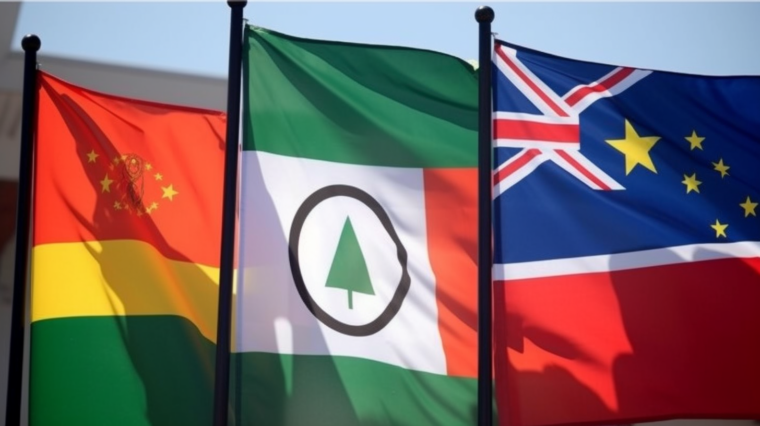
Speculations are rife that the BRICS alliance, with its new additions, is set to control over 40% of the global crude oil output. This development, considered by some as a ‘warning’ to America, is seen as an indication of the shifting geopolitical winds.
Emerging Multipolar World Order
According to a recent blog post by Jonathan Panikoff from the Atlantic Council, a Washington-based think tank, the expansion of the BRICS economic bloc is a clear sign of the emergence of a multipolar world order. The new members of the BRICS alliance are believed to be seeking a reduction in the global US economic and financial leverage. This would create a level playing field and further reduce the impact of sanctions, particularly for countries like Iran.
Strengthening and Renewing Alliances
The shifting geopolitical winds highlight the necessity for the United States to strengthen and renew relationships with its allies. As Panikoff points out, in this emerging multipolar world, some poles will inevitably be closer than others. The warning for Washington is clear: it needs to be proactive in maintaining its alliances.
Admission of New Countries to BRICS
Reports from Reuters suggest that BRICS has approved the admission of Saudi Arabia, Iran, Ethiopia, Egypt, Argentina, and the United Arab Emirates. These additions will effectively double the number of BRICS members, leading to a significant increase in the alliance’s global crude oil production. This economic coalition, originally consisting of Brazil, Russia, India, China, and South Africa, is set to command more than 40% of global crude oil output by January 2024.
For those interested in tracking these geopolitical shifts and their impact on the global economy, the cryptoview.io application offers a comprehensive view of economic trends. This tool can be instrumental in understanding the implications of the doubling of BRICS members and their influence on global crude oil production.
Stay ahead of the curve. Get the latest updates with cryptoview.io