
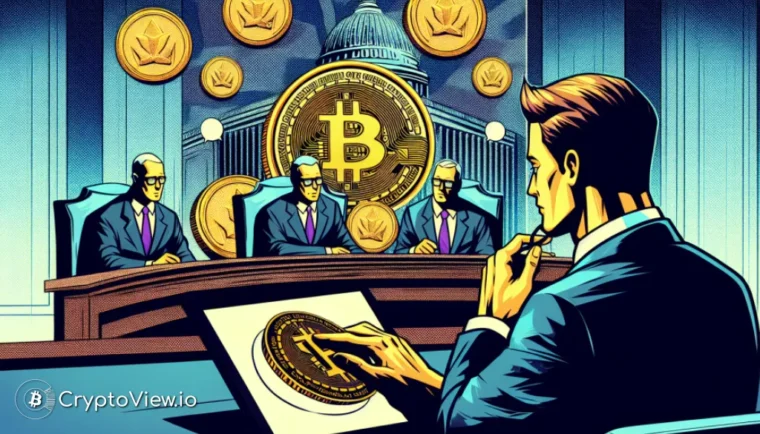
As the U.S. Senate Banking Committee recently advanced its comprehensive market structure legislation, a pivotal debate over whether stablecoin issuers should offer rewards has been reignited. This re-evaluation of Stablecoin Rewards Legislation, initially addressed by the GENIUS Act, introduces fresh uncertainty for an industry that had assumed regulatory clarity, potentially reshaping how digital assets integrate into mainstream finance.
The Legislative Re-evaluation: Revisiting Stablecoin Rewards
The Senate Banking Committee’s recent markup session brought renewed scrutiny to the policy surrounding stablecoin rewards, a topic many in the crypto space believed was settled. Previously, the GENIUS Act had laid down a framework for stablecoins, notably allowing for reward mechanisms while establishing necessary consumer protection guardrails. This approach aimed to foster innovation within digital payments without stifling growth. However, the decision to revisit this aspect within the broader market structure bill has reopened old compromises, creating a sense of regulatory flux.
Industry participants, including major players like Coinbase, have voiced concerns over this late-stage legislative maneuver. The fear is that any restrictions on rewards could disadvantage stablecoins in the burgeoning on-chain economy. Lawmakers, it seems, have yet to forge a consensus, leaving the door open for potential amendments that could significantly alter the competitive landscape for stablecoins.
Economic Tug-of-War: Payments Competition vs. Bank Deposits
At the heart of the debate lies a fundamental question: are stablecoin rewards primarily a matter of financial stability or competitive dynamics in the payments sector? Advocates for rewards, such as Coinbase’s Chief Policy Officer Faryar Shirzad, have consistently argued that stablecoins largely compete with traditional card networks and payment rails, rather than directly with bank lending. Shirzad previously highlighted that U.S. banks generate substantial revenue from payment-related activities, suggesting that opposition to stablecoin rewards might stem from a desire to protect these established revenue streams.
Furthermore, the argument that stablecoin rewards could lead to a significant drain on community bank deposits has been met with skepticism and empirical challenges. Research cited by Shirzad, including a study by Charles River Associates, indicated no substantial correlation between the growth of stablecoins like USDC and fluctuations in community bank deposits. This suggests that stablecoins serve distinct user bases and use cases. Academic studies, such as those from Cornell University, have echoed these findings, concluding that stablecoins do not materially impact bank lending. These studies also noted that reward rates would need to climb far beyond current market offerings to have any meaningful effect on deposits, a threshold that remains distant.
Global Stakes: The Dollar’s Digital Dominance
Beyond domestic economic considerations, the discussion around Stablecoin Rewards Legislation carries significant geopolitical weight. The global race for digital currency leadership adds another layer of complexity to the policy decisions being made in Washington. Shirzad, for instance, has pointed to initiatives by other nations, such as China’s exploration of interest-bearing features for its digital yuan, as a clear signal. Restricting rewards on U.S.-backed stablecoins, some argue, could inadvertently undermine the U.S. dollar’s long-standing competitiveness and influence in the rapidly evolving on-chain commerce landscape.
While these arguments are subject to ongoing debate, they underscore a broader shift in perspective. Stablecoin policy is no longer viewed solely through the narrow lens of crypto regulation; it’s increasingly seen as a critical component of payments leadership and currency influence on the global stage. Ensuring that U.S. digital assets remain attractive and competitive is paramount for maintaining the dollar’s preeminence in a tokenized world.
What’s Next for Stablecoin Innovation?
The outcome of the Senate Banking Committee’s deliberations will be crucial in determining the future trajectory of stablecoins in the U.S. financial system. Will the market structure bill uphold the GENIUS Act’s original stance on stablecoin rewards, or will it introduce new restrictions that could reshape the industry? Any significant alteration could send ripples through a sector that has been building on the assumption of regulatory consistency. The re-emergence of this debate highlights the inherent fragility of legislative compromises, especially in nascent and rapidly evolving fields like digital assets.
As Congress continues to finalize its digital asset framework, even previously settled issues remain subject to revision. This ongoing scrutiny has profound implications for how stablecoins are utilized, priced, and ultimately adopted across the U.S. financial ecosystem. Keeping an eye on these legislative developments is key for anyone involved in the crypto space. For those tracking these dynamic shifts and seeking to understand market sentiment, tools like cryptoview.io can provide invaluable insights into how regulatory news impacts digital asset performance and trader behavior. Explore market trends with CryptoView.io


