Tesla’s current Bitcoin treasury, holding approximately 11,509 BTC valued near $1.28 billion, underscores a complex corporate relationship with the digital asset. Recently, Elon Musk offered a nuanced perspective on Bitcoin’s foundational energy use, asserting that energy expenditure is critical to its monetary scarcity. This shift sees Musk praises Bitcoin energy, framing it as an ‘energy-backed’ digital asset in contrast to easily issued fiat currency, especially amidst rising AI-driven capital flows.
Price of Bitcoin (BTC)
Musk’s Evolving View on Bitcoin’s Energy Footprint
Elon Musk’s public commentary on Bitcoin has certainly seen its share of twists and turns over the years. Back in 2021, the crypto world watched as Tesla first accepted, then swiftly halted, Bitcoin payments, citing significant concerns over the environmental impact of Bitcoin mining. This move sparked considerable debate and even contributed to a market downturn at the time. However, fast forward to today, and Musk appears to be articulating a more sophisticated understanding of Bitcoin’s underlying mechanics, focusing on its energy consumption as a core component of its value proposition rather than solely a drawback.
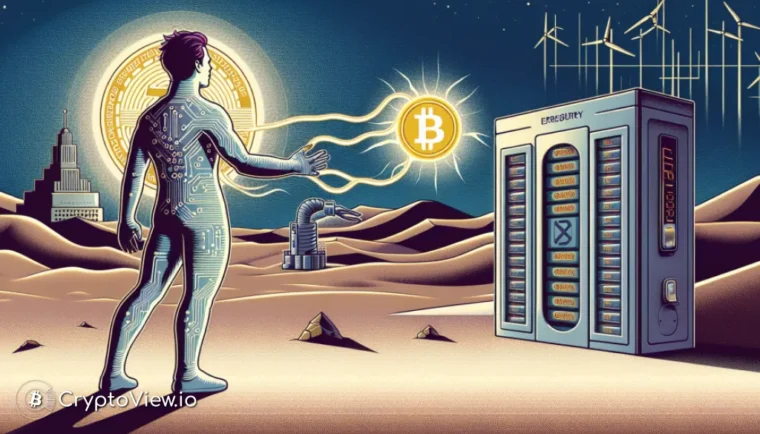
His latest remarks suggest a philosophical pivot, where the energy expended in mining isn’t just an environmental cost, but a fundamental proof of scarcity. He famously stated that while it’s trivial to ‘issue fake fiat currency,’ it’s ‘impossible to fake energy.’ This perspective aligns Bitcoin with a tangible, real-world expenditure, drawing parallels to how precious metals require effort to extract. This isn’t just about environmental impact anymore; it’s about the very nature of money in a digital age.
The ‘Energy-Backed’ Argument for Bitcoin’s Scarcity
The concept that Bitcoin is ‘energy-backed’ isn’t new within the crypto community, but having a figure like Elon Musk articulate it brings significant mainstream attention. The argument posits that the computational work and electricity required for Bitcoin mining are not merely overheads but rather the *proof of work* that validates transactions and secures the network. This continuous expenditure of real-world resources creates an intrinsic anchor for Bitcoin’s scarcity, distinguishing it from traditional fiat currencies that can be printed at will by central banks.
Michael Saylor, co-founder of MicroStrategy and a staunch Bitcoin advocate, has often reinforced this idea, emphasizing that *“The laws of nature are superior to the laws of man.”* This sentiment perfectly encapsulates the belief that Bitcoin’s energy-intensive mining process imbues it with a form of scarcity that human-made laws or policies cannot easily manipulate. In a world increasingly concerned about monetary debasement and the inflationary pressures from AI-driven capital flows, this ‘energy-backed’ narrative positions Bitcoin as a potential hedge, a digital asset whose value is tied to an undeniable physical input.
Tesla’s Bitcoin Holdings: A Shifting Corporate Strategy
Tesla’s journey with Bitcoin has been a roller coaster, reflecting the broader volatility and evolving perceptions of digital assets in the corporate world. After initially making a splash by accepting BTC payments in early 2021, the company reversed course just months later due to environmental concerns surrounding mining energy use. Despite this, Tesla chose to retain a significant portion of its Bitcoin treasury, demonstrating a nuanced approach that separated payment utility from long-term asset conviction. The company did, however, execute partial sales in May 2021 and a larger divestment in July 2022, the latter reportedly driven by a ‘Bitcoin impairment’ on its balance sheet.
According to data tracked by BitcoinTreasuries, Tesla’s current holding stands at 11,509 BTC, a substantial sum, though down from its peak of 43,200 BTC. This retention, even after significant sales, suggests a strategic long-term view on Bitcoin as a reserve asset, irrespective of its immediate payment utility. The market buzz often points to these corporate moves as indicators of institutional adoption and confidence, even when accompanied by public relations challenges regarding sustainability.
Trend of Bitcoin (BTC)
Navigating the Green Bitcoin Debate
The conversation around Bitcoin’s energy consumption remains a hot topic, with proponents and critics alike weighing in on its environmental impact. Public data from sources like the Cambridge Bitcoin Electricity Consumption Index provides estimates of the network’s energy use, fueling ongoing discussions about sustainability. Tesla itself stated it would consider resuming BTC payments if a ‘meaningful threshold’ of mining activity shifted to ‘reasonable clean energy’ sources, signaling a desire for more sustainable practices within the industry.
The shift in how Musk praises Bitcoin energy could signal a growing acceptance of Bitcoin’s energy use as a feature, not a bug, especially if a significant portion of that energy comes from renewable sources. The industry continues to innovate, with increasing efforts towards integrating green energy solutions into mining operations. For investors, understanding these dynamics, from corporate holdings to the broader energy debate, is crucial. Tools that provide real-time market data and on-chain metrics can be invaluable for tracking these trends. For those looking to make data-driven decisions in this dynamic market, platforms like cryptoview.io offer comprehensive insights. Find opportunities with CryptoView.io