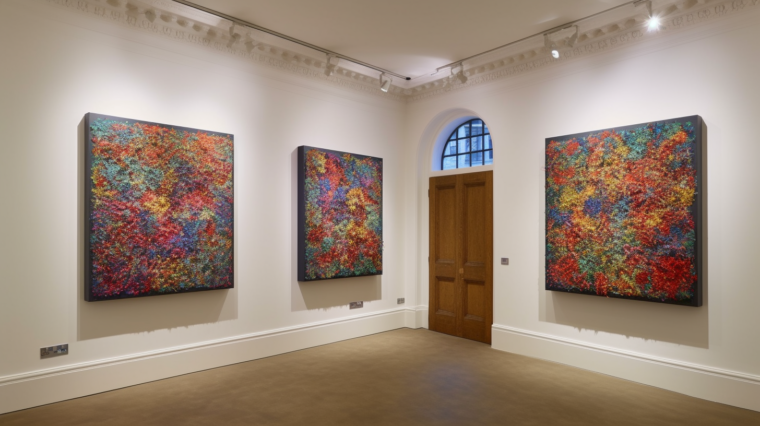
With the advent of Non-Fungible Tokens (NFTs) and Artificial Intelligence (AI), generative art history has witnessed an unprecedented surge in popularity. However, the concept of generative art precedes both these recent developments. An exhibition in London, known as GEN/GEN: Generative Generations, aims to shed light on this historical context of generative art, tracing its roots back to the 60s, 70s, and 80s.
Understanding the Generative Art Exhibition
The exhibition, held at Gazelli Art House in Mayfair, seeks to draw parallels between the works of past and present generative artists. It brings into focus the work of Harold Cohen, a pioneer of generative art, along with his contemporaries like Ernest Edmonds, William Latham, and Stephen Willats. It also showcases the work of modern generative artists such as Tyler Hobbs, Sougwen Chung, Rhea Myers, and Ben Kovach, who have drawn inspiration from Cohen’s work and reimagined it in their unique styles.
As Robert Norton, founder and CEO of Verisart, the tech partner of the gallery, points out, this exhibition aims to highlight a “shared vocabulary” that started much earlier. The works of the generative art pioneers and their successors are displayed side by side, emphasizing the connections between them. The idea is not to present a chronological timeline, but to highlight the similarities across generations of artists.
The Influence of Digital Art and NFTs
The recent boom in generative art is largely attributed to the emergence of NFTs. Many artists featured in the exhibition, such as Ben Kovach and Tyler Hobbs, have showcased their work on platforms like Art Blocks. The sale of these works is made possible through the integration of Art Blocks on Gazelli Art House’s online store via the Verisart Shopify app. As the NFT market matures, Norton predicts that physical galleries will open their own digital storefronts to gain more control over the display and sale of these projects.
Despite the collapse in NFT prices and the subsequent exit of speculators, galleries like Gazelli remain undeterred. According to Norton, the strength of top-end artists working with AI has encouraged them to focus on AI shows. He believes that generative art fits well within art history, and the advent of NFTs has merely provided a new mechanism for ownership.
Embracing the Future of Generative Art
While the traditional art community was initially unsure about NFTs, generative art has seen a broader consensus. Norton is particularly excited about the potential of new technologies to transform artworks into “living entities”. For instance, Beeple’s ‘Human One’ is a changeable artwork that introduces a living element to the canvas. Similarly, artists like Matt Kane are leveraging external data sources for their projects, changing the paradigm from art being a finished product to something that’s a living entity.
As we witness the evolution of generative art, it’s fascinating to explore platforms like cryptoview.io, which offer a unique perspective on the intersection of art and technology. The application provides a comprehensive view of the crypto market, making it a valuable resource for artists and collectors alike in the digital art space.