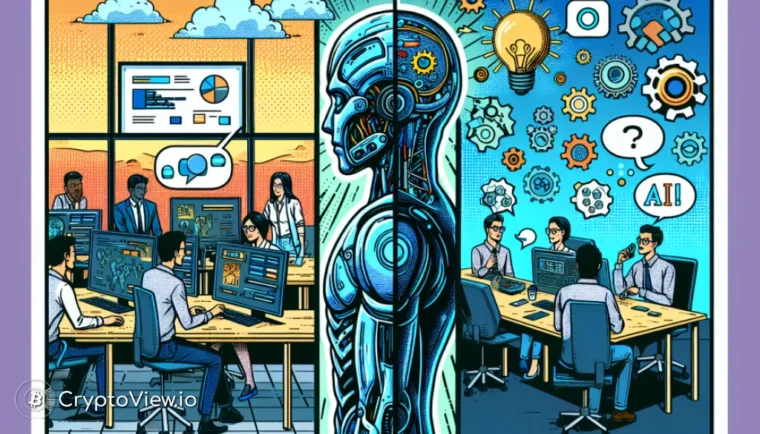
In a significant strategic pivot, Square Enix confirmed layoffs across its U.S. and European divisions, with reports suggesting 137 jobs at risk in London alone, as the gaming giant intensifies its adoption of generative AI. This move underscores a broader industry trend where companies like the Final Fantasy maker are leveraging advanced AI to streamline operations, directly impacting workforce structures and raising questions about the future of human roles in game development amidst these Square Enix AI layoffs.
The Strategic Shift Towards Generative AI
Square Enix, renowned for blockbuster franchises such as Final Fantasy and Dragon Quest, has been vocal about its aggressive embrace of generative AI. The company’s leadership, including President Takashi Kiryu, indicated as early as 2024 a strong commitment to integrating AI to enhance productivity and reshape game creation processes. This strategic shift is not merely about incremental improvements but a fundamental re-evaluation of how games are developed, from initial concept to final release.
A key objective highlighted in a recent presentation involves utilizing generative AI tools to automate a substantial portion of quality assurance (QA) and debugging tasks. The company previously aimed to have AI handle 70% of these critical development stages by the end of 2027. This ambitious target, born from a joint initiative with the Matsuo Laboratory at the University of Tokyo, signifies a belief that AI can significantly reduce development cycles and costs, potentially freeing up human talent for more creative endeavors.
Impact on Workforce: The Reality of Square Enix AI Layoffs
While Square Enix framed its recent workforce reductions as a reorganization to strengthen development and global marketing, the timing coincides directly with its accelerated AI integration plans. The company has not disclosed the exact number of affected employees, but internal sources revealed significant job cuts in its London office, with further reductions anticipated across its U.S. operations. This situation reflects a growing tension within the tech and gaming sectors: the promise of AI-driven efficiency versus the immediate human cost of job displacement.
The gaming industry has been experiencing widespread layoffs over the past couple of years, and Square Enix’s actions are part of this broader trend. As major players like Electronic Arts and Krafton also announce substantial investments in generative AI, the industry appears to be at an inflection point. The narrative often centers on AI ’empowering creativity,’ but for many, it translates to increased job insecurity. This is a complex transition, where companies grapple with optimizing for the future while managing the present-day impact on their teams.
AI’s Expanding Role Beyond QA and Debugging
Square Enix’s journey with cutting-edge technology extends beyond just generative AI for QA. The company has been an early adopter of various emerging technologies, including experimenting with NFTs and even launching an NFT-powered Ethereum game called Symbiogenesis. Although Symbiogenesis concluded its final story chapter and shut down this past summer, these ventures illustrate Square Enix’s willingness to explore new frontiers in digital entertainment and asset ownership.
The application of AI in Square Enix’s creative pipeline is also becoming more evident. For instance, the company utilized Midjourney, an AI art generator, to create some artwork for its 2024 game, Foamstars. This demonstrates a practical integration of AI into the artistic aspects of game design, suggesting that AI’s influence will touch every facet of game development, from backend processes to front-facing aesthetics. The long-term vision seems to be a hybrid development model where AI tools augment human creativity and efficiency.
Navigating the Future of Gaming with AI
The gaming industry is clearly at a crossroads, with AI poised to redefine workflows and business models. For Square Enix, the current reorganization and emphasis on AI are part of a larger strategy to consolidate development back in Japan and streamline global operations, a process that began with the sale of several studios and franchises in 2022 to fund AI and blockchain gaming initiatives. This strategic direction highlights a commitment to innovation, albeit one that comes with significant structural adjustments.
As the industry continues to evolve, understanding these shifts becomes crucial for developers, investors, and gamers alike. Monitoring how major players like Square Enix balance technological advancement with human talent will be key to predicting future trends. The ongoing discussion around Square Enix AI layoffs is a microcosm of the broader debate on AI’s role in creative industries. For those tracking market movements and technological integrations, platforms like cryptoview.io offer valuable insights into how these macro trends impact the digital asset landscape and beyond. Find opportunities with CryptoView.io