
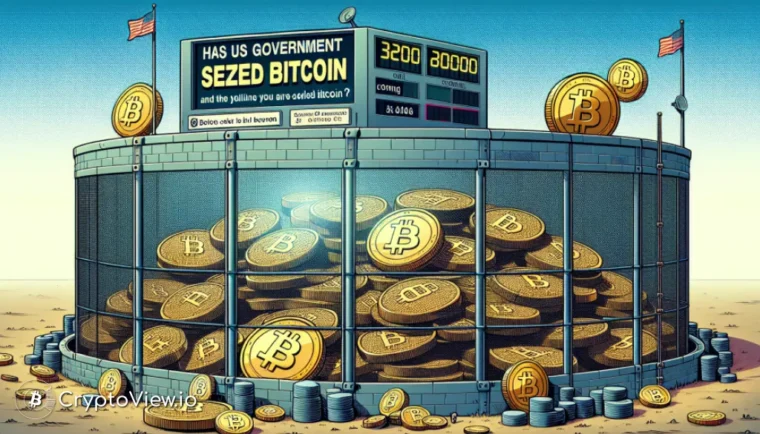
Despite earlier market whispers, the U.S. government has officially confirmed it did not liquidate the Bitcoin seized from Samourai Wallet. With over 328,000 BTC, valued at more than $31 billion, currently held in its reserves, the US government Bitcoin sale confirmation clarifies that these digital assets remain securely on its balance sheet, adhering to federal policy.
Price of Bitcoin (BTC)
Dispelling Rumors: The Official Word on Seized Bitcoin
What’s driving this surge of clarity? Patrick Witt, Executive Director of the President’s Council of Advisors for Digital Assets, unequivocally stated that the Department of Justice (DOJ) has confirmed the seized Bitcoin from Samourai Wallet “have not been liquidated and will not be liquidated.” These assets, rather than being sold off, are now integral to the U.S. government’s Strategic Bitcoin Reserve. This direct refutation addresses earlier reports that suggested prosecutors in the Southern District of New York (SDNY) had already disposed of Bitcoin forfeited by Samourai Wallet developers, sparking considerable concern across the crypto landscape.
The initial claims of a sale were particularly troubling as they appeared to contradict Executive Order 14233. This pivotal executive order mandates that certain forfeited Bitcoin be retained as a strategic asset, rather than being sold into the open market. The DOJ’s clarification, as relayed by Witt, assures that the digital assets remain firmly within government possession, fully compliant with the executive order. This statement directly counters any speculation that the Bitcoin had been liquidated following the Samourai plea agreement, providing much-needed certainty.
On-Chain Transparency: What the Data Reveals
Beyond official statements, independent blockchain data offers compelling evidence supporting the U.S. government’s position. Analysis from platforms like Arkham, which tracks publicly identified wallets, shows no significant reduction in Bitcoin balances associated with U.S. government holdings that would indicate a sale linked to the Samourai case. This on-chain scrutiny provides a robust US government Bitcoin sale confirmation, reassuring the market that these funds haven’t unexpectedly flooded the order books.
As of mid-January 2026, on-chain analytics continue to show the U.S. government holding an impressive cache of over 328,000 BTC. This colossal sum is currently valued at more than $31 billion, alongside smaller but still substantial balances of Ether and various stablecoins. Crucially, no abnormal outflows or transactional patterns consistent with a large-scale liquidation tied to the Samourai forfeiture have been detected, reinforcing the official narrative.
A Shifting Paradigm: Government’s Evolving Crypto Strategy
The confusion surrounding the Samourai Bitcoin wasn’t entirely unfounded; it stems from historical precedents. In earlier, high-profile cases, such as the infamous Silk Road seizures, the U.S. government regularly sold off forfeited Bitcoin through public auctions. This established practice naturally shaped market expectations, leading many to assume that any newly seized Bitcoin would follow a similar path to liquidation.
However, Executive Order 14233 represents a significant policy evolution. This order marks a deliberate shift from immediate liquidation to strategic retention, designating certain seized Bitcoin as long-term assets. The Samourai case serves as a clear illustration of this updated framework in action, signaling a departure from previous forfeiture practices and highlighting a more sophisticated approach to managing digital assets. The government, in essence, is taking a page from the *HODL* playbook, viewing these assets as strategic rather than just disposable.
Trend of Bitcoin (BTC)
Market Sentiment and the Path Forward
The definitive US government Bitcoin sale confirmation from the DOJ has certainly calmed nerves, removing a potential source of market volatility. The *market buzz* around a possible government dump had created an air of uncertainty, but this clarity allows investors and traders to focus on fundamental metrics rather than speculative fears. It underscores the importance of verifying information with on-chain data and official statements in the fast-paced crypto world.
This episode highlights a broader trend: the evolving relationship between governments and digital assets. As more sophisticated tools become available for tracking and managing these holdings, transparency is becoming paramount. For those looking to keep a close eye on these significant government movements and other market opportunities, platforms like cryptoview.io offer valuable insights into on-chain data and market trends. Find opportunities with CryptoView.io


