
In a recent turn of events, the United States’ Long-Term Foreign-Currency Issuer Default Rating (IDR) was reduced from ‘AAA’ to ‘AA+’ by the globally recognized credit rating agency, Fitch Ratings. The downgrade, driven by concerns over the U.S.’s fiscal health and governance standards, has sparked a wide range of reactions. However, not all experts view this “U.S. Credit Rating Downgrade” as a reason for alarm.
Reasons Behind the Downgrade
Fitch’s decision to downgrade the U.S. credit rating was influenced by several factors. Foremost among these were the anticipated fiscal deterioration over the next three years, an increasing general government debt burden, and a decline in governance standards. Fitch has also expressed concerns about a potential mild recession in the U.S. economy by late 2023 or early 2024, primarily due to tightening credit conditions and weakening business investment.
A Contrarian Perspective
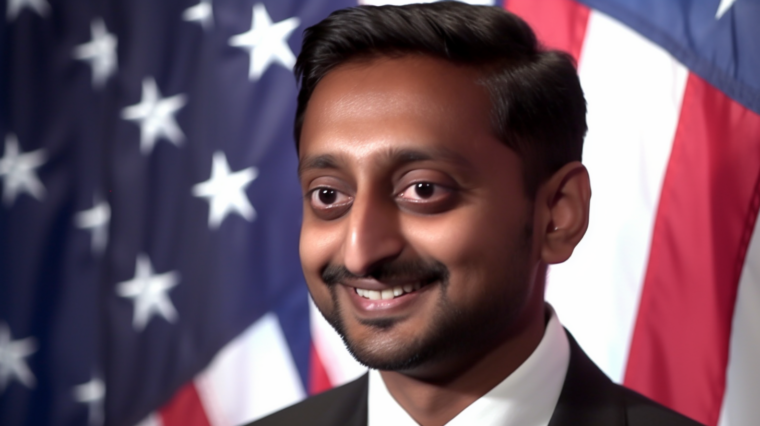
Despite the concerns raised by Fitch, some financial experts have a different perspective. One such expert is Chamath Palihapitiya, a billionaire venture capitalist of Sri Lankan-Canadian-American descent. Palihapitiya has publicly shared his views on the “U.S. Credit Rating Downgrade” during a recent episode of the “All-In Podcast”.
According to Palihapitiya, the downgrade by Fitch is not as significant as it appears. He pointed out that S&P Global Ratings had already downgraded the U.S. credit rating 13 years ago. He suggested that Fitch’s downgrade could be a late reaction or possibly a response driven by anxiety.
The Power of Relativism
Palihapitiya’s main argument is based on the principle of relativism. He argues that the economic discussions surrounding the “U.S. Credit Rating Downgrade” are often misunderstood and treated as absolutes rather than relative. For instance, he highlighted that Japan’s debt to GDP ratio is 270% and growing, which is considerably higher than the U.S.’s ratio. This, he suggests, puts the U.S.’s fiscal situation in a better light when compared.
Furthermore, Palihapitiya emphasized the U.S.’s position as the most significant economic force globally. He argued that other countries, on a monetary basis, are struggling more than the U.S., and he anticipates this trend to continue with the U.S. maintaining its economic dominance.
In the world of cryptocurrencies, applications like cryptoview.io offer a unique perspective on global economic trends, including the “U.S. Credit Rating Downgrade”. For those interested in keeping a pulse on the shifting economic landscape, it’s worth exploring.


