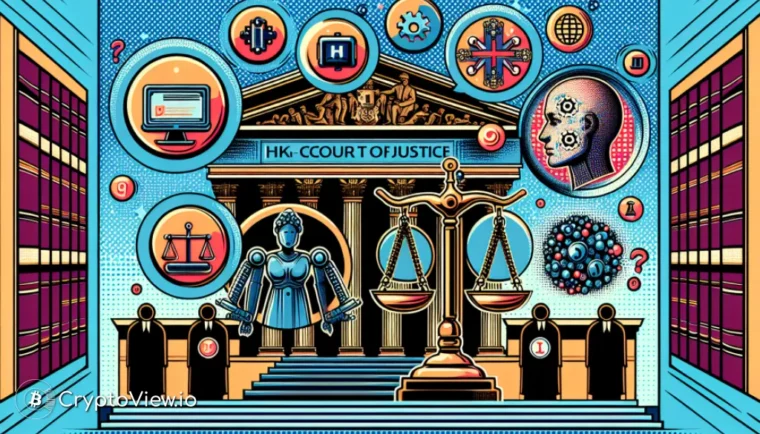
In a significant development for digital rights, the UK High Court of Justice delivered a nuanced verdict in the Getty Images v. Stability AI case, largely favoring Stability AI but leaving crucial questions about AI and intellectual property unresolved. This pivotal UK AI copyright ruling, which concluded earlier this year, underscored the complexities of applying existing IP law to rapidly evolving AI technologies, sending ripples through the creative and tech industries.
The Getty v. Stability AI Verdict: A Mixed Bag for IP
The high-stakes legal battle between stock image giant Getty Images and AI art generator Stability AI captivated the digital world, focusing on whether AI models infringe on existing copyrights. Getty, possessing a vast library of licensed images, alleged that Stability AI’s Stable Diffusion model, trained on extensive online data, infringed both its trademarks and copyrighted material. Specifically, Getty pointed to instances where its distinctive watermark was reproduced by the AI, claiming this constituted trademark infringement.
However, Justice Joanna Smith’s findings were described as "extremely limited in scope." While the court acknowledged the reproduction of Getty’s watermark by Stability’s Stable Diffusion model in some cases, a broader claim of copyright infringement faced significant hurdles. This particular UK AI copyright ruling highlighted the challenges of proving infringement in the context of AI training data and output.
Unpacking the Legal Nuances: Why Stability AI Prevailed (Mostly)
Getty’s attempts to establish "primary infringement" under UK law faltered. The court ruled that Getty failed to demonstrate that any UK users specifically utilized Stable Diffusion to reproduce the watermark, a crucial requirement for proving direct infringement. This technicality proved a significant roadblock for Getty’s case, underscoring the specific evidentiary demands of UK intellectual property law.
Furthermore, the allegation of "secondary infringement" was also dismissed. Justice Smith clarified that an AI model like Stable Diffusion does not store or reproduce actual copyrighted images, and therefore, it cannot be classified as an "infringing copy" under sections 22 and 23 of the UK’s Copyright, Designs and Patents Act (CDPA) of 1988. This interpretation suggests that the AI’s process of learning from data, rather than directly copying, falls outside the traditional definitions of copyright violation, a distinction that has profound implications for AI development.
The Broader Implications for AI and Creativity
While the ruling offers some clarity, particularly in allowing brands to pursue protection for their trademarks against AI reproduction, the highly technical nature of the case prevented it from setting a broad legal precedent. This leaves many fundamental questions regarding AI training, data provenance, and intellectual property rights largely unanswered and open for continued debate. The crypto market buzz often highlights how such legal uncertainties can stifle innovation or, conversely, drive new solutions.
This situation mirrors a similar outcome in the United States, where Judge William Orrick had issued a ruling in October 2023, which dismissed most copyright infringement claims against Midjourney AI, DeviantArt, and Stability AI. Orrick’s decision was based on the premise that images generated by these AI models did not bear a substantial resemblance to the original copyrighted works used for their training. These retrospective rulings collectively underscore a global legal challenge in adapting existing IP frameworks to the rapidly evolving capabilities of generative AI.
Web3 and Blockchain: A Lifeline for Content Creators?
The current legal landscape, with its perceived lack of robust protections for content creators and artists against AI’s use of their work, has spurred innovation within the blockchain and Web3 sectors. A growing number of companies are now developing data provenance solutions designed to record ownership and verify the origins of information, copyrighted material, and other intellectual property. These decentralized approaches offer a new paradigm for digital rights management.
Non-fungible tokens (NFTs), for example, are emerging as a powerful tool in this domain. By tokenizing creative works such as art, essays, books, or musical compositions, NFTs can immutably track original ownership and assign royalty rights, ensuring creators receive fair compensation even as their work potentially contributes to AI training datasets. This provides a tangible way for creators to maintain their "diamond hands" on their intellectual property in the digital age. For those navigating the complexities of digital assets and seeking to understand market trends, platforms like cryptoview.io offer valuable insights and tools to help manage and optimize their crypto portfolios. Find opportunities with CryptoView.io