
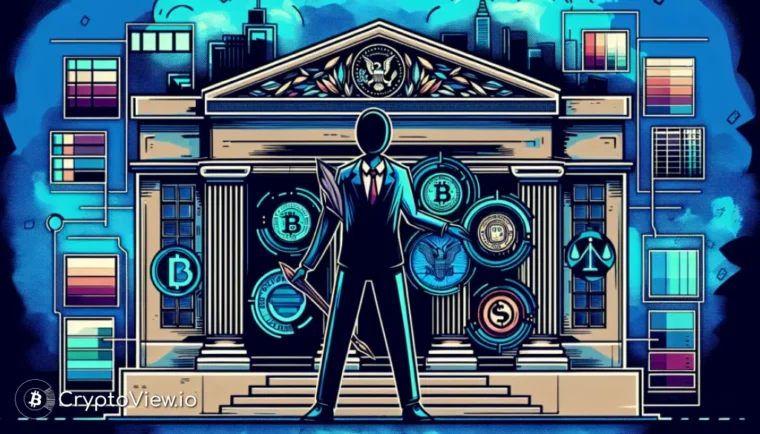
In a significant move that shaped regulatory dialogue around digital assets, former President Donald Trump’s nomination of Travis Hill to lead the Federal Deposit Insurance Corporation (FDIC) underscored a pivotal shift towards clearer crypto guidelines. Hill, a vocal advocate for the sector, previously clarified that banks could engage with digital assets as a permissible activity, setting a forward-looking tone for the agency’s approach to crypto innovation under Trump FDIC digital assets initiatives.
A Pro-Digital Asset Stance at the FDIC
Back in March, before officially stepping into his role as acting chair, Travis Hill made his stance on digital assets clear. He emphasized the necessity for the FDIC to provide more comprehensive guidance regarding digital assets and tokenization. Hill was also a vocal critic of what he perceived as instances where U.S. authorities were allegedly ‘debanking’ companies due to their connections with the crypto industry. His proactive approach culminated in a letter to financial institutions, explicitly stating that engaging with digital assets was indeed a permissible activity for banks, a significant clarification for the nascent sector.
This clarification was a crucial step, signaling a potential shift in the regulatory landscape. Hill articulated his expectation that this would be just one of several measures the FDIC would undertake to establish a new framework for how banks could participate in crypto and blockchain-related activities, all while adhering to established safety and soundness standards. This sentiment was a stark contrast to the more cautious, and at times ambiguous, approach seen previously. The preceding Senate-confirmed FDIC chair, Martin Gruenberg, had resigned in January as part of the outgoing Biden administration, paving the way for new leadership and a fresh perspective on digital finance.
Navigating Regulatory Waters for Digital Assets
The nomination of Travis Hill by former President Trump was seen by many market observers as a strategic move to infuse a more progressive outlook into financial regulation, particularly concerning the burgeoning digital asset space. Hill’s previous statements and actions highlighted a desire to integrate digital assets into the traditional financial system rather than isolating them. This perspective was particularly relevant given the ongoing discussions around central bank digital currencies (CBDCs) and the broader tokenization of real-world assets.
The emphasis on providing clear guidance was paramount. The crypto industry had long grappled with regulatory uncertainty, often leading to a cautious stance from traditional financial institutions. By clarifying that engaging with digital assets was ‘permissible,’ the FDIC under Hill aimed to reduce this ambiguity, potentially opening doors for more mainstream adoption and institutional participation. This policy direction, part of the broader Trump FDIC digital assets strategy, sought to balance innovation with robust consumer protection and financial stability.
The Broader Regulatory Landscape and Past Delays
While the nomination of Travis Hill was a key development for crypto policy, it occurred within a broader context of various unfilled positions at critical U.S. financial regulatory bodies. At the time, former President Trump had announced several nominations that could significantly impact U.S. crypto policy, but many key leadership roles remained vacant. For instance, a replacement for prospective Commodity Futures Trading Commission (CFTC) chair Brian Quintenz had yet to be chosen, and other commissioners were needed to fill the agency’s five-seat leadership panel. Similarly, a Democratic commissioner’s seat at the U.S. Securities and Exchange Commission (SEC) had been vacant since January of that year.
The Senate Banking Committee’s consideration of Hill’s nomination faced delays. A government shutdown, which occurred after Congress failed to pass a funding bill, complicated the scheduling of hearings. At the time, there was no immediate deal between Democratic and Republican lawmakers to halt the shutdown, which many expected to last for at least another week. These broader political and legislative challenges underscored the complexities involved in shaping comprehensive digital asset regulation, even with a clear vision from a nominated leader.
Looking Ahead: Stability and Innovation
The push for clearer regulatory frameworks under figures like Travis Hill was a critical step in fostering a more stable and predictable environment for digital assets. The industry’s journey towards mainstream acceptance often felt like a *moonshot* without clear guidelines, but the FDIC’s efforts helped lay some groundwork. As financial institutions continue to explore blockchain and crypto applications, the foundation laid by these early regulatory clarifications remains relevant.
For investors and institutions alike, understanding these regulatory shifts is paramount. Tools that provide comprehensive market insights and track regulatory developments are invaluable. For those looking to stay ahead of the curve and navigate the evolving digital asset landscape, exploring platforms like cryptoview.io can offer a distinct advantage. The proactive stance on Trump FDIC digital assets policies aimed to ensure that innovation could thrive responsibly within the financial system, rather than at its periphery.


