
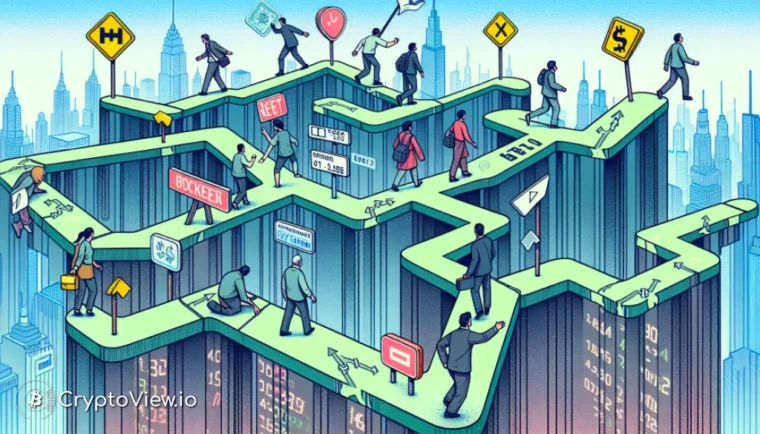
Tokenized stocks, once valued at over $1.3 billion according to past market data, present a complex investment landscape where the allure of blockchain-backed assets clashes with significant challenges. Investors navigating this nascent market face distinct Tokenized stock risks, stemming from regulatory ambiguities, market volatility, and inherent smart contract vulnerabilities that demand careful consideration.
The Unpredictable Dance of 24/7 Markets
One of the primary challenges with tokenized stocks, particularly for digital asset treasury (DAT) companies that issue both traditional and tokenized shares, is the stark contrast in trading hours. Traditional equity markets operate within specific windows, offering companies a chance to react to market-moving news. Blockchains, however, are relentless, trading 24 hours a day, seven days a week. This continuous activity means that sharp on-chain price movements can occur outside traditional market hours, potentially triggering a ‘run’ on a company’s stock before management even has a chance to respond effectively.
Imagine a scenario where a critical piece of news breaks over a weekend. While traditional shares remain locked, their tokenized counterparts could experience significant volatility. This divergence creates a vulnerability, as a sudden downturn in tokenized share value could spill over, impacting the company’s overall market perception and stability without an immediate mechanism for intervention.
Unpacking the Layers of Tokenized Stock Risks
Beyond market hour discrepancies, the very architecture of tokenized assets introduces additional layers of risk. Smart contract vulnerabilities are a persistent concern in the blockchain space; a single code exploit could compromise the integrity of the tokenized shares themselves. Furthermore, the underlying funds held by crypto treasury companies, as well as the tokenized shares, are targets for hacking attempts, posing a direct threat to investor capital. These technological risks are not trivial and require robust security measures and continuous auditing.
Adding to this complexity, some industry experts have described tokenizing DAT equity as creating a “synthetic on top of a synthetic.” This means investors are exposed twice: once to the inherent volatility of the treasury’s crypto holdings and again to the intricate complexities of corporate equity, governance structures, and securities law. This layering of risk on already volatile assets can make valuation and risk assessment particularly challenging, requiring investors to have a deep understanding of both traditional finance and the crypto ecosystem.
Regulatory Headwinds and the Quest for Clarity
Despite their growing popularity—with dozens of companies now having tokenized shares—the regulatory landscape for these digital assets remains largely undefined. This lack of legal clarity places tokenized stocks in a significant regulatory grey zone, which can deter institutional adoption and expose investors to uncertain legal recourse. Regulators worldwide are grappling with how to classify and oversee these innovative financial instruments.
In a move signaling a potential shift, the U.S. Securities and Exchange Commission (SEC) has been exploring blockchain-based stock trading to modernize the legacy system. This initiative aims to address the slow settlement times and limited operating hours of traditional markets. Past discussions from the SEC indicated they were weighing plans to allow regulated retail crypto exchanges to offer tokenized stock trading to U.S. customers, a development that could pave the way for greater mainstream acceptance, provided a clear regulatory framework emerges.
Traditional Finance’s Digital Embrace: A Glimpse into Tomorrow
It’s not just the crypto native companies and regulators looking at this space; even traditional stock exchanges are feeling the pressure to adapt. Major players like Nasdaq and the New York Stock Exchange (NYSE) have been pushing for expanded trading hours to keep pace with the always-on nature of crypto markets. For instance, Nasdaq had announced plans in March to offer 24-hour trading, five days a week, with a targeted rollout in the second half of 2026. This move highlights the growing recognition that the future of capital markets may indeed involve round-the-clock access, blurring the lines between traditional and digital assets.
As the market evolves, understanding these intertwined dynamics becomes crucial. For those looking to manage these complex digital assets and monitor market movements, platforms like cryptoview.io offer advanced tools and analytics to help navigate the evolving digital asset landscape. It’s a challenging but potentially rewarding frontier for investors with the right information and risk management strategies. Find opportunities with CryptoView.io


