
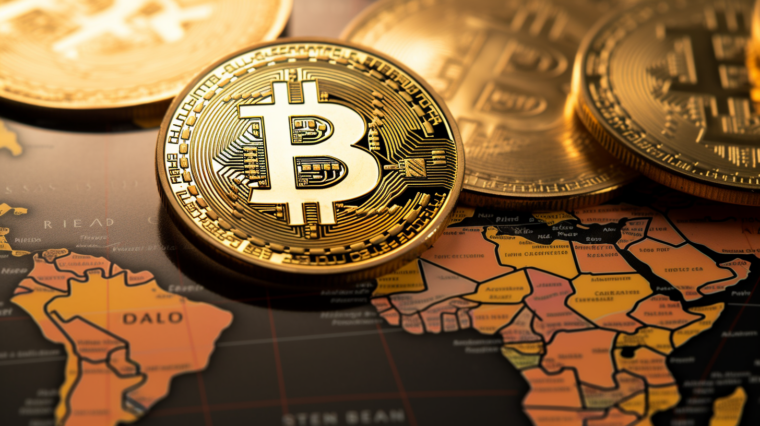
While Sub-Saharan Africa may not be the first region that comes to mind when one thinks of cryptocurrency, recent trends suggest a shift in this perception. This region is experiencing a notable surge in cryptocurrency adoption, with Bitcoin leading the charge and centralized exchanges handling more than half of all transactions. Furthermore, regulatory advancements in countries like South Africa, Kenya, and Nigeria are paving the way for the growth of the cryptocurrency sector.
Sub-Saharan Africa’s Leap into Cryptocurrency
Sub-Saharan Africa, often overlooked in the global cryptocurrency landscape, is making significant strides towards embracing this digital revolution. According to data from Chainalysis, the region accounted for 2.3% of global transaction volume between July 2022 and June 2023. During this time, the region saw an estimated $117.1 billion in on-chain value flow through it.
The dominance of centralized exchanges, which facilitated over half of all transaction volumes, is a noteworthy trend. However, the region’s retail-driven market sets it apart. A large portion of transaction volume comes from transactions under $60 billion, implying that cryptocurrencies are becoming a crucial part of daily life for many residents, particularly in major markets like Nigeria, Kenya, Ghana, and South Africa.
The Growing Influence of Bitcoin and Stablecoins
The report reveals that Bitcoin makes up 9.3% of the region’s volume share, outstripping even North America and Eastern Europe. Amid rising inflation and debt, Sub-Saharan residents are increasingly seeing Bitcoin as a viable alternative store of value. For instance, Ghana witnessed a staggering inflation rate of 29.8% in June 2022, the highest in two decades. As a result, many Ghanaians are turning to Bitcoin to safeguard their savings and attain financial independence.
Additionally, the region has seen a growing interest in stablecoins. According to Moyo Sodipo, Co-Founder and CPO of Nigeria-based cryptocurrency exchange Busha, the decline in Bitcoin’s value has sparked this interest. Sodipo believes that market fluctuations are not deterring activity but rather promoting diversification between Bitcoin and stablecoins.
Regulatory Clarity Paving the Way
Regulatory clarity is also playing a significant role in shaping the cryptocurrency landscape in Sub-Saharan Africa. South Africa has emerged as a regional leader in this aspect, with its Financial Sector Conduct Authority announcing a licensing regime for cryptocurrency businesses. This move has not only provided legal clarity but also encouraged billions of dollars worth of digital currency trading in the country.
Simultaneously, Kenya has proposed a bill advocating for a consistent securities definition of digital currencies, and Nigeria has approved a national blockchain policy, underscoring the potential benefits of blockchain adoption for the country. These regulatory strides are likely contributing to the growth of local cryptocurrency exchanges, which have been outpacing their international counterparts in the region since early 2023.
As the future unfolds, it appears that Sub-Saharan Africa’s crypto economy holds great promise. Large countries like Nigeria are already positioning themselves as global leaders in cryptocurrency adoption, with increasing regulatory clarity bolstering this growth. Local crypto operators are poised to benefit from these developments, given the everyday need for cryptocurrency in these emerging markets.
One such tool that could prove beneficial in navigating this burgeoning market is cryptoview.io, a comprehensive platform for tracking and analyzing cryptocurrency data. As Sub-Saharan Africa continues to witness a surge in cryptocurrency adoption, tools like these can provide valuable insights and aid in decision-making.
In conclusion, the rise in cryptocurrency adoption in Sub-Saharan Africa is fueled by economic challenges and the need for financial alternatives. Regulatory developments are providing the necessary framework for growth, cementing the region’s position as a key player in the global crypto industry.


