
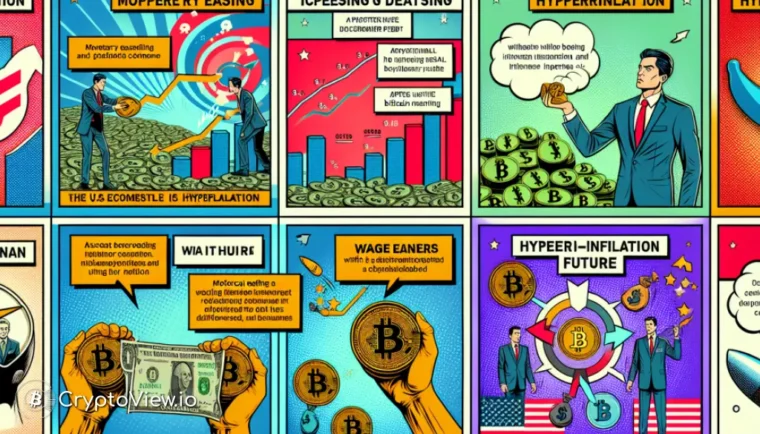
Amidst persistent global economic uncertainties, financial author Robert Kiyosaki recently issued a stark Robert Kiyosaki hyperinflation warning, drawing parallels between the current U.S. economic landscape and historical periods of severe currency debasement. He highlighted increasing consumer debt and ongoing monetary easing as critical indicators, asserting that these factors are accelerating a cycle that ultimately disadvantages wage earners while benefiting asset holders, with Bitcoin being a key recommendation.
Price of Bitcoin (BTC)
Echoes of Weimar: A Modern Hyperinflation Warning
Kiyosaki, known for his Rich Dad Poor Dad series, has consistently voiced concerns about the U.S. economy’s trajectory. In a recent discussion, he articulated that while modern inflation may not manifest with the visual spectacle of wheelbarrows full of cash, its underlying mechanisms and devastating effects remain just as potent. He pointed specifically to the surge in credit card debt, noting that the average American carries a significant balance at high interest rates, a silent but insidious form of currency erosion.
His perspective suggests that the traditional signs of hyperinflation are evolving. Instead of overt currency printing, he argues that the expansion of credit and debt serves a similar function, diluting purchasing power without the dramatic imagery of past economic collapses. This contemporary view of inflation, driven by consumer credit rather than just physical currency, forms the core of his recent Robert Kiyosaki hyperinflation warning.
Monetary Policy and the Erosion of Purchasing Power
A central theme in Kiyosaki’s caution is the role of monetary policy. He specifically referenced the actions of the Federal Reserve, stating that continued interest rate reductions, particularly in the current economic climate of late 2025, would only hasten the onset of hyperinflation. His argument is straightforward: more money chasing fewer goods and services inevitably leads to a significant decline in currency value, making everyday necessities increasingly expensive.
Economists frequently debate the precise definition and triggers of hyperinflation, yet Kiyosaki’s long-standing contention is that sustained currency debasement disproportionately harms those on fixed incomes, savers, and individuals relying on traditional retirement accounts. This group, he believes, is most vulnerable as their hard-earned money loses value rapidly, making it harder to maintain their standard of living.
Asset Protection: Kiyosaki’s Playbook for Economic Turmoil
In contrast to the grim outlook for wage earners, Kiyosaki posits that owners of tangible and income-producing assets are strategically positioned to thrive during inflationary periods. He advocates for a portfolio that includes what he terms “true assets,” which historically retain or increase their value when fiat currencies falter. His recommendations are clear:
- Precious Metals: Gold and silver have long been considered hedges against inflation due to their intrinsic value and limited supply.
- Digital Gold: Bitcoin (BTC) is increasingly viewed as a digital alternative to gold, offering decentralized protection against currency debasement. Many in the crypto community believe in its potential to act as a store of value, encouraging investors to *HODL* through volatility.
- Real Estate: Income-producing properties can provide a steady cash flow and appreciate in value, offering a tangible hedge against inflation.
- Commodities: Assets like cattle or other essential commodities can also appreciate as the cost of living rises.
He starkly contrasts this with traditional employment and retirement plans like 401(k)s, which he warns offer insufficient protection in a hyperinflationary environment. For Kiyosaki, holding assets that are not directly tied to the fate of a national currency is paramount for wealth preservation.
Trend of Bitcoin (BTC)
Navigating Volatility: The Crypto Perspective
The inclusion of Bitcoin in Kiyosaki’s recommended asset list underscores a growing sentiment among a segment of investors who see cryptocurrencies as a vital hedge against traditional financial instability. While Bitcoin’s volatility is well-documented, its fixed supply cap and decentralized nature appeal to those wary of central bank policies. On-chain metrics often reflect increased accumulation during periods of economic uncertainty, suggesting that more investors are choosing to *diamond hands* their digital assets.
Understanding these market dynamics is crucial for anyone looking to navigate the current economic climate. Tools that offer comprehensive market insights can be invaluable. For those tracking the performance of digital assets and seeking to understand broader market trends, platforms like cryptoview.io provide essential data and analytics. Find opportunities with CryptoView.io


