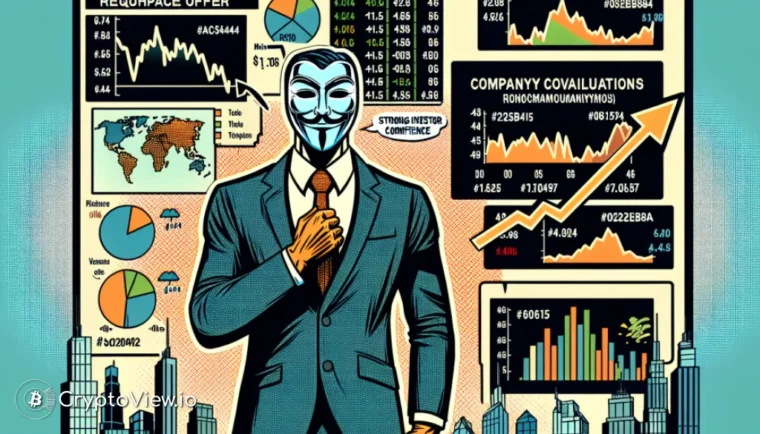
Ripple Labs recently initiated a $1 billion share repurchase offer, valuing the company at an impressive $40 billion. However, this tender offer witnessed historically low participation, a clear indicator of robust Ripple investor confidence and a belief among shareholders that the company’s future valuation will far exceed its current standing.
Price of Ripple (XRP)
This strategic move, reflecting a significant leap from earlier valuations, underscores the firm’s growth trajectory and the perceived long-term potential of its digital asset ecosystem, particularly following key regulatory clarifications.
A $40 Billion Valuation: A Testament to Ripple Investor Confidence?
In a notable development, Ripple Labs’ latest tender offer set the company’s valuation at a staggering $40 billion. This figure represents a substantial increase compared to previous rounds, signaling a strong internal assessment of Ripple’s market position and future prospects. The offer aimed to repurchase shares from private investors, yet the uptake was remarkably low—the lowest in the company’s history. This reluctance to sell suggests that existing shareholders, many of whom have held their positions for years, anticipate even greater appreciation in Ripple’s value down the line. It’s a classic case of *diamond hands* in action, where investors are HODLing onto their stakes, convinced that the best is yet to come.
This sentiment is particularly potent given the backdrop of Ripple’s ongoing advancements and its significant legal victory in 2023 against the U.S. Securities and Exchange Commission (SEC), which clarified XRP’s non-security status for retail sales. Such regulatory clarity has undoubtedly bolstered investor optimism, allowing the company to operate with greater certainty and pursue aggressive expansion strategies.
The Evolving Landscape of Ripple’s Share Valuations
Ripple’s journey through various tender offers illustrates a fascinating progression of its perceived value. Back in January 2024, the company executed a $285 million buyback, which then pegged its valuation at approximately $11.3 billion. At the time, Ripple CEO Brad Garlinghouse publicly expressed that this figure significantly undervalued the company, emphasizing its substantial XRP reserves, which exceeded 40 billion tokens and provided a robust foundation for its balance sheet.
By June 2024, Ripple had scaled up its efforts, launching a $700 million offer at $175 per share, reflecting growing internal confidence amid its expanding global operations. The subsequent $1 billion initiative, which valued the company at $40 billion, as reported by outlets like The Information, encountered minimal participation. This consistent trend of low uptake across escalating valuations suggests a deeply ingrained belief among shareholders in Ripple’s long-term vision and its potential to disrupt traditional finance. Market observers, including those cited by Bloomberg, have often noted that such low participation rates in private tender offers can frequently precede significant upward revaluations for fintech firms.
Strategic Acquisitions and the Enduring Power of XRP
Ripple’s strategic acquisitions have played a pivotal role in strengthening its market position and enhancing its suite of custody and payment solutions. These integrations have streamlined cross-border transactions, enabling the company to process over $30 billion annually. The firm’s commitment to innovation and expansion in the digital asset space is evident in these strategic moves, which are designed to bolster its ecosystem and increase the utility of XRP.
The company’s extensive XRP holdings, exceeding 40 billion tokens, continue to be a cornerstone of its financial strength. These reserves provide Ripple with significant operational flexibility and a competitive edge in the volatile crypto market. The clarity gained from the SEC ruling has also allowed Ripple to more aggressively pursue partnerships and expand its On-Demand Liquidity (ODL) service, further integrating XRP into global payment corridors. This operational prowess, combined with the post-SEC ruling stability of XRP, positions Ripple favorably in the highly competitive digital finance landscape.
Trend of Ripple (XRP)
Navigating the Future: IPOs, Privacy, and Market Impact
Despite its soaring valuation and market success, Ripple has consistently signaled its preference for remaining a private entity. Ripple President Monica Long has frequently downplayed immediate IPO prospects, emphasizing the strategic advantages of operating privately. This approach allows Ripple to pursue ambitious long-term strategies, make nimble decisions, and innovate without the intense scrutiny and quarterly pressures often associated with public markets.
This stance aligns with Ripple’s history of self-funded growth, minimizing dilution while leveraging its robust reserves. Financial publications like Forbes have echoed this sentiment, noting that privacy can enable companies to respond more effectively to dynamic market shifts and evolving regulatory landscapes in key regions across Europe and Asia. For investors tracking the digital asset space, Ripple’s continued focus on internal fortification, ecosystem development, and navigating regulatory complexities offers a compelling narrative of resilience and strategic foresight. Understanding these dynamics is crucial for anyone keen on the future of digital payments.
For those looking to keep a finger on the pulse of such market movements and analyze potential opportunities, platforms like cryptoview.io offer valuable insights and tools. Find opportunities with CryptoView.io