
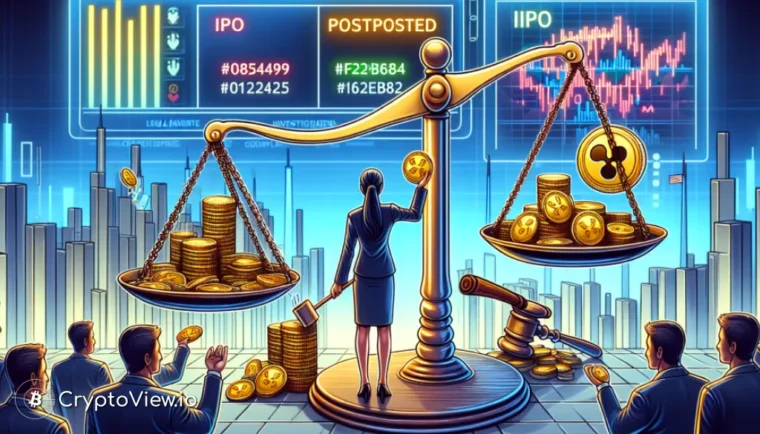
Despite a significant $500 million strategic investment from institutional giants and a pivotal win against the SEC, Ripple has no immediate plans for a public offering. Ripple President Monica Long confirmed the company is well-capitalized, effectively shelving any immediate prospects for a Ripple IPO, ending years of market speculation.
Price of XRP (XRP)
Why the Hold on a Ripple IPO?
Ripple’s leadership has made it clear that despite years of market buzz and previous hints from executives, an Initial Public Offering is not on their immediate agenda. President Monica Long articulated that the blockchain firm is in an exceptionally strong financial position. She noted, “We’re in a fortunate position where we’ve been able to be very well capitalized and fund all of our organic growth, inorganic growth, strategic partnerships, anything we want to do.” This robust capitalization provides the company with the autonomy to expand without the need for public market funding.
This stance brings to a close a long-running narrative that began even before the company’s high-profile legal entanglement with the U.S. Securities and Exchange Commission. Back in 2020, CEO Brad Garlinghouse himself had referred to an IPO as a “natural evolution” for Ripple, sparking considerable anticipation among investors eager to get a piece of the action. However, the subsequent legal battle and Ripple’s demonstrated ability to thrive privately have seemingly altered their strategic direction.
Ripple’s Robust Financials and Expansion
As a privately held entity, Ripple is not obligated to disclose its full annual profits or revenues, a common practice that often fuels investor curiosity. However, market intelligence platform CBI Insights had estimated Ripple’s 2024 revenue at an impressive $1.3 billion. While Monica Long had declined to share specific 2024 revenue figures in her remarks, she did highlight the company’s substantial operational growth, indicating a doubling of its customer base. This expansion was largely attributed to the increasing adoption of its stablecoin, RLUSD, and a globally clearer regulatory environment.
Further underscoring its financial strength, Ripple recently announced a substantial $500 million strategic investment. This capital injection came from a consortium of high-profile institutional investors, including Citadel Securities, Pantera Capital, Galaxy Digital, Brevan Howard, and Marshall Wace. This investment follows what Ripple described as its “strongest year to date,” which also included a $1 billion tender offer, valuing the company at an estimated $40 billion. The company has also been actively repurchasing its outstanding shares, acquiring over 25% in recent years, demonstrating a commitment to providing liquidity for its shareholders and employees even without going public.
The SEC Battle: A Turning Point
The conclusion of Ripple’s multi-year legal saga with the SEC marked a significant milestone for the company and the broader crypto industry. In March, CEO Brad Garlinghouse officially announced that the SEC was dropping its long-standing action against the company. This resolution, while not without its complexities and ongoing appeals in some aspects, largely vindicated Ripple’s position regarding the non-security status of XRP, at least in programmatic sales.
This hard-won legal clarity removed a substantial overhang that had clouded Ripple’s operational and strategic planning for years. While many in the crypto community speculated that a definitive legal victory would pave the way for a public listing, Ripple’s leadership has instead chosen to leverage its newfound regulatory certainty to double down on private growth and strategic partnerships. The ability to navigate and ultimately prevail in such a high-stakes legal battle has undoubtedly bolstered the company’s confidence in its independent trajectory.
Trend of XRP (XRP)
The Broader Crypto Public Market Landscape
While Ripple has opted to remain private for the foreseeable future, the broader cryptocurrency ecosystem has seen several major players enter the public markets. Earlier in 2025, prominent crypto firms such as USDC issuer Circle, Bullish, and Gemini successfully completed their IPOs, indicating a maturing landscape where digital asset companies are increasingly seeking public valuation and access to traditional capital markets. These moves highlight a growing appetite among institutional and retail investors for exposure to the crypto sector through publicly traded entities.
Ripple’s decision to forgo a public listing, despite this trend, suggests a strategic preference for operational flexibility and perhaps a desire to avoid the intense scrutiny and quarterly pressures that come with being a public company. For those who continue to *HODL* XRP or follow Ripple’s ecosystem closely, its private status means a different kind of transparency – one based more on on-chain metrics and company announcements rather than traditional financial reporting. For investors tracking these dynamics and seeking informed decisions, platforms like cryptoview.io offer invaluable insights into digital asset performance and market trends. Discover insights with CryptoView.io


