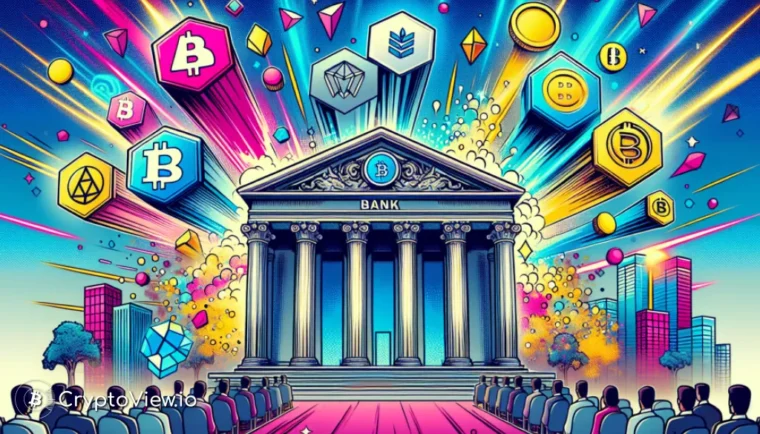
BNY Mellon recently launched a significant tokenized deposit service, marking a major leap into digital assets. This initiative, which saw its pilot roll out in October 2025, strategically includes Ripple as a key participant, underscoring the importance of the Ripple BNY Tokenized Deposit collaboration for institutional blockchain adoption.
Price of Ripple (XRP)
Understanding BNY Mellon’s Tokenized Deposit Innovation
BNY Mellon’s foray into tokenized deposits represents a crucial evolution in how traditional finance interacts with blockchain technology. Unlike volatile cryptocurrencies or even stablecoins, these tokenized deposits are digital representations of funds already held within the bank’s established infrastructure. They are not new forms of currency but rather a more efficient way to move existing capital.
The core concept is simple yet transformative: by digitizing traditional deposits onto a blockchain, BNY Mellon aims to unlock a new era of financial efficiency. The bank had previously launched a pilot version of this service in October 2025, setting the stage for its broader rollout. This innovation is designed to facilitate:
- Faster Payments: Streamlining transaction speeds that traditionally take hours.
- Enhanced Collateral Management: Improving the efficiency with which assets can be pledged.
- Seamless Margin Transactions: Expediting processes critical for institutional trading.
- 24/7 Operability: Moving towards an always-on financial system, breaking free from conventional banking hours.
This strategic move is also viewed as a foundational element for the broader tokenization of various financial assets, from stocks to bonds, paving the way for a more integrated digital financial ecosystem.
Ripple Prime’s Strategic Role in Ripple BNY Tokenized Deposit
Ripple’s involvement in this groundbreaking initiative is through its prime brokerage arm, Ripple Prime, which was acquired for a substantial $1.25 billion in the preceding year. Ripple Prime has been named among the early institutional clients leveraging BNY Mellon’s tokenized deposit service. This places Ripple alongside a prestigious cohort of industry giants, including Citadel Securities, Intercontinental Exchange (ICE), asset manager Baillie Gifford, DRW Holdings, and stablecoin issuer Circle.
For Ripple Prime, access to these tokenized bank deposits offers several compelling advantages:
- Improved Liquidity Management: Enabling more agile and efficient handling of digital assets.
- Enhanced Collateral Efficiency: Optimizing the use of collateral in various financial operations.
- Accelerated Settlement Times: Significantly reducing the time required for transaction finality.
This collaboration firmly entrenches Ripple’s position at the critical intersection where traditional financial systems meet innovative blockchain infrastructure. It’s a clear signal that Ripple isn’t just focused on cross-border payments but is actively engaging with the broader institutional adoption of distributed ledger technology.
The Broader Landscape of TradFi Embracing Blockchain
BNY Mellon’s tokenized deposit initiative isn’t an isolated event; it’s part of a growing trend among established financial institutions leveraging blockchain for operational enhancements. Major players in traditional finance (TradFi) are actively exploring and implementing similar solutions to drive efficiency and innovation:
- JPMorgan Chase: Continues to expand its JPM Coin, a private blockchain-based system for institutional clients, facilitating wholesale payments and tokenized transfers.
- HSBC: Has plans to roll out its own tokenized deposit service to corporate clients in key markets like the U.S. and UAE within the first half of 2026, signaling a widespread institutional commitment to this technology.
BNY Mellon itself has been an active participant in the digital asset space for several years. For instance, in July 2025, the bank partnered with Goldman Sachs to launch a platform that allowed institutional clients to trade tokenized shares of money market funds. These initiatives collectively highlight a paradigm shift, where blockchain is no longer just a disruptor but an integral tool for enhancing existing financial frameworks. The continued institutional embrace, particularly with innovations like the Ripple BNY Tokenized Deposit, suggests a robust future for digital assets within regulated finance.
Trend of Ripple (XRP)
Driving Efficiency and Future-Proofing Finance
The move by BNY Mellon, with Ripple’s strategic participation, underscores a significant industry-wide pivot towards integrating blockchain technology into core banking operations. This isn’t just about faster transactions; it’s about building a more resilient, transparent, and accessible financial infrastructure for the future. As these tokenized systems become more prevalent, the potential for seamless, real-time value transfer across global markets grows exponentially. It’s a clear indication that the ‘digital transformation’ buzzword is rapidly translating into tangible, operational advancements.
For those looking to keep a pulse on these transformative developments and track how traditional finance and crypto are converging, platforms like cryptoview.io offer valuable insights. Staying informed is key in this rapidly evolving landscape. Find opportunities with CryptoView.io