
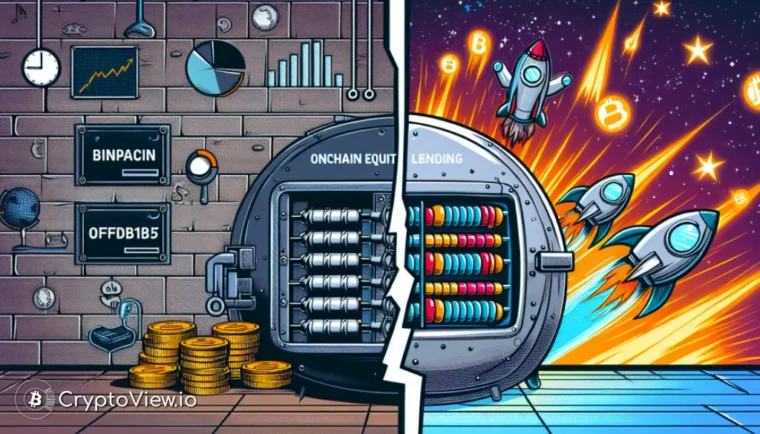
Global equity markets still grapple with settlement delays averaging T+2 or T+3, a significant friction point in an otherwise fast-paced world. The paradigm is rapidly shifting as the emergence of Onchain equity lending is poised to revolutionize traditional finance, offering instant settlement, programmable collateral, and unparalleled transparency that addresses these inefficiencies head-on.
The Archaic Infrastructure of Traditional Finance
For too long, the backbone of equity markets has relied on antiquated systems. Think batch file processing, manual email reconciliations, and collateral transfers that crawl between custodians through opaque, fragmented workflows. This outdated infrastructure is a relic, creating significant drag on efficiency and trust. Settlements often drag, recalls stall, and corporate actions become reconciliation nightmares, exposing participants to unnecessary risk and eroding potential returns. The industry’s continued reliance on these slow, error-prone processes not only hinders innovation but also raises serious questions about its long-term credibility in a digitally transforming world.
Pioneering Real-Time Settlement with Onchain Equity Lending
The answer to these systemic issues isn’t merely an incremental patch; it’s a fundamental leap to onchain solutions. Blockchain technology, with its immutable ledger and smart contract capabilities, cuts through this friction. Trades can settle instantly and securely, eliminating the delays and counterparty exposure inherent in today’s multi-day processes. Smart contracts automate routine tasks, from collateral management to interest payments, removing the need for endless back-and-forth manual checks. This paradigm shift means rules are enforced *before* a loan goes through, rather than discovering risks too late through painstaking post-trade reconciliations. Imagine a system where exposure limits, recall periods, and other critical conditions are met proactively, embedding certainty and security into every transaction.
Moreover, the broader financial ecosystem is already laying the groundwork. Global regulators and market architects are actively exploring tokenized settlement, backed by central bank digital currencies (CBDCs) or tokenized deposits. A 2025 study highlighted the preservability of policy execution on programmable rails, suggesting that if monetary operations can be safely automated, so too can complex equity finance rule sets. Reports from the World Economic Forum and the Bank for International Settlements (BIS) have consistently underscored the transition of tokenization use cases, particularly in securities financing, from pilot programs to full-scale production. This isn’t theoretical anymore; it’s the inevitable direction of market evolution, characterized by tokenized assets and money operating under public law oversight.
Navigating Regulatory Currents and Technical Hurdles
While some skeptics view regulation as a roadblock, the reality is more akin to a metered green light. Europe’s supervised sandbox for blockchain market infrastructure, for instance, provides a live, regulated environment for experimenting with these new models under real exemptions and reporting lines. This initiative is crucial for establishing the legal guardrails and operational blueprints for future equity lending avenues. It demonstrates that regulators are not stifling innovation but rather guiding its safe and compliant integration into existing frameworks. This regulatory foresight is precisely what’s needed for equity lending to seamlessly transition to its onchain evolutionary path.
Of course, challenges remain, such as market fragmentation and the need for robust confidentiality. However, these are not insurmountable. Permissioned networks can effectively handle Know Your Customer (KYC) and whitelisting constraints, ensuring compliance while maintaining privacy. Zero-Knowledge Proofs (ZKPs) offer a powerful solution for protecting sensitive borrower and owner information, allowing for verification without revealing underlying data. Furthermore, the standardization of collateral tokens is essential for maintaining precise and auditable exposure, bringing clarity and trust to the system.
The Inevitable Shift: Why Onchain is the Only Way Forward
Equity lending that remains tethered to outdated batch windows will inevitably fall behind on two critical fronts: basis efficiency and market trust. Delays in settlement don’t just erode returns; they amplify counterparty risk, leaving participants vulnerable when precision should be the standard. By contrast, Onchain equity lending doesn’t merely improve existing processes; it fundamentally transforms them. It enforces transparency by design, significantly compresses systemic risk, and restores the true time value of capital down to the millisecond. The market is already shifting, regulatory frameworks are maturing, pilot programs are validating the model, and institutional appetite for these innovations is growing.
The decision is no longer abstract. Capital markets are moving towards a future defined by efficiency, transparency, and automation. Platforms like cryptoview.io are increasingly vital for investors to track these evolving market dynamics and identify emerging opportunities within this transformative landscape. It’s clear: equity lending belongs onchain, or it risks being left in the past.


