
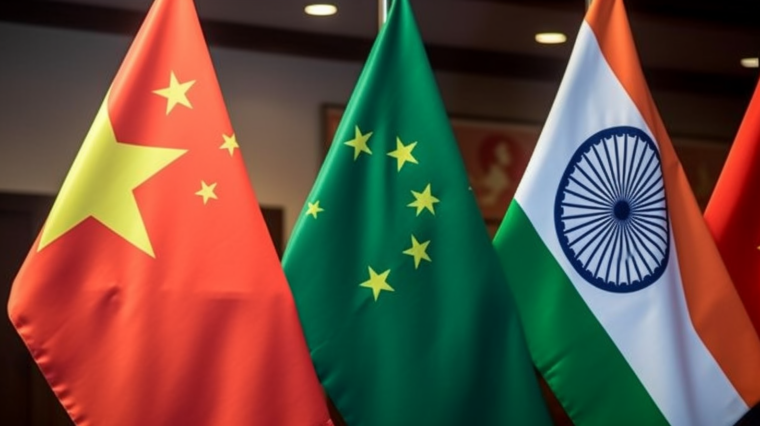
Are we on the brink of witnessing a seismic shift in the global financial landscape? A growing chorus of critics, notably the BRICS nations (Brazil, Russia, India, China, and South Africa), are challenging the longstanding dollar dominance. The discontent stems from potential hazards such as sanctions and U.S. dollar’s value fluctuations, prompting a push for local currency lending.
Why is There Dissatisfaction with the Dollar?
The dominance of the dollar has been a bone of contention for many, particularly those feeling the pinch of sanctions, like Russia. The potential risks associated with holding foreign reserves in dollar-bound assets are now more evident than ever. Add to this the U.S. dollar’s value fluctuations, with the dollar reaching a 20-year high, and the dissatisfaction becomes clear. Such fluctuations can have a real-world impact, with a 10% increase in the dollar’s value potentially reducing emerging economies’ yields by almost 2% within a year.
The Historical Precedence of Powerhouse Reserve Currencies Falling
The history of global finance has shown us that even powerhouse reserve currencies can face downturns. The British pound’s tumble post-World War I is a classic example. If the dollar were to lose its significance, the ripple effects could be profound: a potential deterioration of the currency, a spike in U.S. interest rates, and a drop in demand for U.S. Treasury securities.
Is the Dollar’s Dominance Really in Jeopardy?
Despite these concerns, the notion of the dollar losing its dominance may be premature. Its ubiquity can be attributed to several factors including network effects, the robust U.S. capital markets, and legal reliability. The dollar continues to play a pivotal role on the global scene, in international banking, and in global trade. However, there are signs of diversification, with Russia, for example, increasingly leaning towards the renminbi for its export payments.
Yet, it’s worth noting that this doesn’t necessarily reflect a unanimous BRICS sentiment. Other BRICS nations, such as India, remain wary of China gaining an upper hand. Furthermore, the idea of BRICS introducing a unified currency seems to be a non-starter.
While the U.S. continues to enjoy its prime position, it cannot afford to be complacent. The use of the dollar as a tool for sanctions is a double-edged sword, and the broader issue of global financial stability must always be considered. The dollar’s unparalleled stature is both an asset and a liability, and must be managed with foresight and caution.
In conclusion, although the BRICS nations are making concerted efforts to disrupt the financial status quo, the dollar’s reign is unlikely to end soon. The journey to reshaping global economic dynamics is a complex one, filled with intricacies. However, the geopolitical shifts and changing winds of the financial world cannot be ignored. Only time will tell if the dollar’s dominance will remain unchallenged.
For a comprehensive understanding of the global financial landscape and how it may affect your cryptocurrency investments, consider using applications like cryptoview.io.
Discover More with cryptoview.io

