Recently, Fitch Ratings, a global credit rating agency, lowered the Long-Term Foreign-Currency Issuer Default Rating (IDR) of the United States from ‘AAA’ to ‘AA+’. This U.S. Credit Rating Downgrade was triggered by concerns regarding the country’s fiscal health and governance standards, including a projected fiscal decline over the next three years, an increasing general government debt burden, and a decline in governance standards. Fitch also cautioned about a possible mild recession in the U.S. economy in late 2023 and early 2024 due to tightening credit conditions and weakening business investment.
A Disagreement with Fitch’s Assessment
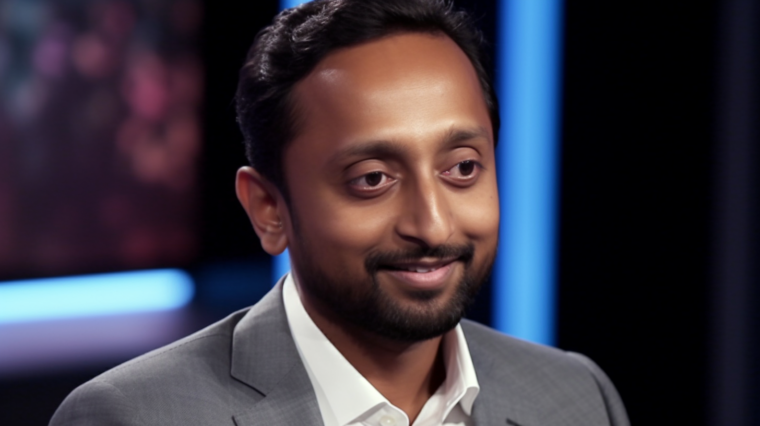
However, Fitch’s evaluation has not been universally accepted. One such critic is Chamath Palihapitiya, a billionaire venture capitalist born in Sri Lanka and now a Canadian and American citizen. During the latest episode of the “All-In Podcast”, Palihapitiya offered his perspective on the downgrade. He argued that Fitch’s downgrade is inconsequential, noting that S&P Global Ratings had already downgraded the U.S. credit rating 13 years ago. This, he suggested, indicated that Fitch was either late in its assessment or was merely reacting out of worry. He further questioned the significance of Fitch as a credit-rating agency, suggesting that its decision might not hold as much significance as some might think.
The Concept of Relativism
Palihapitiya’s primary argument, however, centers on the concept of relativism. He posits that many misunderstand the relative nature of these economic discussions, treating them as absolutes instead. He pointed out that Japan’s debt to GDP ratio is 270% and rising, which is significantly higher than that of the U.S. This, in his opinion, makes the fiscal situation of the U.S. appear much better in comparison.
The U.S. as a Dominant Economic Force
Moreover, Palihapitiya underscored the U.S.’s position as the most critical economic force globally. He contended that, monetarily, other countries are struggling more than the U.S. He anticipates that this trend will persist, with the U.S. maintaining its economic dominance. On the topic of central banks’ foreign reserves, he questioned what realistic alternatives central banks could adopt if they decided to move away from the U.S. dollar. He suggested that doubling down on the euro or the yuan (which he sees as a proxy for the U.S. dollar) may not be practical strategies.
For those interested in staying informed about such significant financial developments, the cryptoview.io application provides a comprehensive platform. It allows users to keep track of these shifts and understand their potential impact on the cryptocurrency market.