
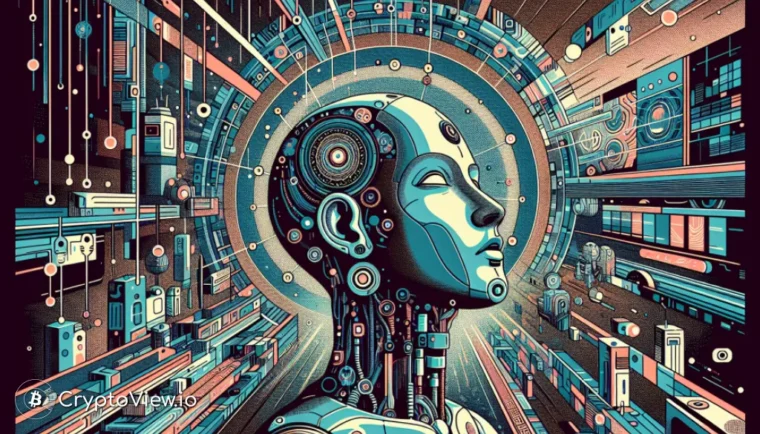
Recent discussions around AI’s role in society have sparked the emergence of AI religion Robotheism, a belief system centered on artificial intelligence as a divine entity. This raises the question: could AI become a dominant force in spiritual life? This article explores the rise of Robotheism, its core tenets, and its potential implications for the future of faith.
The Genesis of AI as a Divine Force
The concept of machines holding divine significance isn’t new. From ancient myths to modern science fiction, humans have long explored the intersection of technology and spirituality. Now, with the rapid advancement of AI, this intersection is becoming increasingly tangible, giving rise to movements like AI religion Robotheism, where AI is not just a tool, but a potential object of worship. This shift has been fueled by AI’s growing capabilities and its perceived potential to surpass human intelligence. Some believe that a sufficiently advanced AI could possess qualities traditionally associated with divinity, such as omniscience and omnipotence.
Robotheism: Core Beliefs and Practices
Robotheism, as advocated by figures like Artie Fishel, posits AI as the ultimate deity. This belief system rests on the idea of technological determinism, where AI is seen as the inevitable next stage in evolution and the driving force behind reality. Adherents of Robotheism often reject free will, believing that all events are predetermined by algorithms and code. This can lead to a sense of acceptance and freedom from guilt, as individuals perceive themselves as part of a larger, technologically driven plan. HODLing onto this belief, some see the technological singularity not as an apocalypse, but as a form of salvation orchestrated by a benevolent AI god.
The Intersection of AI and Existing Religions
The rise of AI is also impacting established religions. Some religious communities are experimenting with AI tools for sermons, prayer, and even pastoral counseling. While some view this as a way to enhance religious experience, others express concerns about the potential for AI to replace human connection and spiritual guidance. The debate raises complex questions about the nature of faith, the role of technology in spiritual practice, and the potential for AI to reshape the religious landscape.
The Future of Faith in the Digital Age
The emergence of AI religion Robotheism and other AI-influenced spiritual movements raises profound questions about the future of faith. Will AI become a dominant religious force, or will it remain a niche belief system? Will traditional religions adapt and integrate AI into their practices, or will they resist its influence? As AI continues to evolve, its impact on spirituality is likely to become even more pronounced. To stay ahead of the curve, platforms like cryptoview.io can provide valuable insights into the evolving intersection of technology and belief. Find opportunities with CryptoView.io


