
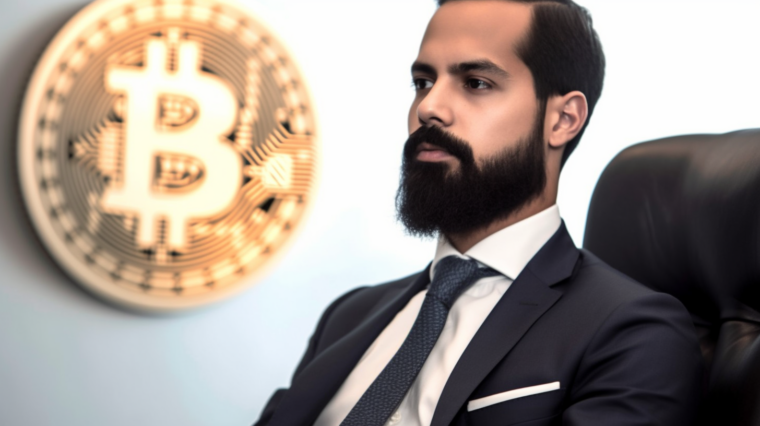
In an unprecedented move, El Salvador became the first country to embrace the “Bitcoin Standard” in September 2021, making Bitcoin its second official national currency alongside the U.S. dollar. This bold move has positioned El Salvador as a practical testing ground for the rest of the world, keenly observing the progress of Bitcoin adoption in El Salvador.
El Salvador’s Bitcoin Vision
The architect behind this revolution is none other than El Salvador’s young and dynamic President, Nayib Bukele. His vision is to radically transform the country’s economy, starting with the integration of Bitcoin. A law has been enacted, obligating businesses to accept Bitcoin as a form of payment. To further support this initiative, the government has amassed a Bitcoin reserve of 2,381 BTC (approximately $70M at the time of writing) and has launched its own Bitcoin wallet, the Chivo Wallet. To facilitate Bitcoin transactions, plans are underway to install 1,500 Bitcoin ATMs across the country.
Bitcoin: A Currency for the Masses?
While the global Bitcoin community and a growing number of Bitcoin expatriates in El Salvador view Bitcoin as the future of money, the sentiment among average Salvadorans remains mixed. The success of Bitcoin as a currency hinges on its acceptance as a medium of exchange in daily commerce by the common man. They need to see the intrinsic value in Bitcoin, even if they don’t fully comprehend the complex system that underpins it.
Despite the optimism, it remains uncertain whether the average Salvadoran will embrace Bitcoin. Most Western Bitcoin investors buy and hold Bitcoin for the long term, believing in its potential to appreciate in value. But for the average Salvadoran worker, who typically lives paycheck to paycheck with little to no savings, the question remains: Does Bitcoin offer any tangible benefits over the U.S. dollar?
Bitcoin vs. Fiat
Since 1971, when the U.S. dollar was taken off the Gold Standard by President Richard Nixon, the global economy has operated on a fiat system. In this system, the value of money is not backed by any tangible commodity but is determined by the government. This system benefits those who own assets but is detrimental to those who save in fiat currency due to inflation. Bitcoin, with its finite supply, offers an egalitarian alternative to this system.
During his stay in El Salvador, Jonathan Martin, a student from The Wharton School, experienced the restrictive costs associated with fiat banking when traveling abroad. He found Bitcoin to be a more straightforward option, despite the initial hurdles and fees associated with Bitcoin ATMs.
However, the adoption of Bitcoin for everyday services still faces some challenges. Many locals, including Martin’s Spanish tutor and driver, were hesitant to accept Bitcoin due to their lack of knowledge on how to handle it.
Despite these challenges, those who understand Bitcoin deeply view El Salvador as more progressive and open-minded than their home countries. The government’s push for Bitcoin adoption, which started two years ago, is still in its early stages. Most workers still prefer cash, and the latency associated with Bitcoin transactions makes it somewhat cumbersome. However, the Lightning Network and greater education about the benefits of Bitcoin could potentially alleviate these issues and increase adoption.
As the story of Bitcoin adoption in El Salvador continues to unfold, you can keep track of the latest developments and trends in the crypto world using platforms like cryptoview.io.
Article edited by Ben Schiller.


