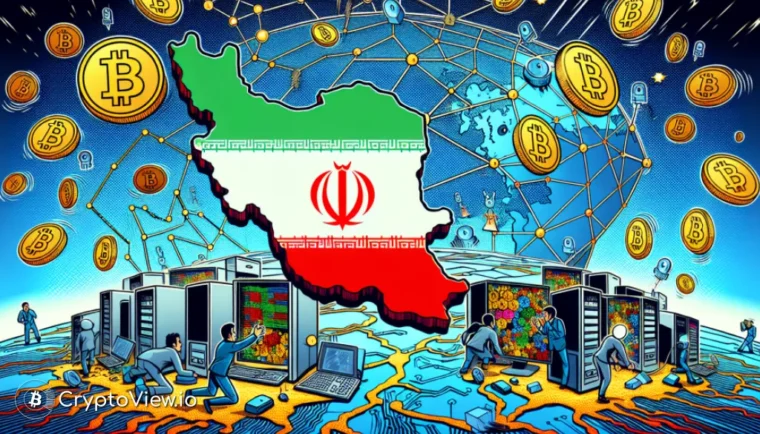
As of early 2026, Iran contributes roughly 2-5% of the global Bitcoin hashrate, a notable decrease from its 2021 peak of 4-8%. This decline underscores the significant impact of recent internet blackouts and government crackdowns, highlighting the escalating Iran Bitcoin mining risks that are reshaping the landscape for miners worldwide. Connectivity, not just cheap power, is now paramount.
Price of Bitcoin (BTC)
The Shifting Paradigm: Connectivity Over Cheap Power
The days when cheap electricity alone guaranteed a competitive edge in Bitcoin mining are rapidly fading into history. Recent events, particularly the widespread internet blackouts experienced in Iran in 2025, served as a stark reminder that digital infrastructure reliability is now as crucial as energy costs. When miners are cut off from the network, even the lowest power rates become irrelevant. This fundamental shift is compelling operations to re-evaluate their strategies, prioritizing jurisdictions with robust, uninterrupted internet access and political stability over mere energy affordability.
Indeed, the global Bitcoin hashrate experienced temporary dips of 2-5% following such outages, illustrating the immediate impact on network operations. While Bitcoin’s inherent difficulty adjustment mechanism ensures the network remains resilient and self-correcting in the long run, these disruptions highlight the increasing sensitivity of mining to external factors beyond just kilowatt-hour prices. The industry is evolving, and with it, the criteria for a successful mining hub.
Navigating the Iran Bitcoin mining risks Landscape
Iran’s geopolitical landscape has historically made it an attractive, albeit volatile, location for Bitcoin mining due to its subsidized energy. However, a series of government crackdowns, protests, and recurrent power outages throughout 2025 severely impacted its mining sector. These instabilities forced many operations offline and prompted a significant migration of hashrate away from the country’s borders. Previously a top-five global player, Iran’s share of the global hashrate has seen a steady decline, with operations seeking more predictable environments.
This miner exodus has redistributed computational power to regions perceived as more stable, such as Kazakhstan and Russia, further diminishing Iran’s role as a major mining hub. For a nation facing economic sanctions, Bitcoin mining had offered a potential avenue for revenue generation and circumventing financial restrictions. However, the persistent Iran Bitcoin mining risks, stemming from both internal policy and infrastructure fragility, have significantly hampered this potential, underscoring the delicate balance between opportunity and operational security in the crypto space.
The AI Factor: New Challenges for Mining Profitability
Beyond geopolitical instability, Bitcoin miners are now contending with a new formidable competitor for grid capacity: Artificial Intelligence (AI) data centers. The surging demand for AI computing power means these data centers are often outbidding miners for available electricity, particularly in energy-rich regions like Texas. This competition leads to frequent curtailments for mining operations, where they are forced to temporarily shut down to free up power for other uses. This trend further erodes the profitability margins for miners who rely solely on cheap grid power.
To remain competitive in this evolving energy market, successful mining operations are increasingly investing in owned energy assets, such as renewable energy farms, or exploring diversified revenue streams like offering AI hosting services alongside their mining activities. This strategic pivot allows them to mitigate the impact of energy curtailments and capitalize on the growing demand for high-performance computing, proving that *diamond hands* are needed not just for holding BTC, but for adapting business models too.
Trend of Bitcoin (BTC)
Global Network Resilience and Future Outlook
Despite the localized disruptions caused by events in Iran and other regions, the global Bitcoin network has consistently demonstrated remarkable resilience. The network’s automatic difficulty adjustment mechanism, which recalibrates every 2016 blocks (roughly every two weeks), ensures that even significant shifts in hashrate do not compromise its security or operational integrity. This adaptive feature means that temporary outages, whether government-induced or weather-related, are absorbed by the system, maintaining consistent block times and transaction validation.
However, the recurring nature of these incidents sends a clear signal to the mining industry: long-term success hinges on operational stability and regulatory certainty. Miners are actively seeking out jurisdictions that offer predictable regulatory frameworks, reliable infrastructure, and a supportive environment for digital asset innovation. As the industry matures, the focus will continue to be on optimizing not just hardware efficiency but also geopolitical and energy supply chain robustness. To stay ahead in this dynamic environment, tracking global hashrate movements and geopolitical shifts is crucial. Platforms like cryptoview.io offer valuable insights into these trends, helping participants make informed decisions.
Find opportunities with CryptoView.io