
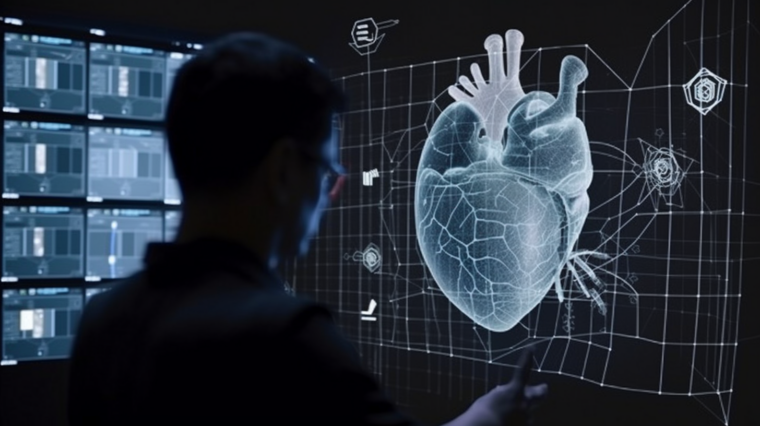
Is it conceivable that artificial intelligence (AI) could revolutionize the field of cardiac diagnosis and treatment? This question has been answered affirmatively by researchers at King’s College London. They have pioneered an end-to-end pipeline that leverages AI to analyze large, unstructured databases of cardiac magnetic resonance (CMR) scans. This development is significant as it promises to unlock valuable insights regarding the effectiveness of treatments and advance healthcare research and guidelines.
AI: A Solution to Data Challenges in Healthcare
Historically, the analysis of extensive CMR databases has been a time-consuming process. The varied organization of data across different institutions and the presence of missing or duplicated files have compounded the challenge. However, the emergence of AI promises to revolutionize this process by providing an efficient solution to these data-wrangling issues.
Researchers at King’s College London have trained a versatile AI algorithm using a large dataset of over 7,000 CMR scans. Initial results have shown that AI can achieve accuracy levels comparable to human experts in segmenting heart chambers. This capability extends across various CMR scanner technologies and a wide range of cardiac diseases.
AI-Powered Data Transformation
The proposed AI-driven pipeline offers an elegant solution to data challenges. It performs “data wrangling” at scale, swiftly navigating through the intricacies of various data structures and efficiently translating them into standardized formats. This transformation makes the data readily accessible and amenable to comprehensive analysis, eliminating the need for laborious manual curation.
The AI algorithm has been trained on an extensive dataset of thousands of CMR scans. This approach enables the AI to recognize and adapt to the nuances present in diverse CMR scanner technologies and handle complex and diverse clinical scenarios.
Clinical Implications and Future Prospects
By automating the analysis of CMR databases, healthcare providers and researchers can expedite data-driven decision-making. This acceleration can facilitate the discovery of effective treatments, inform the development of evidence-based guidelines, and enhance the overall quality of patient care.
The work undertaken by King’s College London researchers signifies a paradigm shift in the analysis of large, unstructured clinical and research databases of CMR scans. By harnessing the power of AI, this innovative pipeline offers a streamlined solution to the challenges posed by disparate data organization and data quality issues.
For those interested in the intersection of technology and finance, it’s worth noting that this advancement isn’t isolated to the medical field. Similar transformations are happening across industries, including the world of cryptocurrencies. For instance, the cryptoview.io application utilizes advanced technologies to provide users with comprehensive cryptocurrency market insights.
In conclusion, the impact of AI on cardiac diagnosis and treatment is profound. With the potential to achieve human-level accuracy and adaptability across a wide range of cardiac diseases and scanner technologies, AI is poised to drive advancements in healthcare research and improve patient outcomes.


