
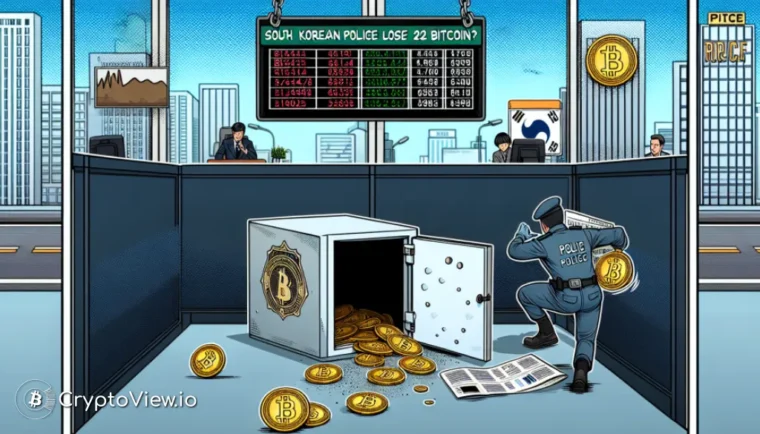
A staggering 22 Bitcoin, valued at approximately $1.5 million at current market prices, mysteriously vanished from a cold wallet held by the Seoul Gangnam Police Station, marking a significant South Korean Police Bitcoin Loss. This digital evidence, seized in November 2021, was discovered missing during a nationwide audit in January 2026, raising serious questions about security protocols for seized digital assets.
Price of Bitcoin (BTC)
The Mystery of the Missing Digital Evidence
The incident at the Seoul Gangnam Police Station has sent ripples through the crypto community and law enforcement alike. Officials confirmed that 22 BTC, initially surrendered as evidence in a virtual asset probe back in 2021, were transferred from their supposedly secure cold storage. Despite the physical hardware wallet (a USB-type device) remaining intact and accounted for, blockchain analysis unequivocally showed the funds moving to an external address. What’s particularly alarming is that this significant outflow went undetected for over four years, highlighting critical vulnerabilities in the monitoring and custody procedures for such high-value digital assets.
The Gyeonggi Bukbu Provincial Police Agency has since launched a comprehensive internal investigation. Their inquiry aims to uncover how this breach occurred without any physical compromise, examining potential factors such as phishing attacks, improper private key management, or even the possibility of insider involvement. As of mid-February 2026, there have been no reports of the missing Bitcoin being recovered.
A Troubling Trend: Recurring Digital Asset Breaches
This isn’t an isolated incident for South Korean authorities. The Gangnam case follows another high-profile digital asset breach that occurred in August 2025, where the Gwangju District Prosecutor’s Office suffered an even larger South Korean Police Bitcoin Loss of 320 BTC. In that instance, officials attributed the loss to a phishing-related compromise during an asset handover, where credentials were stolen, allowing the funds to be drained even as the hardware wallet itself remained physically untouched. These back-to-back incidents underscore a worrying pattern of security lapses within the very institutions tasked with upholding the law and securing evidence.
The repeated failures in safeguarding seized cryptocurrencies, assets that many in the crypto world would typically *HODL* with fierce conviction, are intensifying scrutiny on the operational protocols and technical expertise within South Korean law enforcement. While cold wallets are fundamentally designed to protect private keys by keeping them offline, their effectiveness ultimately hinges on robust human procedures, diligent audits, and impeccable key handling. When these foundational elements falter, even “offline” assets can prove surprisingly vulnerable.
Strengthening Custody Protocols in a Digital Age
The series of losses has put immense pressure on South Korean authorities to re-evaluate and significantly tighten their cryptocurrency custody protocols. The crypto market buzz suggests that the current approaches are clearly insufficient for the complexities of managing digital evidence. Key areas demanding immediate attention include:
- Enhanced Key Management: Implementing more secure, multi-party systems for private key access.
- Multi-Signature Controls: Requiring multiple approvals for any transaction involving seized funds.
- Frequent and Rigorous Audits: Conducting regular, unannounced checks of cold storage devices and blockchain addresses to detect discrepancies promptly.
- Advanced Staff Training: Educating personnel on the latest crypto security threats, including sophisticated phishing techniques and social engineering.
In response to these challenges, the South Korean National Police Agency recently imposed a ban preventing certain officers from purchasing additional cryptocurrencies. This move signals a broader effort to mitigate potential conflicts of interest and reinforce public trust, though it doesn’t directly address the technical vulnerabilities of asset custody.
Trend of Bitcoin (BTC)
The Path Forward for Secure Digital Evidence
For a nation known for its stringent cryptocurrency regulations and proactive enforcement, the recent South Korean Police Bitcoin Loss incidents serve as a stark reminder. Securing digital evidence in the age of blockchain requires far more than simply locking a USB drive in a drawer. It demands a sophisticated, multi-layered security framework that integrates cutting-edge technology with rigorous human protocols. The ongoing investigations and calls for reform indicate a critical juncture for South Korean law enforcement to adapt and evolve its approach to digital asset management. Keeping abreast of market movements and secure practices is paramount, and platforms like cryptoview.io can offer valuable insights into the dynamic crypto landscape.


