
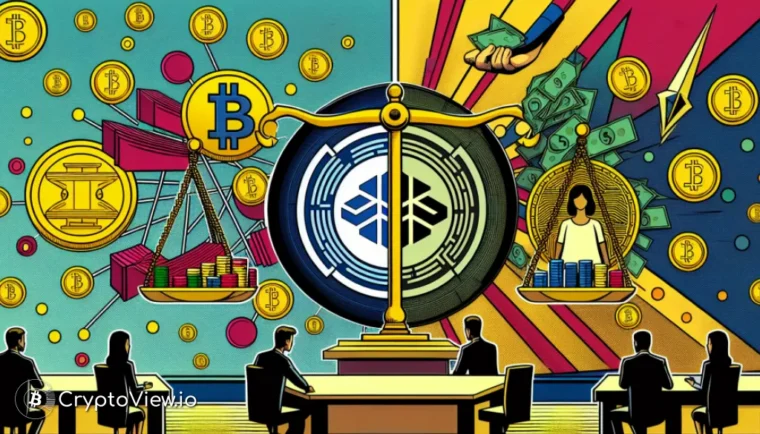
With a market capitalization that has steadily climbed past $150 billion since 2023, stablecoins are undeniably reshaping the financial landscape. This significant growth is intensifying Stablecoins banking competition, compelling traditional financial institutions to reconsider their historically low-yield deposit offerings and adapt to a more dynamic digital asset environment.
The Yield Revolution: A New Imperative for Banks
The days of banks offering negligible interest on savings accounts may be drawing to a close, at least according to influential figures like Stripe CEO Patrick Collison. He posited that depositors are rightfully seeking returns closer to market rates on their capital, a stark contrast to the historical average of around 0.40% for US savings accounts and a mere 0.25% in the EU, as observed in previous years. Collison characterized the practice of relying on cheap deposits without offering competitive yields as a “consumer-hostile” and ultimately unsustainable business model.
The core argument is simple: if stablecoins, which are essentially tokenized fiat moving on blockchain rails, can offer a more attractive return on capital, then traditional banks will be forced to follow suit or risk losing significant market share. This isn’t just about technological innovation; it’s a fundamental shift in economic expectations, driven by the transparency and efficiency inherent in decentralized finance (DeFi) mechanisms.
Regulatory Battles and Industry Resistance
The ascent of stablecoins has not been without its challenges, particularly from established financial players. During the deliberation phases for the GENIUS stablecoin bill in the United States, powerful banking lobbies actively pushed back against provisions that would allow stablecoins to offer interest-bearing opportunities. Their argument, echoed by figures like New York Senator Kirsten Gillibrand in March, was that such offerings would “undermine the banking system” and eliminate the incentive for individuals to keep their funds in local banks. The GENIUS bill, which ultimately passed, did indeed establish a framework for regulated stablecoins but notably included prohibitions on yield-sharing, reflecting the significant influence of traditional financial institutions.
This legislative tug-of-war highlights the tension between preserving the existing financial order and embracing the potential for innovation. While regulators aimed to provide clarity and stability for the burgeoning stablecoin sector, the restrictions on yield-bearing products demonstrate a clear effort to mitigate the direct competitive threat to conventional banking.
The Vision of a Tokenized Financial Future
Despite the regulatory hurdles, the crypto industry largely views the proliferation of stablecoins as an inevitable progression towards a fully tokenized financial system. Reeve Collins, a co-founder of stablecoin issuer Tether, famously articulated this vision at Token2049, suggesting that “All currency will be a stablecoin. So even fiat currency will be a stablecoin. It’ll just be called dollars, euros, or yen.” This perspective posits that the underlying technology will simply become the new standard for all monetary transactions, blurring the lines between traditional and digital assets.
On-chain metrics and market buzz from 2023 indicated a robust expansion of the stablecoin ecosystem, with analysts having previously projected a market boom to $300 billion. This growth was widely anticipated to serve as “rocket fuel” for broader crypto rallies, signaling a maturing market and increased institutional adoption. This long-term outlook underscores the profound implications of Stablecoins banking competition, suggesting that the digital asset revolution is not merely an alternative, but a potential successor to legacy financial rails.
Navigating the Evolving Financial Landscape
The ongoing dialogue surrounding stablecoins and their impact on banking is more than just a debate about interest rates; it’s about the fundamental structure of global finance. As stablecoins continue to gain traction and prove their utility in cross-border payments, remittances, and decentralized applications, the pressure on traditional banks to innovate will only intensify. Institutions that fail to adapt risk becoming relics in a rapidly digitizing world. For individuals and businesses, this shift presents both opportunities and challenges, requiring a keen understanding of the new financial instruments at play.
Understanding these market dynamics is crucial for anyone involved in digital assets. Tools that provide comprehensive insights into stablecoin flows, market sentiment, and regulatory developments are invaluable. Platforms like cryptoview.io offer a consolidated view of the crypto market, helping users track trends and make informed decisions in this evolving landscape. The future of finance will undoubtedly be shaped by how effectively traditional systems integrate with, or compete against, the innovations brought forth by digital currencies and the escalating Stablecoins banking competition. Find opportunities with CryptoView.io


