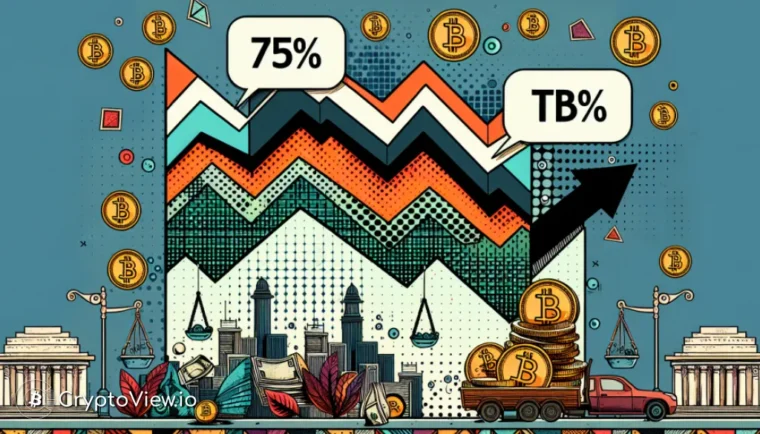
India’s digital asset market saw a dramatic 75% reduction in transaction volume, plummeting to $6.1 billion after the introduction of its stringent India crypto tax policy in February 2022. This aggressive fiscal stance, featuring a 30% tax on gains and a 1% Tax Deducted at Source (TDS), has significantly impacted investor sentiment and capital flows within the nation’s burgeoning crypto ecosystem.
The Harsh Realities of India’s Crypto Tax Framework
The financial year 2022 marked a pivotal shift for Indian crypto enthusiasts, as the government rolled out a taxation regime that many consider one of the world’s most severe. With a flat 30% tax on all virtual digital asset (VDA) gains, irrespective of the holding period, and a mandatory 1% Tax Deducted at Source (TDS) on every transaction exceeding a certain threshold, the landscape for trading became incredibly challenging. This framework was notably reaffirmed in subsequent budgets, including the ninth budget presented by Finance Minister Nirmala Sitharaman, leaving no room for relief or amendments for investors.
For many, particularly those who entered the market during its peak and later faced significant losses in the bear market, this tax structure proved to be a double-edged sword. The inability to offset losses from one crypto asset against gains from another, or to carry forward losses to future tax years, exacerbated their financial woes. This approach contrasts sharply with more lenient tax policies seen in other jurisdictions, leading to widespread discontent among the Indian crypto community and raising questions about the long-term viability of domestic crypto participation under such conditions.
Market Exodus: Investors Seek Greener Pastures
The immediate aftermath of the tax implementation saw a substantial flight of capital and trading activity from Indian exchanges. On-chain metrics and exchange data from early 2022 clearly indicated a sharp decline in domestic transaction volumes, with the reported 75% drop to $6.1 billion being a stark testament to this shift. Many Indian investors, seeking to mitigate the impact of the high tax burden and cumbersome TDS rules, began migrating their holdings and trading operations to international platforms.
This exodus has not only deprived Indian exchanges of liquidity and trading fees but has also stifled the potential for indigenous innovation within the Web3 space. The government’s ‘wait-and-see’ approach to comprehensive crypto regulation, coupled with these stringent tax measures, appears to have inadvertently pushed talent and capital offshore, potentially missing out on the emergence of billion-dollar crypto initiatives that could otherwise flourish domestically. The market buzz suggests that for many traders, the Indian crypto market simply became too unattractive to navigate.
Regulatory Stance: Caution or Hostility?
What initially might have been presented as a temporary measure to pave the way for more comprehensive regulation, as suggested by figures like Sudhakar Lakshmanaraja, founder of the Web3 advocacy group Digital South Trust, has evolved into a perceived stance of hostility. The continued enforcement of steep taxes, even as global regulatory standards evolve and some nations adopt more accommodating frameworks, indicates a deep-seated skepticism towards digital assets among Indian policymakers. Previous statements from top bureaucrats have often reflected a discriminatory attitude, viewing cryptocurrencies with suspicion rather than as a legitimate asset class or technological innovation.
This cautious, almost prohibitive, approach risks isolating India from the global digital economy. While other nations explore regulatory sandboxes, pilot CBDCs, and foster blockchain innovation, India’s rigid India crypto tax policy and regulatory uncertainty create an environment where local startups struggle to compete. For those with *diamond hands*, holding onto their crypto assets through thick and thin, the hope remains that a more progressive regulatory framework will eventually emerge, allowing the Indian market to truly thrive.
The Political Ripple Effect of Crypto Taxation
Beyond the immediate financial implications, cryptocurrency policy has begun to cast a significant shadow over political landscapes worldwide, and India is no exception. The growing influence of crypto investors as a voting bloc is undeniable. We’ve seen how commitments to a favorable crypto environment have swayed voters, with examples like Donald Trump’s outreach to crypto investors in the US, and similar dynamics playing out in elections across South Korea and Japan. These instances underscore that crypto policy is rapidly becoming a crucial electoral topic, standing alongside other fundamental rights and freedoms.
As the digital asset space matures and its user base expands, politicians globally are increasingly recognizing the need to address crypto concerns in their platforms. In India, where a substantial young, tech-savvy population has shown keen interest in cryptocurrencies, the current tax regime could become a significant point of contention in future elections. Investors continue to *HODL* not just their assets, but also their hopes for a future where their participation in the digital economy is not unduly penalized. For those looking to navigate these complex markets, platforms like cryptoview.io offer valuable insights and tools for informed decision-making. Analyze markets with CryptoView.io