
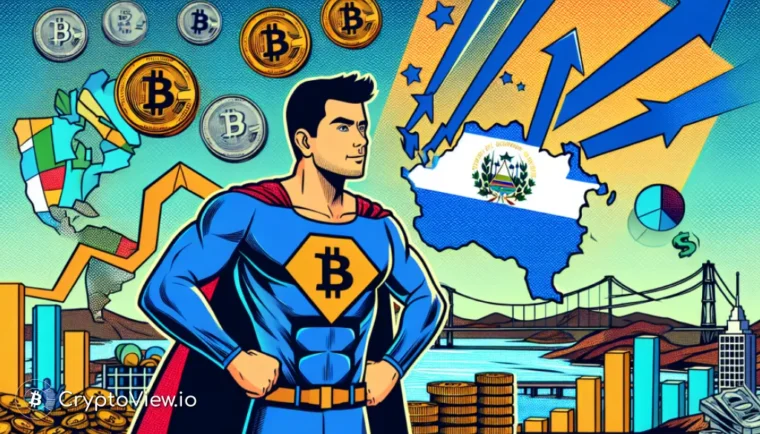
El Salvador’s economic landscape continues to evolve, with a notable 2024 IMF forecast predicting 4% growth, largely influenced by President Bukele’s bold policies. Central to this approach is the nation’s unique embrace of digital assets, making the El Salvador Bitcoin strategy a global case study in financial innovation and national development.
Price of Bitcoin (BTC)
Bukele’s Enduring Popularity: A Security-First Mandate
Since assuming office in 2019, President Nayib Bukele has consistently commanded remarkable public support, a phenomenon largely attributed to his administration’s decisive actions on domestic security. Recent public opinion polls paint a clear picture: an overwhelming 91.9% of participants viewed Bukele positively, with approximately 63% expressing firm support for his leadership. This strong mandate primarily stems from a significant reduction in crime rates and tangible advancements in public safety across the nation.
The Bukele administration has adopted a rigorous stance against gang violence, famously constructing a large-scale correctional facility to house potential offenders. These robust security measures have directly contributed to a notable drop in homicide rates, positively impacting societal well-being and cementing public trust. While the nation’s cryptocurrency ventures have garnered international attention, it’s these domestic security improvements that resonate most deeply with the Salvadoran populace, forming the bedrock of the President’s high approval ratings.
El Salvador’s Bitcoin Strategy and IMF Dynamics
In 2021, under President Bukele’s leadership, El Salvador made global headlines by declaring Bitcoin legal tender, a pioneering move in national financial policy. Despite this bold step, the widespread daily use of Bitcoin within the country has yet to fully materialize. Surveys conducted previously indicated that only a small fraction, about 2.2% of participants, expressed criticism regarding its implementation, suggesting a limited, rather than negative, engagement from the broader public. President Bukele himself acknowledged in a past interview that the project had not achieved its anticipated traction among citizens.
Nevertheless, the government has maintained its commitment, demonstrating what many in the crypto community might call ‘diamond hands’ by continuing its strategy of acquiring Bitcoin daily, steadily bolstering the nation’s digital asset reserves. This unwavering approach underscores the long-term vision behind the El Salvador Bitcoin strategy. Concurrently, El Salvador has navigated complex negotiations with the International Monetary Fund (IMF). While past agreements reportedly included provisions to restrict certain cryptocurrency initiatives, the Salvadoran state has signaled its intent to persist in accumulating crypto assets, highlighting a nuanced balance between international financial relations and national digital asset objectives.
Chivo Wallet’s Operational Hurdles and Future Prospects
The state-backed Chivo digital wallet application, a cornerstone of El Salvador’s Bitcoin integration, has faced its share of operational hurdles since its inception. Discussions with the IMF have frequently touched upon the wallet’s future, largely due to a history of user complaints encompassing fraud, identity theft, and persistent technical glitches. These challenges have prompted considerations regarding the potential transfer or even closure of the platform, signaling a need for a more robust and secure digital payment infrastructure.
Looking ahead, should the public Chivo application be decommissioned, the administration has indicated a willingness to foster an environment where private sector wallet services can thrive within the country. This potential shift could introduce greater competition and innovation in the digital payments space, potentially addressing some of the issues encountered with Chivo. Furthermore, in past developments, El Salvador successfully secured $1.4 billion in financing support from the IMF for 2024, with the fund’s assessment at the time forecasting a 4% economic growth for the nation that year, indicating broader economic considerations beyond just cryptocurrency initiatives.
Trend of Bitcoin (BTC)
The Broader Impact of El Salvador’s Digital Economic Vision
El Salvador’s journey into the realm of digital assets, spearheaded by its unique Bitcoin adoption, continues to unfold as a significant global experiment. While the immediate economic benefits and widespread public adoption of Bitcoin remain subjects of ongoing analysis, the country’s bold move has undeniably positioned it at the forefront of financial innovation. The interplay between strong security policies, an ambitious digital asset agenda, and traditional international financial relationships creates a complex yet fascinating case study for nations contemplating similar paths.
The nation’s commitment to its digital asset reserves, despite market volatility and international scrutiny, reflects a long-term conviction in Bitcoin’s potential. This forward-thinking approach, coupled with improvements in national security, shapes a distinctive narrative for El Salvador on the global stage. For those tracking the evolving landscape of national crypto adoption and its macroeconomic implications, platforms like cryptoview.io offer valuable insights into market trends and policy impacts. The unfolding of the El Salvador Bitcoin strategy provides invaluable lessons for the future of sovereign digital finance.


