
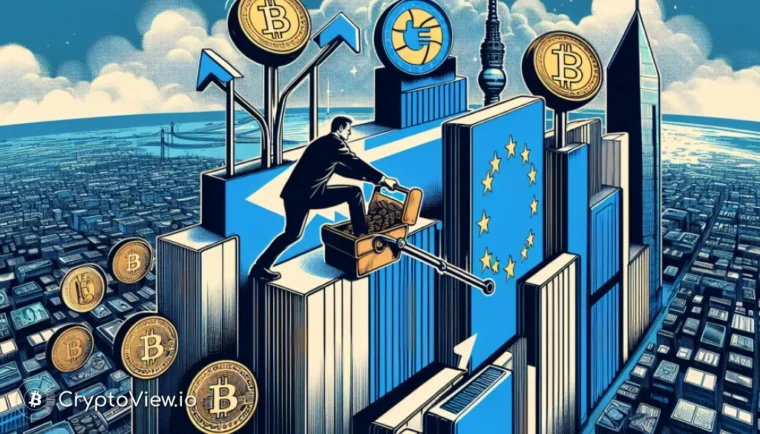
Are you curious about the influence of non-bank entities, including cryptocurrency firms, on traditional banking systems in the European Union (EU)? This article will delve into the EU’s recent decision to investigate these links, as regulators express concerns over potential financial system stress originating from these so-called ‘shadow banks’.
Scrutinizing the Connection Between Banks and Non-Bank Entities
The EU’s regulatory bodies have reportedly decided to intensify their efforts in analyzing the connection between banks and non-bank financial institutions (NBFIs). This decision stems from apprehensions that any strain within these NBFIs could potentially ripple out into the broader financial system. The NBFIs in question encompass a wide range of entities, such as hedge funds, private capital firms, and non-bank entities including crypto firms.
According to the Financial Times, these NBFIs currently hold an estimated $218 trillion, which constitutes nearly half of the world’s financial assets. This significant growth in the sector is attributed to post-crisis regulations that have pushed activities beyond traditional banking, coupled with the flourishing of non-regulated areas like cryptocurrency.
The Role of the European Banking Authority
The European Banking Authority (EBA), under the leadership of José Manuel Campa, will be working in tandem with the European Systemic Risk Board (ESRB) and the Financial Stability Board (FSB). Their collective goal is to comprehend how a financial contagion could potentially arise from a shock in the shadow banking sector. Campa emphasized the importance of understanding the entire underlying chain within NBFIs.
The EBA has already initiated an investigation into the exposure of banks’ balance sheets to NBFIs, which includes loans. However, Campa suggests that these are direct links. Indirect links, on the other hand, encompass the risks of banks getting affected when the value of assets popular with NBFIs falls, and when these non-banking firms sell these assets.
Future Steps for Regulators
Regulators are looking to develop ‘significant minimum areas’ of reporting, which would enable them to obtain transparent data on crucial exposures of non-banks. Campa believes that the first step in this situation is always obtaining information, as this sector is often considered obscure with non-homogenous data quality.
As the investigation unfolds, platforms like cryptoview.io could prove useful for those interested in tracking the impact of these non-bank entities, especially crypto firms, on the wider financial landscape. By providing a comprehensive view of the crypto market, cryptoview.io can help users understand the dynamics of this rapidly evolving sector.
In conclusion, the EU’s decision to investigate the links between banks and non-bank entities, including crypto firms, signifies the growing importance of these entities in the global financial ecosystem. As the investigation progresses, it will be interesting to see what implications it might have for the future of banking and finance.


