
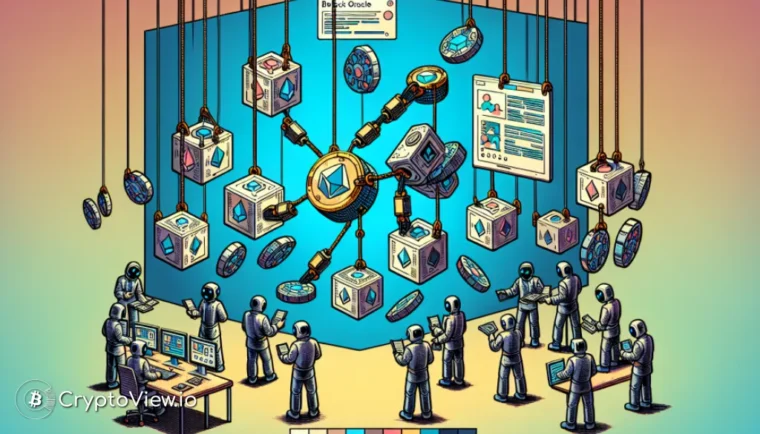
Recent advancements in decentralized technologies show how robot swarms could tackle the blockchain oracle problem robots. These swarms offer a trustless way to bring real-world data onto the blockchain, potentially revolutionizing industries like insurance and environmental monitoring. This approach uses a network of robots to reach consensus on sensor data, offering a decentralized alternative to traditional oracles.
Decentralized Data Collection with Robot Swarms
The core concept involves a network of robots, each equipped with sensors, working together to collect and validate real-world data. These robots utilize Byzantine fault-tolerant protocols to reach a consensus, ensuring data integrity even with some malfunctioning units. Once an agreement is reached, the data is published to the blockchain, becoming available for smart contracts. This method bypasses the need for centralized oracles, enhancing security and transparency. Imagine a network of robots monitoring air quality in a city, providing verifiable, tamper-proof data directly to the blockchain. This data could then trigger automated actions within a smart contract, perhaps releasing funds for environmental remediation when pollution levels exceed a certain threshold. Diamond hands needed for this long-term vision.
Addressing the Blockchain Oracle Problem Robots
Traditional blockchain oracles, while useful, can introduce centralized points of failure. The blockchain oracle problem robots seeks to solve arises from the inherent disconnect between the deterministic world of blockchains and the messy reality of the physical world. Robot swarms offer an elegant solution by distributing trust among multiple independent agents. This decentralized approach minimizes the risk of manipulation or single points of failure. Think of it like a jury – multiple independent observers coming together to reach a verdict, rather than relying on a single judge. This distributed consensus mechanism strengthens the integrity of the data fed to smart contracts.
Reputation and Security in Robotic Oracles
A key feature of these robotic oracle systems is the incorporation of a reputation system. Robots exhibiting malicious behavior or providing faulty data are penalized, losing their influence within the swarm. This self-healing mechanism ensures the long-term health and reliability of the system. It discourages bad actors and prioritizes accurate data contributions. This self-regulating aspect adds another layer of security to the system. By weeding out unreliable robots, the swarm maintains its integrity and trustworthiness over time.
Real-World Applications and Future Potential
The potential applications for robot swarm oracles are vast, spanning from disaster insurance claims verification to environmental monitoring and DePIN networks. Imagine using a swarm to assess damage after a hurricane, providing objective data for insurance payouts. Or consider monitoring remote pipelines for leaks, triggering automated maintenance protocols. The possibilities are truly exciting. While challenges remain, such as scalability and security against sophisticated attacks, ongoing research and development are paving the way for wider adoption. Tools like cryptoview.io can help users navigate this evolving landscape, offering insights into the latest developments in blockchain technology. Find opportunities with CryptoView.io


