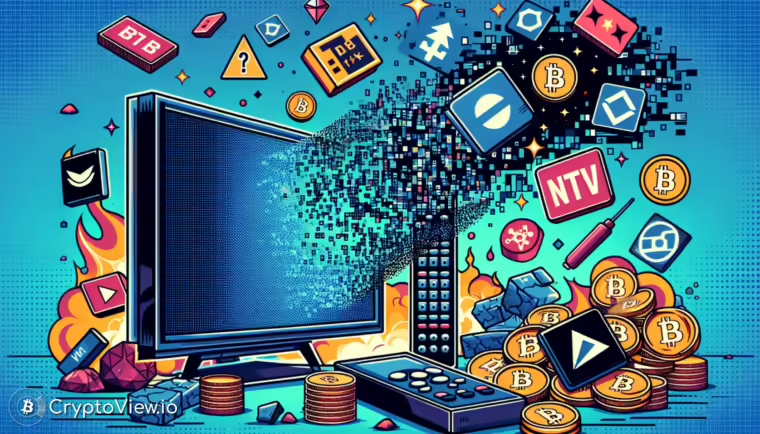
Recently, Sony announced its plan to remove certain TV shows from the PlayStation Store by the end of the year. This move has ignited discussions about digital ownership and NFTs, and the rights of users in the ever-changing digital world.
Challenges of Digital Ownership
Digital content, unlike its physical counterpart, is often bound by licensing agreements and availability restrictions. This can result in content disappearing from online platforms. Sony’s latest decision affects users who have invested in creating digital libraries, only to discover that some of their content is being removed.
The emergence of blockchain technology, with its decentralized and unchangeable properties, presents a potential solution to these issues. Non-Fungible Tokens (NFTs), which represent digital assets such as images, TV shows, music, and in-game items, can be utilized to ensure that people don’t lose ownership of their digital content. The use of NFTs to publish digital content protects user investments, offering them a tangible sense of ownership.
For instance, in the gaming industry, NFTs allow users to transfer items from one server to another and retain them indefinitely, even if the game servers are offline or permanently shut down.
NFTs as a Solution to Sony’s Problem
If blockchain technology were to be embraced for digital content ownership, the effects could be significant. Users could trust in the security and verifiability of their digital assets. In the context of Sony’s TV show removal, if users had NFTs representing their purchased shows, they would maintain proof of ownership, even if the content was deleted from the PlayStation Store.
This shift towards blockchain-based ownership could revolutionize user loyalty. When users are confident that their digital investments are safe and transferable, they are more likely to engage with platforms for longer periods. The sense of ownership and the ability to move assets across platforms or games can strengthen the bond between users and platforms.
Furthermore, the incorporation of blockchain technology in the digital content space, particularly in gaming, presents new monetization opportunities for content creators. This is an aspect that key players in the gaming industry, including Sony, are actively exploring and experimenting with.
Limitations of the NFT Solution
While Sony’s decision to remove TV shows from the PlayStation Store underscores the transitory nature of digital content ownership in centralized systems, blockchain technology and NFTs provide a promising solution, potentially revolutionizing how we interact with and own digital content. However, this solution is not without its drawbacks.
Firstly, storing TV shows on the blockchain would be incredibly challenging due to the large file sizes, making central servers a more suitable option. Secondly, Sony was compelled to remove the movies in question because the license with Warner Bros. was terminated. If the content was published as an NFT and always accessible to users, Sony could potentially face legal issues.
Despite these challenges, NFTs are an evolving technology that is shaping a more secure, transparent, and user-centric digital future.
As we navigate this new era of digital ownership and NFTs, platforms like cryptoview.io can provide valuable insights and tools to help us understand and navigate the complex landscape of cryptocurrencies and blockchain technology.