
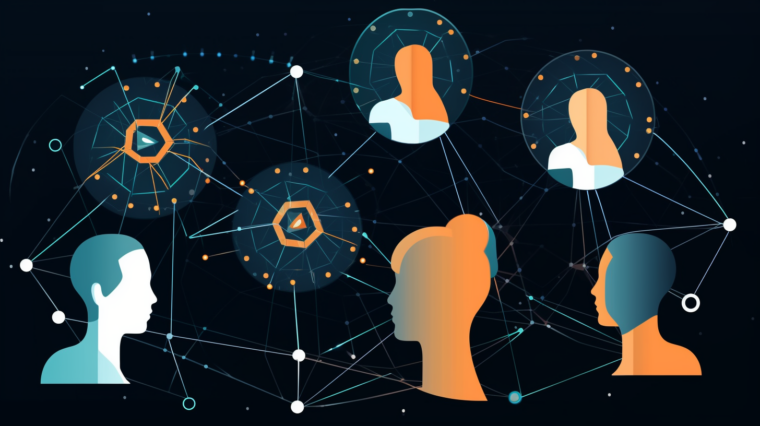
The world stands in awe as artificial intelligence (AI) continues to make striking advancements, prompting many to wonder about the future of this revolutionary technology. However, the widespread acceptance of AI is hindered by a significant hurdle: a deficit of trust and transparency. The answer to this dilemma could lie in blockchain technology, but there are complications. Dominic Williams, the founder and chief scientist of the DFINITY Foundation, a non-profit research and development organization, asserts that there’s currently no reliable method to verify the origins of data used in AI models or how this data influences the model’s precision. Unless AI programs and their underlying infrastructure become more transparent, the lack of trust and skepticism will deter users from fully embracing these models. The fusion of AI and blockchain technology could provide the solution, fostering synergies that could enhance both technologies and drive their integration.
Challenges Facing AI on the Blockchain
At present, most blockchains lack the infrastructure needed to support AI models due to their limited computing power. AI demands substantial computational resources and data sets, but many of the popular blockchains today rely on centralized cloud infrastructure like Google Cloud and Amazon Web Services, which impedes their ability to process and store data at the speed required for AI. Consequently, AI has been running alongside the blockchain, rather than on it, which doesn’t address the trust and transparency issues.
The Potential of Fully Decentralized Blockchain
A fully decentralized blockchain, such as The Internet Computer (ICP) that Dominic Williams helped create, could offer the compute power to match or exceed Web2 cloud servers. This would allow AI models to run entirely within smart contracts, making the training parameters and inputs open source and tamper-proof. For this to be possible, blockchains must be capable of processing data at speeds comparable to Web2 clouds, which can only be achieved through full decentralization. AI on the blockchain could be the next logical step towards long-term success, enhancing AI’s credibility, accountability, and security, and fostering greater trust among users.
Building Trust through Decentralization
Consider an AI model used by medical professionals that generates unreliable responses because there’s no easy way to verify the training data and how it was used. However, in a decentralized environment, the AI model can be built solely from recognized medical textbooks and reputable databases of medical research papers. This transparency allows doctors to trust the results. By operating in a fully open and public environment, AI on the blockchain ensures transparency in data processing, enabling users to understand how their data is used. Additionally, on-chain AI applications can all access and contribute to the same data set, creating a collaborative ecosystem within the blockchain.
The collaboration between AI and blockchain presents a remarkable opportunity to advance both technologies and promote a more trustworthy and reliable exchange of information. The potential of AI on the blockchain is vast, promising seamless integration, open-source tamper-proof smart contracts and rapid content generation for metaverses, games and decentralized social media. The future holds immense possibilities at the intersection of AI and blockchain, driving us toward a decentralized future.
For those interested in exploring this future, cryptoview.io offers a comprehensive platform to monitor and manage your crypto assets while keeping a close eye on developments in the world of blockchain and AI.
Explore cryptoview.io

