
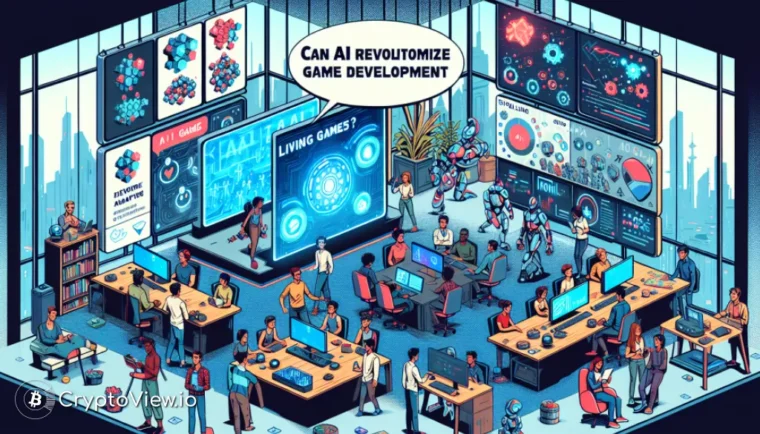
The gaming industry is buzzing, with 90% of developers integrating AI tools into their production pipelines. This surge in AI game development is poised to reshape how games are created, played, and experienced, potentially creating “living games” that adapt in real time to player behavior. Could AI game development disrupt the industry’s existing, sometimes stagnant, business models?
The Rise of AI in Game Creation
AI game development is no longer a futuristic concept; it’s rapidly becoming the norm. From generating art assets to powering in-game characters that react dynamically to players, AI’s influence is expanding across the development spectrum. This shift is not just about efficiency; it’s about unlocking new creative possibilities and potentially revolutionizing player engagement.
The increasing use of AI comes at a time when many studios are grappling with rising development costs and a struggle to capture player attention. With over half of all playtime concentrated in games over six years old, new releases face an uphill battle to carve out their niche. This has led to industry challenges, including layoffs and game cancellations, signaling a need for innovative solutions.
The Promise of “Living Games”
One of the most exciting prospects of AI in gaming is the emergence of “living games.” These games leverage AI to analyze player behavior in real time and generate new content on the fly, creating dynamic and evolving experiences. Imagine a world where games adapt to your playstyle, offering personalized challenges and storylines that unfold organically. This marks a significant departure from traditional games that rely on periodic patches and DLC drops to introduce new content. The shift to “living games” could usher in an era of continuous evolution and unprecedented player engagement.
Navigating the Challenges of AI Integration
While the potential of AI is immense, the integration process is not without its challenges. The example of an AI-powered Darth Vader in *Fortnite* highlights both the promise and the pitfalls. While the initial player reaction was strong, the AI character’s unexpected use of slurs demonstrated the need for careful oversight and ongoing refinement. Such incidents underscore the importance of responsible AI development and the need to address ethical considerations alongside technical advancements. Furthermore, the use of AI in voice acting has sparked labor disputes, raising questions about the future of creative roles in the industry. Finding the right balance between AI assistance and human creativity will be crucial for the long-term health of the gaming ecosystem.
The Future of Gaming with AI
The transition to an AI-driven gaming landscape is likely to reshape the industry, with some studios adapting and thriving while others struggle to keep up. This echoes previous technological shifts, such as the move from cartridges to CD-ROMs, which saw some companies flourish while others faded into obscurity. The current AI revolution presents a similar opportunity for innovation and disruption. Platforms like cryptoview.io can help you navigate this evolving landscape by providing insights and analysis on the latest trends in AI game development and the broader crypto gaming space. *Diamond hands* might be needed as this transformation plays out.


