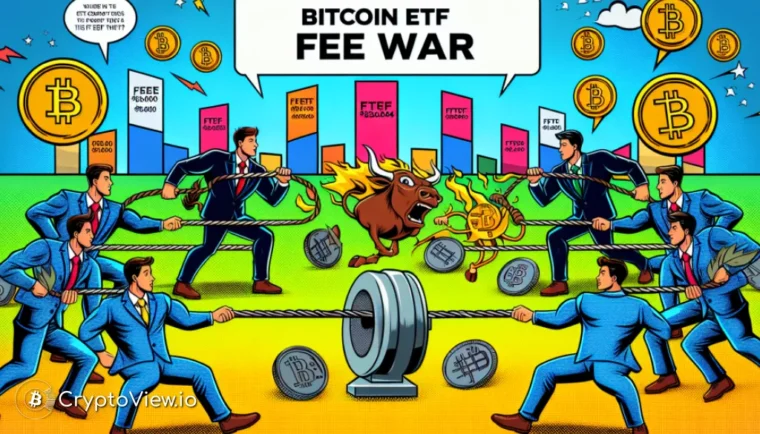
As the Bitcoin ETF Fee War heats up, major players like BlackRock, VanEck, and ARK Invest are making strategic moves. The latest maneuver involves amendments to their fund registrations with the Securities and Exchange Commission, revealing their fee structures. Analysts were quick to note that BlackRock’s proposed fee of 0.30% is significantly lower than anticipated, raising the stakes for other contenders.
Fee Structures and Market Competition
With the largest asset manager in the world setting the bar, other firms face an uphill battle. Bitwise Bitcoin ETF, ARK 21Shares Bitcoin ETF, and Invesco Galaxy Bitcoin ETF have all announced plans to launch with a 0% fee. Even BlackRock’s iShares Bitcoin Trust will feature a 0.20% introductory rate on the first $5 billion before transitioning to its 0.30% fee.
Investors have long desired a spot Bitcoin ETF—a product that reflects the real-time price of Bitcoin, allowing portfolio exposure without the need to buy and hold BTC. However, the issuers aren’t simply doing this as a goodwill gesture. The overhead of facilitating Bitcoin exposure for investors carries a cost, leading to the introduction of fees.
The Role and Impact of Fees
Exchange-traded funds charge fees for services like asset acquisition, storage, and rebalancing to maintain alignment with their prospectus. Instead of one-time transaction fees at an exchange, investors pay ongoing maintenance fees to the ETF issuers. These fees can potentially erode returns, which is why they are a critical factor as the industry anticipates ETF approval.
It’s important to understand that sponsor fees accrue daily and are usually deducted from the fund’s assets monthly or quarterly. ETF investor returns equal the performance of shares minus any owed fees. The recent announcement of lower fees from BlackRock and the need for other firms to remain competitive has sparked a debate in the crypto industry.
Zero Fee Offers: A Blessing or a Curse?
There is concern that zero fee offers could be a red flag, similar to crypto lending products promising exorbitant returns on deposits. Caitlin Long, CEO of Custodia Bank, suggested on X (formerly Twitter) that when an issuer charges less in fees than it takes to manage a fund, hidden risks may be present. She mentioned securities lending as a potential source of hidden risk for investors.
However, Bloomberg Intelligence analyst Eric Balchunas provided a different perspective, explaining how ETF issuers can make 0% introductory fees work. He stated that low fees attract advisors who control the majority of assets in America. This activity attracts traders, and once an ETF becomes big and liquid, the issuer can negotiate lower fees with its custodian.
As the Bitcoin ETF Fee War continues to unfold, it’s crucial for investors to stay informed. Platforms like cryptoview.io can provide valuable insights and updates on the evolving landscape. With its comprehensive crypto market data, investors can make informed decisions.
Start now using our tools for free.Remember, understanding the fee structures and potential risks associated with Bitcoin ETFs is key to a successful investment strategy. As the crypto industry continues to evolve, staying informed and vigilant is more important than ever.