
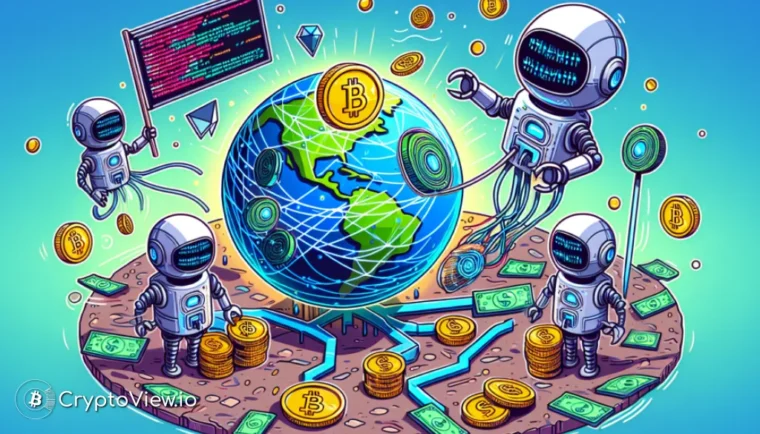
The stablecoin market, which previously surged past $300 billion, is on the cusp of a profound transformation, with autonomous programs poised to become its primary drivers. This shift hinges on the burgeoning potential of AI agents stablecoin liquidity, as these intelligent systems promise to streamline market efficiency and redefine how digital dollars flow across the crypto ecosystem, moving beyond human-led adoption to an era of algorithmic optimization.
AI-Driven Optimization for Fragmented Markets
The proliferation of stablecoins, from dominant dollar-backed assets like Tether and Circle to newer entrants such as PayPal’s PYUSD and synthetic alternatives, has created a diverse yet fragmented landscape. While this fragmentation could lead to liquidity silos and user confusion, it also presents an opportunity for optimization, particularly through the intervention of AI. Industry experts suggest that autonomous AI agents possess the unique capability to navigate this complexity, instantly identifying and shifting liquidity to the most economically efficient stablecoin issuers. This dynamic ensures that fragmentation, rather than being a hindrance, becomes a catalyst for market-level optimization.
By constantly evaluating factors like transaction fees, yield opportunities, and underlying collateral mechanisms, AI agents can compel issuers to compete more fiercely on fundamental economic principles. This competitive pressure is anticipated to compress fees and enhance overall market health, benefiting users with more efficient and cost-effective stablecoin transactions. The implications are significant, potentially reshaping the competitive dynamics among stablecoin providers and fostering an environment where only the most robust and efficient models thrive.
Industry Leaders Eye AI’s Potential
The idea of AI agents playing a pivotal role in the stablecoin sector isn’t just theoretical; it’s a vision shared by several prominent figures in the digital asset space. For instance, in a September 202X Bloomberg interview, Galaxy Digital CEO Mike Novogratz had previously forecasted that AI agents would emerge as the primary users of stablecoins, predicting an explosion in transaction volumes. He envisioned a future where these agents could manage everyday purchases, citing an example of a ‘grocery agent’ that autonomously handles shopping based on user preferences and budget. Such agents, he noted, would likely prefer stablecoins over traditional payment methods like wire transfers or apps, given their speed and programmability.
Echoing this sentiment, the co-founder of Paxos Labs had highlighted that AI agents stablecoin liquidity could act as the ‘X-factor’ for the next wave of stablecoin adoption. This perspective emphasizes how AI could turn market fragmentation into an advantage, allowing liquidity to flow seamlessly to the most efficient stablecoin offerings, ultimately refining market dynamics and fostering greater competition among issuers.
Practical Applications and Emerging Infrastructure
The conceptual framework for AI-driven stablecoin usage is already translating into tangible developments. Cloudflare, a global cloud infrastructure giant, had announced in September 202X its initiative to develop ‘NET dollar,’ a stablecoin specifically designed to support instant transactions by AI agents. Their vision includes personal AI agents capable of immediate actions, such as booking the lowest-priced flights or purchasing products the moment they go on sale, leveraging the speed and efficiency of stablecoin transactions.
Furthermore, discussions around the necessary infrastructure for these AI systems are gaining traction. In August 202X, members of Coinbase’s development team had suggested on X that a long-standing web standard, HTTP 402 ‘Payment Required,’ could enable AI agents to become ‘Ethereum’s biggest power users.’ Around the same time, the co-founder of Anoma had written about the inevitability of AI agent systems and the critical need for intent-based blockchain infrastructure to ensure users retain control over their data and assets. These insights underscore the foundational work being laid to accommodate a future dominated by autonomous agents.
The Future Landscape of Digital Assets
The integration of AI agents into the stablecoin ecosystem marks a significant evolutionary step for digital finance. This convergence promises not only enhanced liquidity and market efficiency but also opens doors to novel applications and services that are currently beyond human operational scale. As AI continues to advance, its capacity to manage complex financial operations autonomously will only grow, potentially ushering in an era where automated systems handle a substantial portion of global transactions. The implications extend to broader economic shifts, where the speed and precision of AI could redefine traditional banking and payment systems.
Looking ahead, some previous forecasts, like the one made by a Tether co-founder, had even suggested that all currencies could eventually become stablecoins by 2030, underscoring the long-term vision for this asset class. While that’s a bold prediction, the undeniable trend points towards greater integration of stablecoins into everyday commerce, driven significantly by AI. For traders and investors navigating this rapidly evolving landscape, tools that offer real-time insights and analytics are becoming indispensable. Platforms like cryptoview.io can provide critical data to help identify emerging trends and opportunities in this AI-powered stablecoin future. Find opportunities with CryptoView.io


