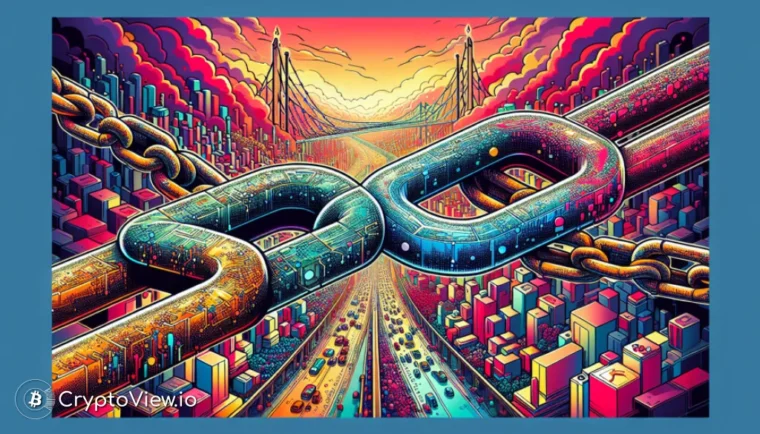
In a significant move for blockchain interoperability, Cardano’s Charles Hoskinson and Solana’s Anatoly Yakovenko have confirmed plans to develop an ADA Solana bridge, aiming to integrate ADA liquidity into the Solana ecosystem. This development, announced on X, marks a pivotal step towards bridging two historically competitive networks, fostering a more connected Web3 landscape.
Price of Cardano (ADA) and Solana (SOL)
Bridging the Divide: A New Era for Interoperability
The crypto world has long watched the spirited rivalry between Cardano and Solana, two powerhouses in the smart contract platform arena. Despite their differing architectural philosophies and community loyalties, a burgeoning consensus around interoperability is now paving the way for unprecedented collaborations. The confirmed intent to create a direct bridge between these ecosystems signals a maturing industry where mutual growth often trumps tribalism.
This initiative isn’t merely about technical integration; it’s a strategic move to unlock dormant liquidity and expand user bases. By enabling seamless asset transfers, both networks stand to benefit from increased utility and broader market participation. The potential for new DeFi applications, cross-chain NFTs, and more robust decentralized exchanges becomes a tangible reality, pushing the boundaries of what’s possible in Web3.
The Genesis of the ADA Solana Bridge Initiative
The concept of an ADA Solana bridge wasn’t born in a vacuum; it emerged from a lively debate on X, where Cardano’s founder, Charles Hoskinson, and Solana’s co-founder, Anatoly Yakovenko, engaged in discussions that quickly escalated. Amidst a heated exchange concerning Solana’s decentralization and Cardano’s utility, Yakovenko stepped in to diffuse tensions, famously stating, “Fighting with Cardano or XRP is incredibly bearish.”
Hoskinson responded positively, indicating an openness to building on Solana. This exchange culminated in both founders affirming their intention to explore a cross-chain bridge. Yakovenko took a decisive step, publicly directing a Solana developer to initiate the project with the clear instruction: “Get ADA bridged to Solana and set up some liquid markets.” While this announcement was met with widespread enthusiasm, some community members expressed a desire for a reciprocal bridge, allowing SOL to flow to Cardano, citing past fluctuations in Solana’s DEX volume. Nevertheless, the founders’ commitment to interoperability remained clear.
Solana’s Track Record in Cross-Chain Integrations
Solana has demonstrated a proactive approach to cross-chain functionality, establishing a robust history of integrating various digital assets. For instance, in mid-December 2024, Solana notably opened its doors to XRP, allowing support for the Ripple token on its network. This move was a testament to Solana’s commitment to expanding its ecosystem’s reach.
Prior to XRP, numerous other major tokens, including Ethereum (ETH), USD Coin (USDC), Bitcoin (BTC), and Dai (DAI), had already been successfully bridged to Solana. These integrations were primarily facilitated through established cross-chain protocols like Wormhole, showcasing Solana’s technical capacity and willingness to connect with diverse blockchain environments. This established precedent provides a strong foundation for the proposed ADA Solana bridge, suggesting that the network is well-equipped to handle the complexities of such an endeavor.
Trend of Cardano (ADA) and Solana (SOL)
Cardano’s Vision for a Multi-Chain Future
Cardano, too, has been a strong proponent of interoperability, with its Midnight protocol serving as a prime example of its commitment. The Midnight project has actively supported a multi-chain future, distributing its historic airdrop across seven major blockchains. The second phase of the Midnight Glacier Drop further underscored this multi-chain eligibility, with Hoskinson himself describing it as a clear *proof of interoperability intent*.
Beyond Midnight, Cardano has also taken significant preliminary steps to empower Bitcoin holders, allowing them to utilize their BTC assets within Cardano’s burgeoning decentralized finance (DeFi) ecosystem without ever having to move their funds off the original Bitcoin chain. These initiatives collectively illustrate Cardano’s strategic pivot towards a highly interconnected blockchain landscape, where assets and liquidity can flow freely across different networks. For those keen on tracking these evolving market dynamics and identifying emerging opportunities, platforms like cryptoview.io offer invaluable insights into cross-chain developments and asset movements. Find opportunities with CryptoView.io