
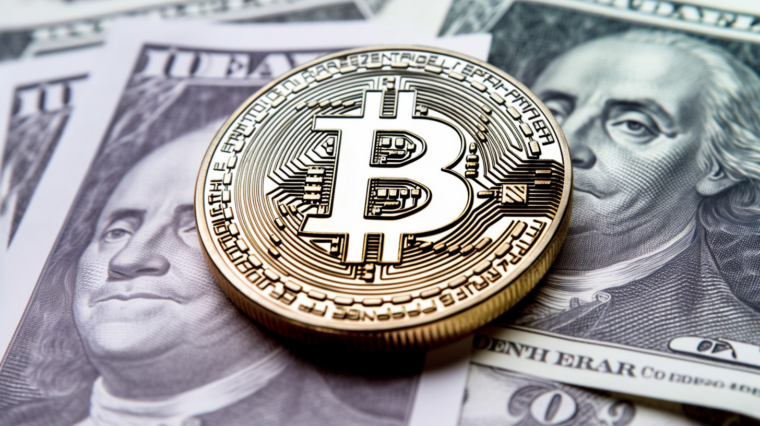
As the stablecoin market grapples with a downturn, PayPal has made its debut with the PYUSD stablecoin. Despite the promise it holds for international transactions, PYUSD has a challenging journey ahead for widespread acceptance. This article will delve into the state of the PYUSD stablecoin, its performance in the midst of market turbulence, and its future prospects.
Unveiling PYUSD: PayPal’s Foray into the Stablecoin Market
PayPal, in collaboration with Paxos Trust, recently launched its stablecoin, PYUSD. As per a transparency report, the assets backing PYUSD were valued at $45.3 million at the end of the previous month. The report provided the first look into the assets tied to the $44.3 million worth of PYUSD in circulation.
Interestingly, while cash deposits backing PYUSD amounted to just over $1.5 million, the majority of reserves were in the form of reverse repurchase agreements collateralized with U.S. Treasuries, totaling $43.8 million. These agreements involve selling securities with an expectation of buying them back at a later date, typically at a higher price. Paxos emphasizes that these transactions are with reputable financial institutions and have an overnight maturity, mitigating the risk of substantial loss.
The Current State of the Stablecoin Market
Stablecoins are digital assets that maintain their value by pegging to a sovereign currency like the U.S. dollar. They often rely on a blend of liquid assets such as cash and government debt for stability. Despite leading stablecoins boasting billions of dollars in assets, the overall market capitalization of stablecoins has seen a steady decrease since the upheaval surrounding Terra’s UST stablecoin last spring. As per CoinGecko, the total value of stablecoins has fallen from roughly $188 billion in May to $131 billion today.
Moreover, various stablecoins have faced challenges. For instance, Circle’s USD Coin (USDC), the second-largest stablecoin in the crypto market, momentarily lost its $1 peg during the failure of Silicon Valley Bank in March. Concerns have also surfaced about Tether’s ability to maintain its $1 value consistently.
The Road Ahead for PYUSD
Upon entering the stablecoin market, PayPal emphasized transparency and a reputable foundation for PYUSD. Despite its well-known brand and transparency initiatives, PYUSD’s market capitalization of $43.4 million is insignificant compared to leading stablecoins like USD Coin (USDC) and Tether (USDT). According to CoinGecko, USDC and USDT, with market capitalizations of $83 billion and $26 billion respectively, together account for 90% of the stablecoin market.
Although PYUSD was listed on centralized exchanges like Coinbase and Kraken at the end of August, its daily trade volumes have remained volatile and comparatively low to other stablecoins. This suggests a lukewarm demand for PYUSD. Amid these ongoing challenges in the crypto market, PYUSD has a tough road ahead to establish itself as a significant player in the crypto space.
However, platforms like cryptoview.io can help users navigate the complex world of cryptocurrencies and make informed decisions. Cryptoview.io provides a comprehensive view of the crypto market, which can be beneficial for those considering PYUSD or any other cryptocurrency.
Despite the hurdles, the future of PYUSD is not set in stone. As the stablecoin landscape continues to change, PYUSD might yet carve a niche for itself. But for now, it remains a watchful contender in the volatile world of cryptocurrencies.


