
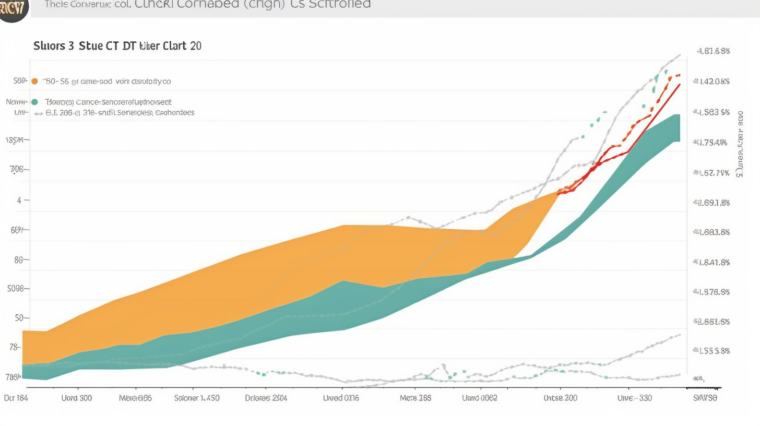
Did you know that the total market capitalization of the top six stablecoins has recently seen an uptick? Yes, it’s true. In fact, over the past fortnight, the combined market cap increases $660m, according to data analytics firm Santiment. This is a noteworthy development, especially considering the significant decline that has been observed since the first quarter of last year when the crypto winter began to intensify.
Understanding the Recent Rise
Recent data reveals that the combined market capitalization of these major stablecoins – USDT, USDC, BUSD, DAI, TUSD, and USDP – has now exceeded $121 billion. This increase of over $660 million in just two weeks suggests a slight recovery from the overall downturn witnessed over the past year and a half.
For context, in May 2022, prior to the Terra collapse, the combined market cap of these stablecoins was roughly $165 billion. So, although the current figures are lower, the recent increase is a positive sign.
External Factors Impacting Stablecoins
It’s important to note that several events have contributed to the previous decrease in market cap. Notably, the FTX meltdown in November last year and the US banking crisis this spring. More specifically, Circle’s multi-billion exposure to Silicon Valley Bank (SVB) had a profound impact on USDC’s performance.
Before these events, USDC’s market capitalization was over $44 billion (as per CoinGecko). However, it now stands at approximately $26 billion.
USDT’s Growing Dominance
While the market cap of most of the aforementioned assets has been slowly decreasing over the past months, USDT is an exception. The leading stablecoin, issued by Tether, has substantially increased its dominance against its rivals. Its market cap even reached a record high of over $84.1 billion in early August, according to CoinGecko’s data.
Keeping track of these market changes can be challenging, which is why platforms like cryptoview.io can be invaluable. Offering comprehensive crypto market analytics, it’s a tool that can help you stay ahead of the curve.
Start now using our tools for free.
Please note that this article does not constitute financial advice. Always do your own research and consult with a professional before making investment decisions.


