
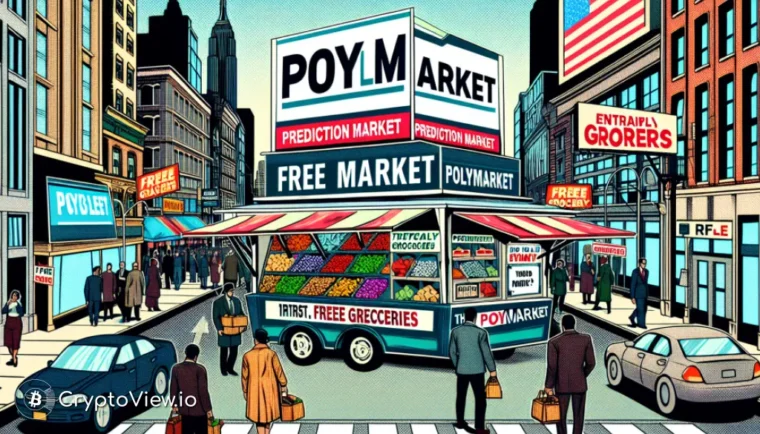
In a memorable display of competitive marketing from February 2024, prediction market giants Polymarket and Kalshi brought their rivalry to the streets of New York City, offering free groceries amidst rising food costs. Polymarket’s ambitious “The Polymarket” pop-up, dubbed the city’s first fully free grocery store, aimed to deliver a substantial community impact, significantly amplifying its presence over a shorter, viral giveaway by its competitor, and establishing the concept of a Polymarket free grocery store.
Prediction Market Rivalry Goes Offline in NYC
The competitive landscape among prediction markets isn’t just playing out on-chain; in early 2024, it spilled into the physical world, specifically the grocery aisles of New York City. With food prices a persistent concern for residents and regulatory pressures mounting on these innovative platforms, both Polymarket and Kalshi orchestrated high-profile, free-grocery events. These initiatives weren’t merely acts of charity; they were shrewd marketing plays, blending viral appeal with a nod to civic responsibility, all while subtly flexing their operational muscle.
The timing was impeccable, aligning with local political discussions around food affordability, including proposals for city-run grocery stores. For prediction markets, which had been facing increasing scrutiny from state regulators, including warnings from the New York Attorney General, these public-facing gestures served as a powerful, albeit carefully staged, reminder of their perceived public service role beyond just facilitating trading.
Kalshi’s Rapid Response: A Three-Hour Blitz
Kalshi was the first to make its move. On February 3, 2024, the event-contracts exchange hosted a three-hour giveaway at Westside Market in Manhattan’s East Village. The offer was straightforward: up to $50 in free groceries per person, with no purchase, sign-up, or hidden conditions. Teased with the audacious tagline, “F it. Free groceries for everyone,” and framed as a celebration of “free markets,” the event, as anticipated, drew massive crowds.
Long lines snaked around the block, aisles were packed, and thousands of New Yorkers left with full bags and a lighter mood. While Kalshi’s RSVP data showed 1,795 advance sign-ups, visual evidence from media coverage suggested a much larger turnout. This tightly scoped, brief, but highly effective stunt proved to be a significant brand-awareness coup, positioning Kalshi as a company that literally delivered when it came to a pressing urban issue.
Polymarket’s Grand Counter: Scale, Philanthropy, and the Polymarket Free Grocery Store
Polymarket’s response was swift and decidedly more ambitious. Announced on the very day Kalshi’s event unfolded, Polymarket unveiled “The Polymarket,” a five-day free grocery store pop-up. This initiative, which commenced on February 12, 2024, was billed as New York City’s first fully free grocery store, offering groceries without cost, income checks, sign-ups, or specified limits.
Going beyond a simple giveaway, Polymarket partnered with Food Bank For New York City, pledging a substantial $1 million donation to bolster food security across all five boroughs. This move framed their project as a tangible, long-term community investment rather than a one-off publicity stunt. Polymarket emphasized meticulous planning, signing a lease, undertaking construction, and months of preparation for the five-day pop-up. The announcement itself went viral, garnering over 42 million views and nearly 18,000 likes, even inviting additional public donations to the Food Bank. It was a clear declaration of intent, showcasing not just generosity but a strategic competitive edge.
Impact and Implications: More Than Just Free Food
The contrasting approaches of Kalshi and Polymarket created a fascinating case study in marketing and public relations within the crypto space. Kalshi’s rapid, viral giveaway grabbed immediate attention and rewarded foot traffic, while Polymarket countered with a strategy focused on scale, duration, and significant philanthropy. Both initiatives generated enthusiastic crowds and widespread media coverage, successfully placing prediction markets in the public eye.
However, these moves also sparked skepticism from critics who viewed them as clever marketing thinly disguised as altruism. Regardless of the underlying motivations, for New Yorkers who benefited from the free groceries, the impact was immediate and practical. These events underscored how platforms like Polymarket are navigating a complex environment, balancing innovation with public perception and regulatory demands. Keeping track of such market-moving events and their broader implications can be crucial for traders and enthusiasts alike. Platforms like cryptoview.io offer valuable insights into market sentiment and emerging trends, helping users make informed decisions.
Find opportunities with CryptoView.ioUltimately, the grocery aisle transformed into an unexpected arena in the heating rivalry between prediction market platforms. Whether these initiatives permanently shifted public perception or simply added another compelling chapter to their competitive saga remains a topic of discussion among market observers, but the spectacle of the Polymarket free grocery store certainly left a lasting impression.


