
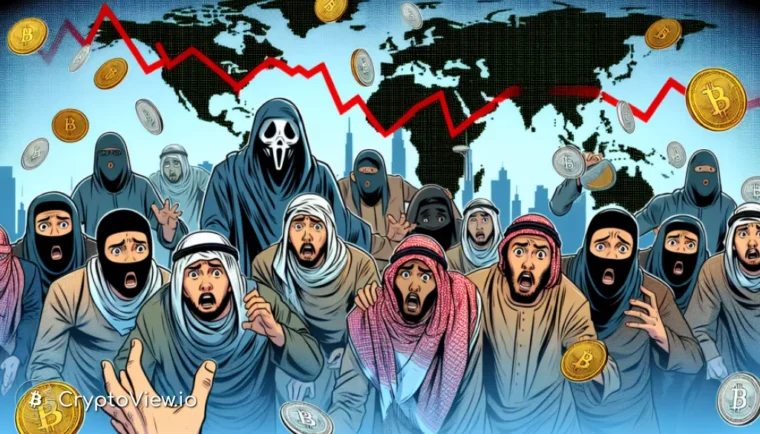
In late 2025, amidst escalating geopolitical tensions, the crypto market saw a significant downturn, with altcoins experiencing double-digit daily losses as investors braced for potential military action. This period highlighted the pronounced Iran conflict crypto impact, underscoring how global instability can trigger sharp corrections and investor apprehension across digital assets, often leading to a flight to perceived safety.
Price of Bitcoin (BTC)
Geopolitical Undercurrents and Market Jitters
The latter half of 2025 was marked by a palpable sense of unease in global markets, stemming from the heightened rhetoric between the United States and Iran. Following remarks by former President Trump, which came after a surprise attack in early 2025, market participants were on edge. The anticipation of further military action created a risk-off environment, significantly impacting speculative assets like cryptocurrencies. This sentiment was amplified by the memory of the 2025 attacks, which had already demonstrated the potential for rapid escalation and market volatility.
During this period, the crypto space, particularly altcoins, already showed signs of fatigue, with many struggling to maintain value. The renewed geopolitical tensions exacerbated this weakness, pushing many digital assets into deeper corrections. Investors, recalling the immediate market reactions to previous confrontations, adopted a cautious stance, leading to intensified sell-offs across the board. This dynamic illustrated how quickly external, non-crypto-specific events can dictate the trajectory of the digital asset landscape.
The Strait of Hormuz: A Strategic Chokepoint and its Iran conflict crypto impact
The Strait of Hormuz, a critical maritime passage for global oil supplies, became a focal point of these tensions. Reports of joint military exercises involving Iran, China, and Russia in the Strait during late 2025 further complicated the geopolitical picture. This strategic display of force was interpreted by many as a direct counter to U.S. presence and warnings, including a past caution from CENTCOM regarding live ammunition naval exercises. Such maneuvers in a vital shipping lane naturally fueled concerns about potential disruptions to international trade and energy markets, which invariably ripple through financial sectors, including crypto.
Iran’s Foreign Minister had previously voiced strong criticism of the U.S.’s regional activities, asserting the Revolutionary Guard Corps’ role in safeguarding peace and stability in the Persian Gulf. These statements, coupled with the military exercises, painted a picture of a region on high alert. The potential for miscalculation or escalation in such a critical area contributed significantly to the broader market anxiety, affecting investor confidence in risk assets.
Domestic Preparations and International Diplomacy
Domestically, Iran made preparations that underscored the seriousness of the situation. The Head of Tehran’s Crisis Management Department had announced the designation of 82 subway stations as shelters, with supplies being delivered. This move, widely reported at the time, signaled a country bracing for potential conflict and contributed to the global perception of imminent danger. Meanwhile, diplomatic channels saw various discussions, with former President Trump acknowledging past negotiations with Iran, though noting their failure to neutralize nuclear capabilities.
Adding another layer to the complex geopolitical chess game, a senior official from a Gulf Cooperation Council member country had indicated Saudi Arabia’s past refusal to allow the U.S. to use its airspace or military bases for potential attacks on Iran, as revealed by Fox News. This particular detail highlighted the challenges faced by any potential U.S. military action and the nuanced regional dynamics at play, further shaping the international response and market sentiment.
Trend of Bitcoin (BTC)
Retrospective: Crypto Market’s Resilience and Past Predictions
Looking back at the period, the crypto market demonstrated its characteristic volatility. While initial reactions to the escalating tensions were largely bearish, with many investors anticipating further downside, the long-term impact proved to be more complex. A notable prediction from late 2025, shared by an on-chain analyst, suggested that if a liquidation wave continued, Bitcoin (BTC) prices might unexpectedly surge to $93,000, potentially liquidating $10 billion in shorts. This forecast, made during a predominantly bearish trend, highlighted the unpredictable nature of crypto markets, where ‘liquidity hunting games’ can lead to rapid price movements contrary to prevailing sentiment. While the immediate surge to $93,000 didn’t materialize exactly as predicted, the observation underscored the market’s capacity for sharp reversals.
The episode served as a stark reminder that geopolitical events, even those far removed from the core technology of blockchain, can have a profound Iran conflict crypto impact. For those navigating these turbulent waters, tools that offer real-time data and comprehensive market insights are invaluable. Staying informed on both macro-economic trends and on-chain metrics is crucial for making informed decisions in such a dynamic environment. You can explore market movements and track key indicators to better understand these influences. Find opportunities with CryptoView.io


