
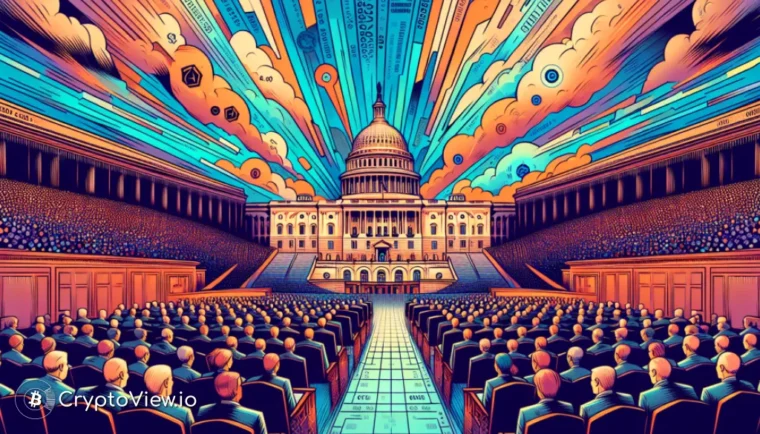
On January 15, 2026, the Senate Banking Committee convened a critical markup session for the Digital Asset Market Clarity Act (CLARITY), aiming to establish a definitive U.S. crypto regulatory framework after years of legislative uncertainty. This pivotal meeting was intended to resolve the long-standing jurisdictional dispute between the SEC and CFTC, marking a potential shift from the industry’s ‘gray zone’ into a robust legal structure.
The Quest for a Clear Rulebook
For too long, the digital asset industry in the United States has navigated a complex landscape, often caught in a regulatory ‘turf war’ between the Securities and Exchange Commission (SEC) and the Commodity Futures Trading Commission (CFTC). The CLARITY Act emerged as a beacon of hope, designed to provide the much-needed clear guidelines and a predictable operating environment. Following its bipartisan passage in the House, the Senate version, championed by key figures like Chairmen Tim Scott and John Boozman, sought to bring this legislative effort to fruition. The industry eagerly watched as the Senate Banking Committee deliberated, understanding that the outcome would shape the future trajectory of innovation and investment in the crypto space.
U.S. Crypto Regulatory Framework: The Sticking Points
Despite significant momentum and bipartisan efforts, the path to a comprehensive U.S. crypto regulatory framework has been fraught with challenges. Lawmakers had spent the preceding holiday period attempting to bridge partisan divides, yet several major issues continued to impede progress during the January 15th session and subsequent discussions. These core disagreements highlighted the complexities of integrating novel digital technologies into existing legal structures.
Key hurdles that have historically slowed the CLARITY Act’s advancement include:
- DeFi Regulation: A persistent inability to agree on how to regulate decentralized finance (DeFi) without inadvertently stifling its innovative potential for developers.
- Token Classification: The fundamental disagreement between the SEC and CFTC over the classification of various digital tokens, which dictates which agency has primary oversight.
- Stablecoin Rewards: Strong opposition from Banking Committee Democrats regarding whether stablecoin issuers should be permitted to offer rewards or interest on their holdings.
While a party-line vote could theoretically push the bill through the committee, political insiders have consistently warned that such an approach would likely doom its chances on the broader Senate floor. With a 60-vote requirement for cloture, genuine bipartisan consensus remains indispensable for the CLARITY Act to advance beyond committee stages and avoid being dead on arrival in the wider chamber.
Market Sentiment: What Past Predictions Revealed
Before the January 15th session, prediction markets offered a glimpse into industry sentiment regarding the CLARITY Act’s prospects. Data from platforms like Kalshi had indicated a 69% chance that the Act would become law before May 2026, with a notable 42% of traders forecasting a breakthrough as early as April. These figures reflected a significant rebound from earlier skepticism observed in late 2025. Similarly, on Polymarket, the odds for the bill’s passage had jumped from a bleak 15% to 35% following year-end updates, signaling to many that the industry’s ‘legislative winter’ might finally be thawing. These forecasts underscored a growing belief among market participants that Congress was closer to delivering regulatory clarity than ever before, despite public commentary often remaining cautious.
Navigating the Political Landscape Ahead
The journey for the CLARITY Act to reach the President’s desk remains complex, intertwined with the broader political calendar. With the 2026 midterm elections looming large, the window for effective bipartisan cooperation is narrowing. Historical patterns suggest that once intense campaign seasons commence, cross-party negotiations frequently break down, leading to legislative gridlock. Should the Banking Committee fail to finalize an agreement by early spring, the CLARITY Act could realistically be pushed into 2027, leaving the crypto industry to contend with regulatory uncertainty for yet another year. The stakes are high; the Senate’s decisions will ultimately determine whether digital assets gain a stable foundation or continue to operate in a state of limbo. Keeping a close eye on legislative developments is crucial for anyone involved in the space, and tools like cryptoview.io can help track market reactions to these ongoing policy shifts. Find opportunities with CryptoView.io


