
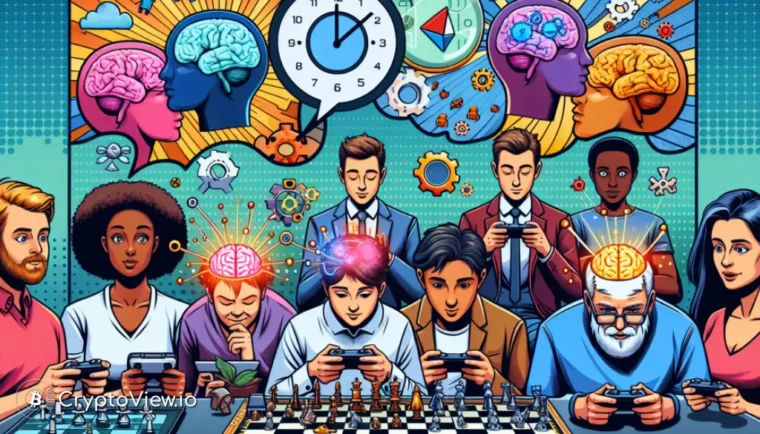
A recent 2025 Nature Communications study revealed that individuals engaged in complex creative activities, particularly demanding video games, exhibited brains appearing 4 to 7 years younger than their chronological age. This compelling research suggests that strategic gaming can significantly impact Video Games Brain Age, offering a surprising defense against cognitive decline.
Unlocking Cognitive Potential Through Digital Play
The relentless march of time invariably impacts our cognitive functions, yet cutting-edge research points towards an unexpected ally in combating neural decline: complex, demanding recreational activities, especially sophisticated video games. Researchers Carlos Coronel and Agustin Ibanez led a pivotal 2025 study, published in the esteemed Nature Communications journal, which utilized advanced machine learning to analyze EEG and MEG brain scans. Their findings indicated that individuals deeply immersed in specific “creative” tasks—including video games, music, dance, and visual arts—possessed brains that appeared remarkably younger than their actual age. This provides compelling evidence that cognitively demanding hobbies can significantly enhance neural plasticity, potentially offering a buffer against age-related decline.
The study meticulously mapped neural activity patterns to estimate a biological “brain age” for each participant. On average, the brains of experienced gamers and artists appeared to be 4 to 7 years younger than those of their non-expert counterparts. This suggests a profound link between engaging with complex digital environments and maintaining youthful cognitive vigor, a concept increasingly relevant in the intricate world of Web3 gaming and digital asset management where strategic thinking is paramount.
The Strategic Edge: Why Complexity Matters
To ascertain whether these activities were indeed the cause of the anti-aging effect, rather than merely attracting individuals already endowed with healthier brains, the researchers conducted a controlled experiment. Non-gamers were tasked with playing StarCraft II, a real-time strategy game renowned for its intense multitasking demands, intricate planning, and rapid attention shifts. Participants dedicated approximately 30 hours over several weeks to this challenging game. Following this training period, these new players demonstrated a measurable slowing of brain aging and a notable increase in brain efficiency.
Crucially, the study highlighted that not all games deliver the same cognitive benefits. A separate control group engaged with Hearthstone, a turn-based card game with a slower pace, and did not exhibit significant cognitive improvements. This disparity underscores that the real-time complexity and high cognitive load inherent in certain activities are the primary drivers of these anti-aging benefits. The researchers drew parallels between the cognitive demands of these complex games and the neural exertion involved in mastering a new language or musical instrument, emphasizing the importance of continuous mental challenge for maintaining peak brain performance. This mirrors the strategic depth often required for successful participation in crypto markets, where quick decision-making and analytical prowess are key.
Beyond Gaming: Holistic Brain Health
While the impact of Video Games Brain Age on cognitive function is undeniable, experts caution against viewing gaming as a standalone panacea for overall health. A separate large-scale study from Western University, while corroborating that frequent gamers performed cognitively as if they were 13.7 years younger than non-gamers, also pointed out a critical distinction: gaming did not necessarily provide the same mental health benefits—such as reductions in depression or anxiety—that are typically associated with physical exercise. This highlights the importance of a holistic approach to well-being.
The emerging consensus among researchers suggests that maintaining neural youth necessitates treating the brain akin to a muscle, requiring diverse and complex workouts. Action and strategy games appear to specifically engage brain networks responsible for attention and decision-making, areas frequently among the first to show decline with age. Therefore, while digital engagement offers significant cognitive advantages, it should complement, not replace, other essential aspects of a healthy lifestyle, including physical activity and social interaction.
Navigating the Future of Cognitive Enhancement
As the digital landscape continues to evolve, particularly with the rise of Web3 gaming and decentralized applications, the opportunities for cognitive engagement are expanding. The intricate economies, strategic resource management, and social dynamics within these new digital frontiers demand high levels of analytical and adaptive thinking. For those looking to stay sharp and potentially enhance their cognitive longevity, exploring these complex digital realms could be a rewarding endeavor. Monitoring these trends and making informed decisions, whether in gaming or investing, requires reliable data and insights. Platforms like cryptoview.io can be invaluable for tracking market movements and understanding the broader digital asset ecosystem, providing the clarity needed to navigate complex environments. Find opportunities with CryptoView.io


