
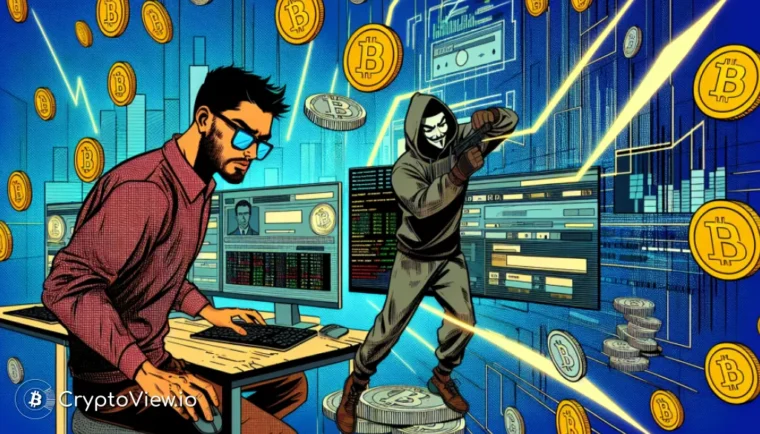
In a significant cybercrime case, a 23-year-old Brooklyn man was recently charged with orchestrating a sophisticated Coinbase phishing scam, allegedly siphoning $16 million in cryptocurrency from approximately 100 users. This elaborate scheme leveraged social engineering to trick victims into transferring their digital assets, highlighting the persistent threat of such illicit activities in the crypto space.
The Anatomy of a Multi-Million Dollar Deception
Prosecutors in Brooklyn have identified Ronald Spektor, known online as “lolimfeelingevil,” as the alleged mastermind behind a sophisticated phishing and social engineering operation that defrauded numerous Coinbase account holders. Spektor reportedly impersonated a Coinbase representative, convincing unsuspecting users that their digital assets were under threat from hackers. Under this guise, he persuaded victims to transfer their cryptocurrency to wallets he controlled.
Once the funds were acquired, Spektor allegedly employed various tactics to launder the stolen digital assets. These methods included utilizing cryptocurrency mixers, swapping services, and even crypto gambling platforms to obscure the money trail. The brazen nature of his activities was further underscored by revelations that Spektor openly boasted about his illicit gains within a Telegram channel dubbed “Blockchain enemies,” where he also claimed to have lost a staggering $6 million in crypto through gambling.
Law Enforcement’s Swift Response and Recovery Efforts
Spektor faced arraignment on 31 charges, encompassing first-degree grand larceny, first-degree money laundering, and participation in a scheme to defraud. The Brooklyn District Attorney Office’s comprehensive investigation, which spanned over the past year, culminated in the seizure of approximately $105,000 in cash and roughly $400,000 in digital assets. Authorities continue their efforts to recover additional stolen funds, emphasizing their commitment to protecting crypto investors.
The collaborative investigation also highlighted the crucial role of external parties. One of Spektor’s victims had previously contacted the pseudonymous blockchain investigator ZachXBT, who, in 2024, published an exposé on the alleged scammer. This earlier investigation brought to light the plight of a victim who reported losing $6 million to the scheme, demonstrating the importance of community vigilance in the decentralized finance landscape.
Coinbase’s Proactive Stance Against Crypto Fraud
Coinbase played a pivotal role in assisting law enforcement, working closely with the Brooklyn District Attorney’s Office and its Virtual Currency Unit. The exchange provided critical support by helping to identify Spektor and his victims, sharing associated on-chain activity, and aiding in the complex process of tracing the stolen funds. This collaboration underscores the increasing partnership between centralized exchanges and legal authorities in combating crypto-related crime.
Earlier in May 2025, Coinbase had also grappled with a significant data breach affecting nearly 70,000 users, which the company estimated could lead to $400 million in damages. In response, the exchange swiftly reimbursed users impacted by social engineering schemes that exploited stolen information and significantly tightened vendor and insider controls. These incidents underscore the ongoing challenges exchanges face in securing user assets against sophisticated cyber threats, even as Coinbase recently announced on December 17, 2025, an expansion of its platform into traditional stock trading and Solana DeFi integration, signaling broader ambitions beyond digital assets.
Safeguarding Your Digital Wealth: Lessons from the Coinbase Phishing Scam
The case of Ronald Spektor serves as a stark reminder of the persistent threats within the cryptocurrency ecosystem. To protect your digital assets, vigilance is paramount. Always verify the identity of anyone claiming to be from a financial institution, especially if they request sensitive information or ask you to transfer funds. Legitimate companies like Coinbase will never ask for your private keys or pressure you into immediate transfers.
- Be Skeptical: Treat unsolicited communications with extreme caution.
- Verify Sources: Always independently verify contact requests through official channels, not through links or numbers provided in suspicious messages.
- Enable 2FA: Utilize two-factor authentication (2FA) on all your crypto accounts.
- Hardware Wallets: Consider using hardware wallets for storing significant amounts of cryptocurrency.
- Stay Informed: Keep abreast of common scam tactics and security best practices.
For those looking to navigate the crypto markets with greater confidence and security, platforms like cryptoview.io offer tools and insights to help users stay informed and manage their portfolios effectively. Staying educated is your best defense against evolving threats.
Find opportunities with CryptoView.io

