
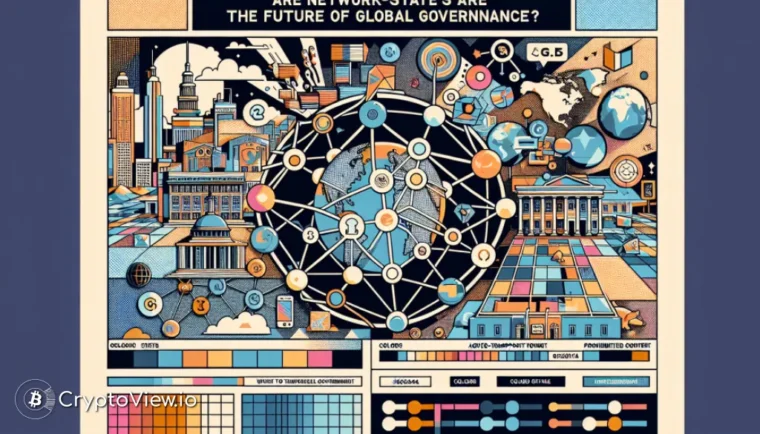
Originating nearly 380 years ago, the traditional nation-state model is increasingly seen as an anachronism in our hyper-connected world, prompting discussions around whether Network states future governance paradigms can offer a more agile and transparent alternative for global communities.
The Digital Erosion of Traditional Sovereignty
The established nation-state structure, a relic predating even the scientific discovery of oxygen and gravity, is experiencing a profound erosion of its relevance in the digital age. This shift is largely driven by the internet and blockchain technology, which provide unprecedented tools for societal organization, allowing individuals to coalesce across geographical boundaries. Traditional governance often relies on a system of trust in unelected bureaucrats, unfamiliar figures, and opaque processes, a model that feels increasingly out of step with modern expectations for transparency and direct participation.
This growing dissatisfaction with centralized control has fueled a movement towards decentralized alternatives. The core ideals of decentralization, transparency, equal access, immutability, and the right to privacy, deeply embedded in the cypherpunk ethos, are now manifesting in concrete attempts to build new forms of community and governance. These emerging models seek to bypass the perceived inefficiencies and lack of accountability inherent in older systems, proposing a future where digital sovereignty holds sway.
Blockchain: The Cornerstone of Decentralized Communities
Blockchain technology offers a robust toolkit for constructing these new forms of digital communities, often referred to as network states. Its inherent properties address many of the shortcomings of traditional governance:
- Inflation-Resistant Digital Currencies: Decentralized currencies provide economic stability, free from the manipulation often associated with fiat systems.
- Immutable Ledgers: Tamper-proof records ensure integrity and transparency in all transactions and agreements.
- Smart Contract Platforms: Automated financial and legal agreements execute without intermediaries, reducing friction and the need for trust in third parties.
- Privacy-Preserving Protocols: Individuals can interact and transact while maintaining their digital anonymity and data sovereignty.
- Decentralized Autonomous Organizations (DAOs): These structures enable transparent community governance, where decisions are made collectively through code, narrowing the domain of required human trust.
These tools collectively lay the groundwork for a new type of societal organization, one built on verifiable trust rather than institutional faith. The concept of Network states future governance leverages these innovations to create self-sustaining, digitally native societies that prioritize individual liberty and collective decision-making.
Challenges and the Road Ahead for Network States
Despite the promise, the path to establishing fully functional network states is fraught with challenges, primarily stemming from the formidable resistance of established nation-states and powerful institutions, including multinational corporations. We’ve seen examples, such as the UK Online Safety Act, illustrating attempts by centralized authorities to exert control over digital infrastructure, directly clashing with the ethos of decentralized sovereignty.
History shows that attempts to create such sovereign digital entities or micronations, like Bitnation in 2014, have yet to yield a fully autonomous and successful network state. Crypto market buzz suggests that existing powers are unlikely to cede influence easily. They possess significant tools—ranging from regulations and litigation to, in extreme scenarios, military force—to prevent the rise of alternative organizational models that could challenge their authority. The resilience required to overcome these hurdles will demand *diamond hands* from those committed to the vision.
Embracing a New Era of Digital Governance
The slow but persistent emergence of network states signifies a profound shift in how we might conceive of governance and community in the 21st century. While the journey is long and complex, the underlying principles of decentralization and transparency continue to gain traction. The vision for Network states future governance is ambitious, aiming to create digital havens where individuals can truly exercise self-determination and participate in a governance model that is inherently more equitable and accountable. This isn’t just a theoretical exercise; it’s a movement building towards a future where digital citizenship holds as much weight as geographical belonging. As we navigate these evolving landscapes, platforms like cryptoview.io become invaluable for tracking the pulse of decentralized movements and digital asset trends, offering insights into the projects shaping this new world. Find opportunities with CryptoView.io


