
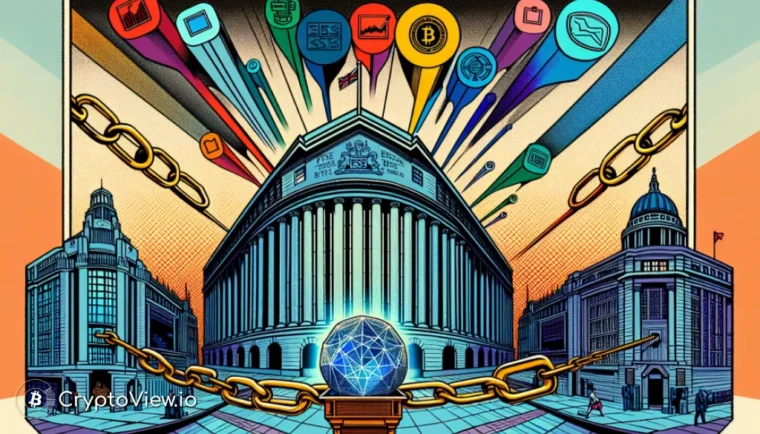
In a significant move for institutional finance, global index provider FTSE Russell has begun publishing its premier equity and digital asset indexes on-chain, leveraging Chainlink’s DataLink service. This pivotal development, which includes the widely tracked Russell 1000, Russell 2000, Russell 3000, and FTSE 100 indexes, showcases how blockchain technology is increasingly delivering institutional-grade market data, with FTSE Russell stock indexes onchain now accessible across various blockchains.
Democratizing Market Data: The On-Chain Imperative
The decision by FTSE Russell to bring its benchmark data onto blockchain networks marks a new era for financial market transparency and accessibility. Through Chainlink’s DataLink, an institutional-grade publishing service, vital market information previously confined to traditional financial infrastructure is now available in a decentralized, tamper-proof environment. This move is particularly impactful given that the Russell indexes alone are benchmarks for over $18 trillion in assets globally, primarily tracking US small- and mid-cap stocks.
This initiative isn’t just about moving data; it’s about enabling a new generation of financial products and services. By providing reliable, on-chain data feeds, developers and institutions can build innovative decentralized applications (dApps), tokenized assets, and sophisticated smart contracts that react directly to real-world market movements. The implications for enhancing liquidity, reducing counterparty risk, and fostering greater financial inclusion are substantial, paving the way for a more integrated and efficient global financial system.
FTSE Russell Stock Indexes Onchain: A Strategic Evolution
FTSE Russell’s foray into the on-chain world isn’t a sudden leap but a calculated strategic evolution. Fiona Bassett, CEO of FTSE Russell, highlighted this initiative as a core part of the company’s broader strategy to foster innovation around *tokenized assets* and exchange-traded funds (ETFs). This forward-thinking approach aligns with their previous ventures into the digital asset space.
Looking back, FTSE Russell has been steadily building its presence in the crypto ecosystem. In January of the previous year, they introduced a suite of digital asset indexes through a collaboration with SonarX, aiming to provide institutional investors with standardized benchmarks for the burgeoning crypto market. Furthermore, in 2023, the firm partnered with digital asset manager Grayscale to launch five distinct indexes designed to categorize the cryptocurrency market by sectors, such as smart contract platforms, utilities, and consumer products. These earlier moves clearly laid the groundwork for the current decision to make FTSE Russell stock indexes onchain a reality, signaling a long-term commitment to digital finance.
Institutional Giants Embrace Tokenization
FTSE Russell isn’t alone in recognizing the transformative potential of blockchain technology. Major financial institutions worldwide are actively exploring and implementing blockchain solutions for various applications, including asset tokenization, settlement, and stablecoin integration. This growing institutional adoption signals a clear shift in how traditional finance views and utilizes distributed ledger technology.
- JPMorgan, for instance, has significantly expanded its tokenization efforts, notably through its private Kinexys blockchain, which now facilitates the on-chain management of private equity funds. This illustrates a practical application of blockchain to streamline complex financial processes.
- Goldman Sachs and BNY Mellon have also stepped into the tokenization arena, offering tokenized money market funds to their clients. These offerings boast benefits like round-the-clock settlement and transparent on-chain ownership tracking, addressing some of the inefficiencies inherent in traditional finance.
- Even banking behemoth Citigroup, back in April, acknowledged that a clearer regulatory environment, particularly concerning stablecoins, was a significant catalyst for increasing institutional interest in blockchain. Their perspective then was that regulatory clarity in the US could unlock greater integration of stablecoins, and blockchain more broadly, into the existing financial system. This sentiment has only strengthened as regulatory frameworks continue to evolve.
The Future of Finance: Interoperability and Efficiency
The on-chain migration of FTSE Russell’s indexes is more than just a technical upgrade; it’s a profound statement about the future direction of global finance. It underscores a growing consensus that interoperability, transparency, and efficiency will be paramount. As traditional assets increasingly find their place on blockchain rails, the demand for reliable, decentralized data feeds becomes critical. This trend is creating a vibrant ecosystem where innovation can truly *to the moon*, fostering new financial instruments and investment strategies.
For investors and market watchers keen on tracking these evolving trends, platforms like cryptoview.io offer invaluable insights into the burgeoning world of digital assets and tokenized securities. Staying informed on these developments is key to navigating the next wave of financial innovation. The integration of established financial benchmarks with blockchain infrastructure is not just a passing fad; it’s a fundamental shift that promises to reshape how we perceive and interact with financial markets.
Find opportunities with CryptoView.io

