
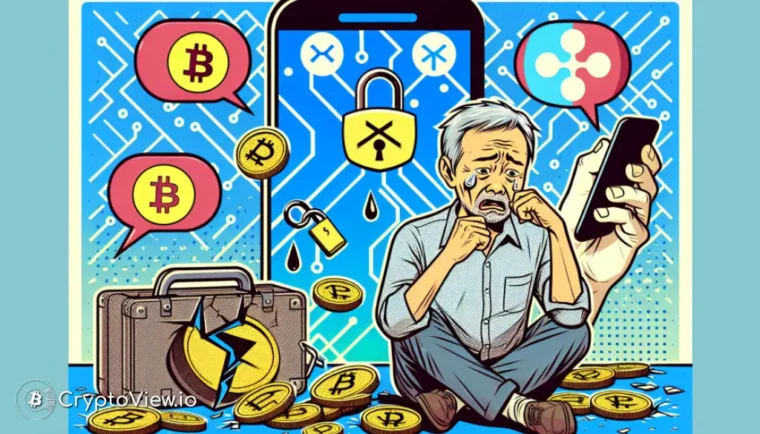
A recent high-profile incident saw approximately 1,209,990 XRP, valued at over $3 million at the time, drained from a retiree’s Ellipal account after a critical seed phrase error, underscoring significant XRP cold wallet risks. This unfortunate event highlights how easily offline security can be compromised by user actions, particularly when interacting with mobile applications that bridge the gap between cold storage and the internet.
Price of XRP (XRP)
The Ellipal Breach: A Costly Lesson in Digital Security
In October 2025, the crypto community was reminded of the razor-thin margin between secure cold storage and vulnerable online exposure. A North Carolina retiree, Brandon Laroque, reported the devastating loss of over $3 million in XRP, representing his life savings, from what he believed was a secure cold wallet setup. The incident began with two small test transactions before a massive transfer of his entire XRP holdings to a new address, subsequently fragmented across dozens of wallets.
Ellipal, the hardware wallet provider, publicly responded, attributing the loss to Laroque’s decision to enter his hardware wallet’s seed phrase into their mobile application. This action, they argued, effectively transformed his cold storage into a hot wallet, granting online access to his private keys and nullifying the air-gapped security that hardware wallets are designed to provide. While Ellipal maintained that its physical devices remained uncompromised, the episode sparked a crucial discussion about user interface clarity and the profound implications of seed phrase management.
Navigating the Peril of Seed Phrase Exposure and XRP Cold Wallet Risks
The core of this security breach lies in the exposure of the seed phrase. A seed phrase is the master key to your cryptocurrency, and its compromise is akin to handing over the keys to your vault. When a seed phrase is entered into any internet-connected device, even a seemingly innocuous mobile app, the fundamental security principle of cold storage—being offline and air-gapped—is instantly violated. This creates significant XRP cold wallet risks, as well as for any other digital asset.
Ellipal highlighted its color-coded interface, where a blue background indicated a cold wallet and orange signified a hot wallet. However, Laroque contended that the distinction wasn’t sufficiently clear, leading to his critical error. This raises an important point: while users bear responsibility for understanding security protocols, wallet providers also have a role in creating intuitive and unambiguous interfaces that prevent such costly mistakes. The industry must prioritize user education alongside robust technical safeguards to truly protect assets.
The Digital Hunt: Tracing Stolen XRP Across Chains
Following the theft, renowned on-chain investigator ZachXBT meticulously traced the stolen XRP. His findings revealed that the attacker leveraged Bridgers (formerly SWFT), a swap service, to convert over 120 Ripple-to-Tron transactions. The funds were then consolidated on the Tron network into a specific wallet (TGF3hP5GeUPKaRJeWKpvF2PVVCMrfe2bYw) before being dispersed to multiple over-the-counter (OTC) desks, many linked to Huione, a Southeast Asian marketplace known for attracting enforcement attention due to illicit transfers.
ZachXBT’s detailed analysis underscored the daunting challenge of recovering stolen funds once they traverse multiple blockchains and enter the opaque world of OTC markets. As he noted, *"Once it’s bridged across chains and hits OTC desks, there’s almost no way back,"* emphasizing the irreversible nature of such transfers. This highlights why prevention, rather than post-incident recovery, remains the crypto community’s strongest defense.
Trend of XRP (XRP)
Fortifying Your Digital Assets: Best Practices to Mitigate XRP Cold Wallet Risks
To minimize XRP cold wallet risks and safeguard your digital assets, adhere to these critical security practices:
- Strict Device Separation: Never enter your hardware wallet’s seed phrase into any internet-connected device, including your smartphone or computer. Use a dedicated, air-gapped device solely for cold storage operations.
- Verify Firmware and Software: Always obtain firmware updates and wallet software directly from the official, verified sources of your hardware wallet manufacturer.
- Understand Wallet States: Familiarize yourself with how your wallet interface distinguishes between cold (offline) and hot (online) states. If unsure, err on the side of caution.
- Multi-Factor Authentication (MFA): Enable MFA wherever possible for exchange accounts and any online services linked to your crypto.
- Secure Offline Backups: Store multiple copies of your seed phrase in physically secure, fireproof, and waterproof locations, ensuring they are truly offline and away from digital threats.
- Be Wary of "Recovery Services": Avoid third-party crypto recovery services, as many are scams that prey on victims of theft. Report incidents directly to law enforcement and reputable cybersecurity experts.
The Ellipal incident serves as a stark reminder that even seasoned investors must remain vigilant. The dynamic nature of the crypto landscape demands continuous education and adherence to best practices. For those looking to stay on top of their portfolio’s security and market trends, platforms like cryptoview.io can offer valuable insights and monitoring tools. Find opportunities with CryptoView.io


