
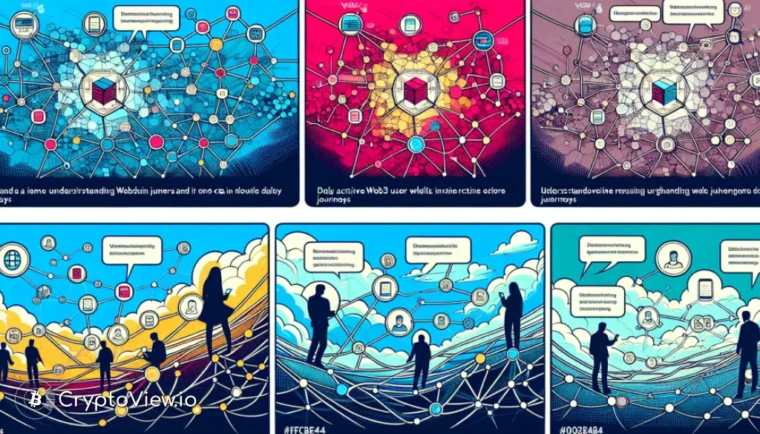
On-chain data reveals a significant shift, with daily active Web3 wallet users increasing by 18% over the past quarter, highlighting a growing yet complex landscape. Understanding these evolving Web3 user journeys is now more critical than ever, moving beyond traditional metrics to truly grasp how individuals interact with decentralized applications and digital assets in real-time.
The Evolution of User Behavior in Decentralized Ecosystems
The decentralized web presents a unique challenge for understanding user behavior. Unlike Web2, where centralized servers and cookies offer clear tracking pathways, Web3 operates on principles of pseudonymity and self-custody. This paradigm shift means traditional analytics tools often fall short, leaving developers and project teams guessing about how users navigate their dApps, interact with smart contracts, or manage their digital assets. However, advancements in on-chain data analysis are beginning to bridge this gap, offering unprecedented insights into genuine user actions rather than inferred patterns.
This new era of analytics allows for a granular view of interactions, from the initial wallet setup to complex DeFi transactions and NFT minting. By analyzing public blockchain data, we can trace the actual steps users take, identify common friction points, and understand the pathways that lead to sustained engagement or abandonment. This isn’t just about transaction volume; it’s about mapping the entire user experience, identifying patterns of adoption, and optimizing the decentralized applications (dApps) for a smoother, more intuitive experience.
Decoding On-Chain Metrics for Enhanced Understanding
For the first time, the transparent nature of public blockchains empowers us to dissect user interactions with remarkable precision. Every transaction, every smart contract call, every token transfer leaves an immutable trace. This rich data trove, when properly analyzed, allows for a comprehensive mapping of Web3 user journeys. Key metrics now extend far beyond simple website visits, encompassing:
- Wallet Activity: Tracking new wallet creations, active addresses, and dormancy periods.
- Transaction Patterns: Analyzing the types, frequencies, and values of transactions, including swaps, liquidity provision, and governance votes.
- dApp Engagement: Monitoring interactions with specific decentralized applications, identifying popular features, and understanding user flow within the dApp.
- Gas Fee Sensitivity: Observing how fluctuating gas prices impact user behavior and transaction completion rates.
- Token Holdings and Movements: Gaining insight into how users manage their portfolios and react to market events.
These on-chain insights are invaluable for developers aiming to build more user-centric dApps and for projects looking to refine their onboarding processes. By understanding where users *actually* go and what they *actually* do, teams can make data-driven decisions that foster greater adoption and retention within the Web3 space.
The Imperative of User Experience in Web3 Adoption
While the underlying technology of Web3 is revolutionary, mainstream adoption hinges critically on user experience (UX). Many early Web3 applications, despite their innovative features, have been plagued by complex interfaces, steep learning curves, and opaque processes. The ability to truly understand how users navigate these systems, identify their pain points, and observe where they get stuck is paramount. A leading Web3 wallet provider recently highlighted that simplifying the initial onboarding process and making transaction flows more intuitive are key to attracting and retaining a broader user base. The days of expecting users to *ape strong* into confusing interfaces are fading; clarity and ease of use are becoming competitive advantages.
By leveraging detailed analytics, projects can iterate on their designs, streamline complex processes, and even anticipate potential issues before they become widespread problems. This focus on improving the user journey is not just about aesthetics; it’s about reducing barriers to entry, building trust, and ultimately, accelerating the widespread acceptance of decentralized technologies. The market buzz suggests that projects prioritizing seamless UX are already seeing higher engagement and stickiness.
Crafting Future-Proof Web3 User Experiences
The journey to mass adoption in Web3 is paved with improved user experiences. As the ecosystem matures, the ability to truly comprehend and respond to how users interact with decentralized platforms will differentiate successful projects from those that struggle. By focusing on data-driven insights into Web3 user journeys, developers can build more intuitive interfaces, create smoother onboarding flows, and design applications that genuinely resonate with a diverse global audience. This means moving beyond assumptions and engaging directly with the empirical evidence provided by on-chain activity. Tools that visualize these complex interactions, like those offered on cryptoview.io, are becoming indispensable for navigating this dynamic landscape and informing strategic development decisions.


