
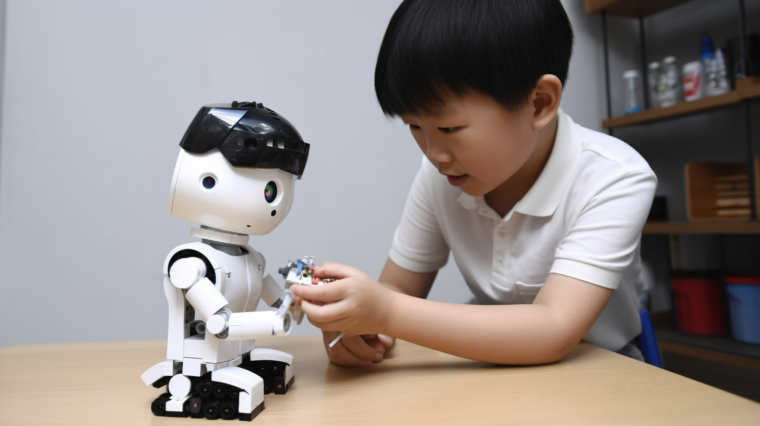
As the world continues to embrace the era of artificial intelligence (AI), one group that warrants careful attention is children. With AI’s integration into various sectors, including education, it’s essential to understand the implications of AI’s impact on kids. This is particularly relevant considering that children have always had a propensity for forming attachments to toys and objects, a phenomenon that is amplified with the advent of AI-enabled chatbots.
The Connection between Children and AI
Psychologist and executive coach Banu Kellner, founder of the SuperHuman Society, highlights the growing concern over the emotional bonds children form with AI-powered toys and games. Kellner notes that these bonds could potentially overshadow human relationships, leading to children becoming reliant on AI instead of learning to navigate complex human interactions. This poses a significant challenge as it’s crucial that AI products aid children in developing life skills, especially social skills, rather than replacing human interactions.
AI’s Integration into Education and Entertainment
As AI technology advances, many companies are eager to bring it to the mainstream, notably in the realms of education and entertainment. Organizations such as Carnegie Learning, Cognii, and Kidsense are implementing AI in educational contexts. For instance, Pinwheel, a child-focused tech company, recently launched PinwheelGPT, a “kid-safe” AI system designed for children aged 7-12, claiming to generate only age-appropriate responses. This allows children to engage with AI technology safely, while parents can monitor and intervene as necessary.
Furthermore, Khan Labs introduced a beta version of Khanmigo for the Khan Academy learning platform. This AI chatbot interacts with students by simulating historical figures, providing an innovative and interactive learning experience.
The Concerns with AI and Artificial Intimacy
However, there’s a growing concern surrounding the concept of artificial intimacy, referring to AI products that simulate relationships, such as AI friends or romantic partners. This could potentially lead to people seeking companionship in AI, as seen with the increased usage of AI chatbots like OpenAI’s ChatGPT for mental health support. While AI can provide instant support, it cannot replace the nuanced and empathetic care that human therapists offer.
AI’s influence extends to social media platforms as well. The majority of teenagers are using digital platforms like YouTube, TikTok, Instagram, and Snapchat, leading to concerns about the impact of AI-generated content on mental health. This is further amplified by the introduction of AI chatbots on platforms like Facebook and Instagram and AI-generated summaries on YouTube.
According to Kellner, the focus should be on using AI to add value rather than becoming a replacement for human interaction. This can be achieved by developing guidelines for parents to ensure that children are set up for a successful future in an increasingly AI-driven world.
As we delve deeper into the world of AI, understanding its implications becomes crucial. For those interested in keeping up with the latest developments in the AI and crypto space, cryptoview.io offers daily updates on the latest news.
Stay updated with the latest in crypto and AI. Get daily updates in your inbox.

