
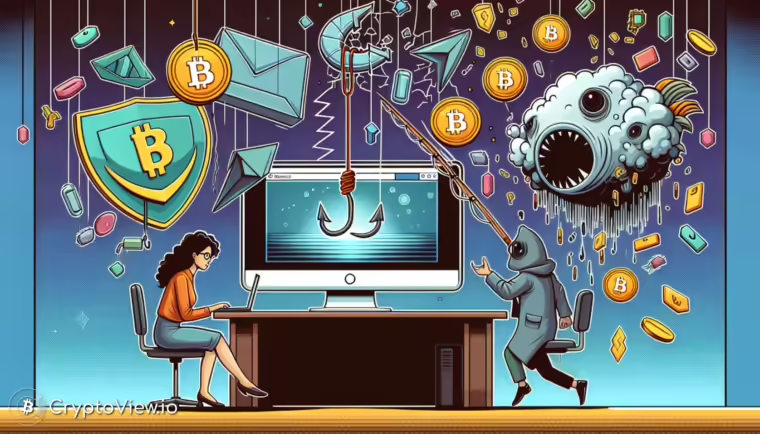
It is often said that a single spark can start a wildfire. This analogy holds true in the digital realm as well, where a single phishing link unleashed chaos on the cryptocurrency landscape, causing widespread panic and uncertainty. The culprit? A former employee of a crypto wallet manufacturer, Ledger, who fell prey to a phishing scam.
Unraveling the Cyber Attack
The phishing scam began when the former Ledger employee’s name and email address appeared in the compromised code. This led to initial speculations that the developer was responsible for the exploit. However, Ledger clarified that the attack was initiated because the former employee fell victim to a phishing scam.
Having gained access to the former employee’s NPMJS account, a package manager for the JavaScript programming language, the attacker was in a position to cause significant damage. Developers use these packages or libraries to build projects, including decentralized apps (dApps), without having to code everything from scratch.
From Access to Exploitation
Once the attacker had access to NPMJS, they pushed a malicious version of the Ledger Connect Kit. This meant that any project using the Connect Kit would have contained harmful code capable of rerouting users’ funds to a hacker’s wallet.
The versions of the Connect Kit affected were 1.1.5, 1.1.6, and 1.1.7, all of which have since been removed from Ledger’s NPM page. The malicious file was live for around five hours, but Ledger believes the window during which funds were drained was less than two hours.
Aftermath and Recovery
Following the incident, Ledger pushed a new version of the Connect Kit (1.1.8) and stated that all wallets using it would be updated automatically. However, they advised users to wait 24 hours before attempting to connect to a dApp.
Ilkka Turunen, Field CTO of cybersecurity firm Sonatype, highlighted the potential scale of the damage, pointing out the vast number of repositories on GitHub that rely on the connect-kit-loader. This incident underscores the importance of developers exercising proper hygiene when using such packages.
The event stirred up considerable anxiety within the industry. Aftab Hossain, an investor and advisor, voiced his concerns on X (formerly Twitter), stating that the ecosystem could be severely compromised if one developer clicking on a phishing link could jeopardize almost every significant app’s frontend.
Meanwhile, Tether, a stablecoin issuer, froze funds linked to the wallet used by the exploiter, which had drained $484,000 from DeFi users. The wallet, linked to a phishing group known as Angel Drainer, had been involved in several other DeFi hacks.
As we navigate the complex world of cryptocurrencies, tools like cryptoview.io can help us stay informed and secure. This incident serves as a stark reminder of the potential risks in the crypto landscape and the importance of vigilance and security.
Stay safe, stay informed, and stay secure with cryptoview.io.


