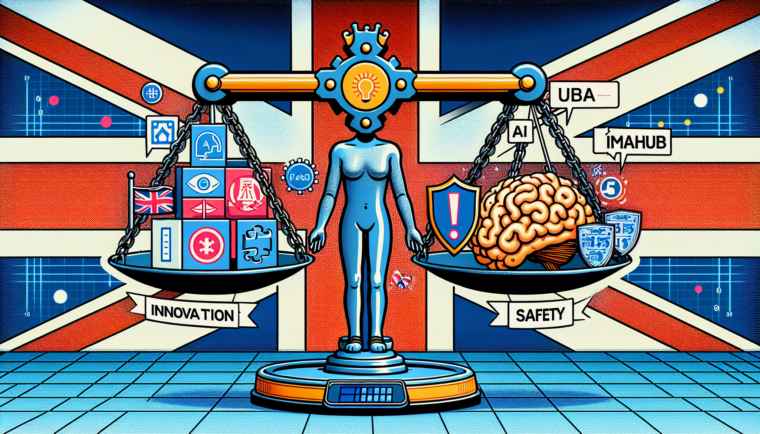
As artificial intelligence (AI) continues to grow exponentially worldwide, the United Kingdom is adopting a more cautious approach to its regulation. The UK government has pledged to prioritize nurturing innovation over hasty legislation, a stance that differentiates it from the stricter regulatory practices of the United States, European Union, and China.
A Delicate Balance Between Innovation and Regulation
Jonathan Camrose, the UK’s first Minister for AI and Intellectual Property, has expressed concern over the potential for premature regulation to inadvertently “stifle innovation.” In contrast to other nations, the UK does not plan to introduce immediate AI regulation. Camrose has emphasized the importance of innovation in AI, warning that over-regulation could bring about unforeseen consequences.
The UK’s Vision for an AI-Driven Economy
The UK’s decision to give AI the room to grow aligns with its broader vision of transforming into an AI-enabled economy. This vision is supported by the UK’s participation in international AI safety initiatives, such as the Bletchley Declaration. This international agreement, which includes countries like the United States and China, highlights the importance of developing AI safely, responsibly, and with a human-centric approach.
The declaration acknowledges AI’s potential to improve human well-being and its crucial role in achieving the United Nations Sustainable Development Goals. Despite acknowledging the dual nature of AI as a tool for progress and a potential risk, the UK government is committed to promoting AI within the country’s existing legal framework.
Implications for Various Sectors
The UK’s cautious approach to AI regulation has implications for various sectors, particularly the creative industries. The culture, media, and sports committee in the UK has expressed the need for a comprehensive understanding of AI’s impact on these industries. They have called for all government branches to understand and defend the interests of the creative industries in the face of AI and broader technology impacts.
While the UK’s decision to delay immediate AI regulations may enable the local AI industry to align and thrive, it also raises concerns about the absence of robust regulatory measures to address emerging threats from new technology use cases, such as deepfakes and unfair use of copyrighted material.
As we navigate the complex world of AI regulation in the UK, tools like cryptoview.io can provide valuable insights into the intersection of technology and regulation. This application offers a comprehensive view of the cryptocurrency market, providing users with an understanding of the regulatory landscape.
In conclusion, the UK’s approach to AI regulation is a delicate balance between fostering innovation and ensuring safety. As the AI landscape continues to evolve, the UK’s regulatory approach will undoubtedly be tested and refined. The key will be to maintain this balance without stifling the very innovation that makes AI such a powerful tool for progress.